Timon of Athens: I love to give, you love to take
Claire Nicholls and Kevin Hopkins bring mischief, theatrical invention and a terrific ensemble to Shakespeare's strange tale of generosity and greed. With Jovanna Hepburn in volcanic form, this is a lively, deliciously peculiar Timon of Athens, even if some of its early surreal magic slips away.


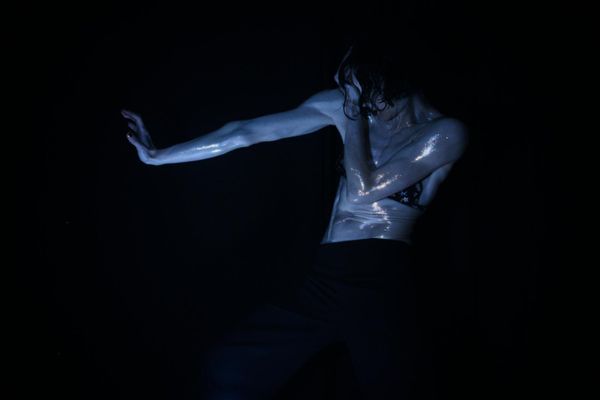
Something peculiar is stirring beneath the banquet table. First a hand, then another, followed by bodies crawling out on all fours. Soon, a small colony of ape-like creatures crouches on its haunches, thrusting its arms upwards to snatch banknotes from Timon, who stands above them on the table, dispensing her wealth. They bob down and spring up again, in a sequence that recalls the bone-wielding apes of Stanley Kubrick's 2001: A Space Odyssey. It's a spectacularly strange opening to Claire Nicholls and Kevin Hopkins' Timon of Athens at Theatre Works. Several million years of evolution, and we're still scrambling for whatever we can get.
Jovanna Hepburn's Timon is a creature of enormous appetites. She loves extravagantly, gives indiscriminately and expects everyone else to be just as generous. Unfortunately, her friends are considerably better at receiving than giving. When the money runs out and Timon discovers the limits of their affection, her love for humanity curdles into a bitter hatred.
Hepburn attacks both extremes with full-throated conviction, her generosity almost childlike in its earnestness, her fury positively volcanic. There's scarcely a corner of humanity left unscathed by her curses. Timon's white-hot rage is quite a spectacle, and Hepburn makes it fascinating to behold.
There's plenty of pleasure elsewhere in this lively ensemble. Seon Williams and Scott Jackson are particularly delicious, throwing themselves into their various roles with extravagant gestures, wonderfully expressive voices and an infectious appetite for theatrical excess. Their command of Shakespeare's language is such that the meaning comes tumbling out through their bodies as readily as their mouths.
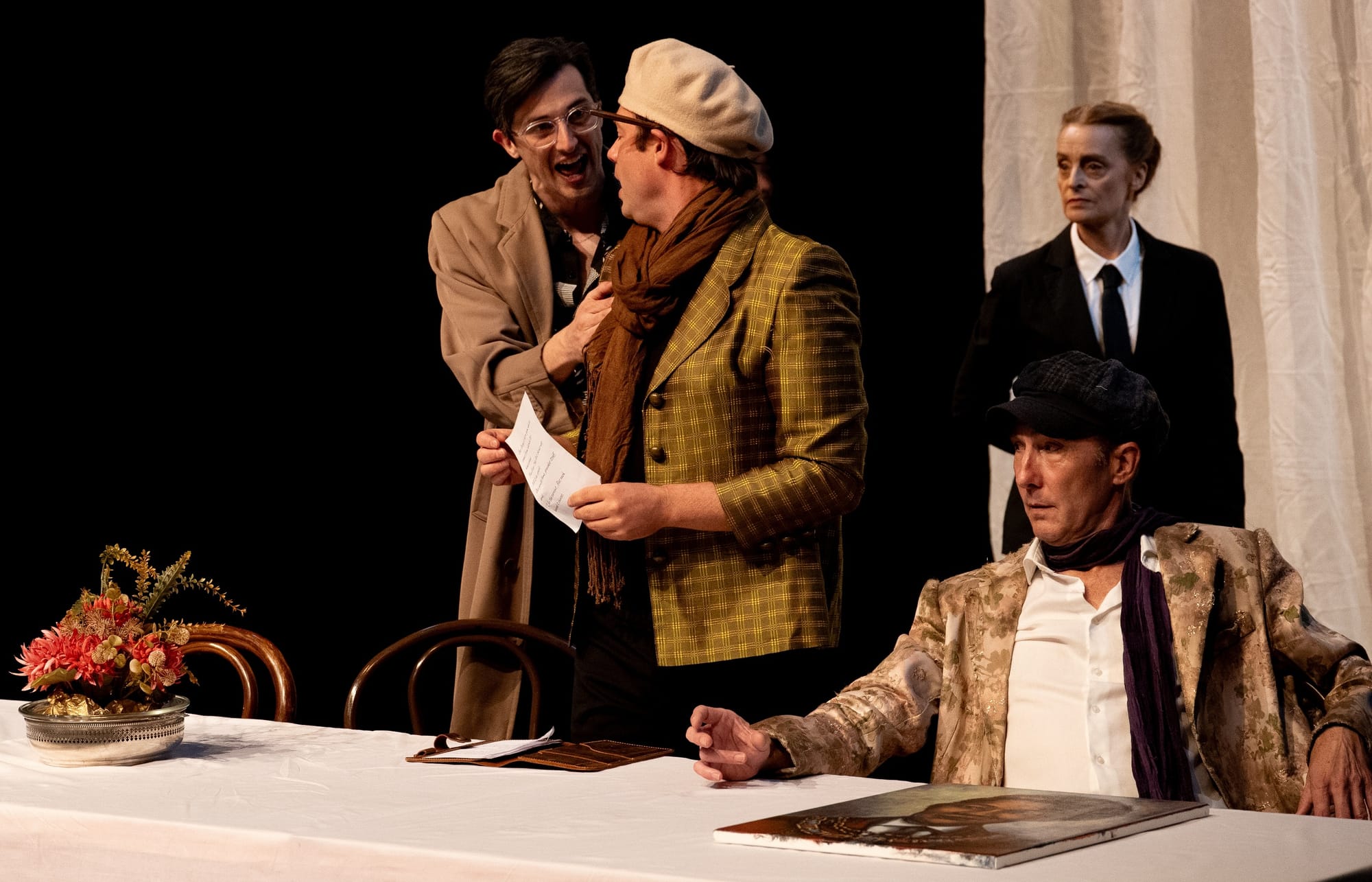
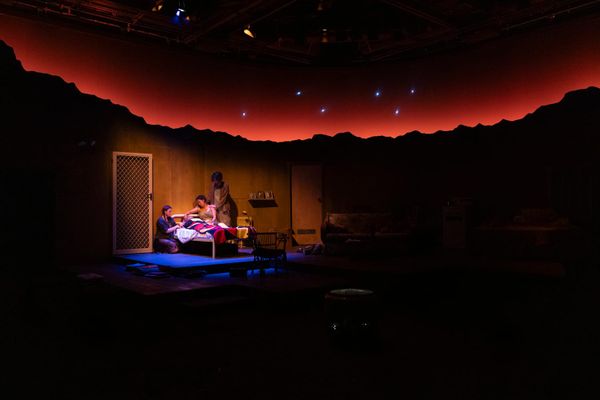
The staging is pleasingly economical. Black curtains frame a long white drape at the rear, while a banquet table sits at an angle across the stage. A little rearrangement creates three separate stations for the increasingly humiliating business of asking Timon's supposed friends for help. Later, the white drape is swept aside and the wilderness becomes a rubbish-strewn refuge complete with dumpster, while Shakespeare's buried gold takes the form of a suitcase stuffed with cash. Smartphones, selfies and other contemporary intrusions add to the fun.
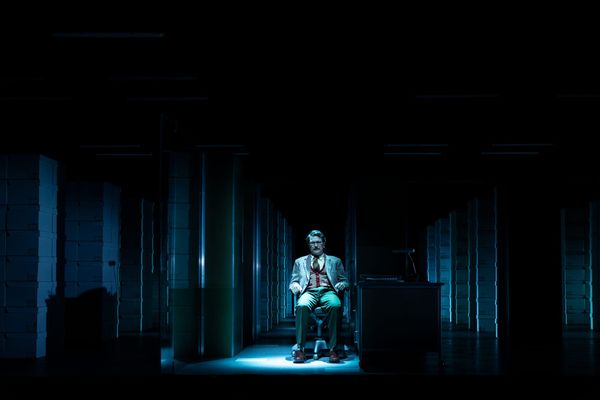
Nicholls and Hopkins have delivered a lively, mischievous and thoroughly entertaining take on one of Shakespeare's stranger plays. Once Timon abandons Athens, however, there's plenty of arguing left to do, and words increasingly take over from the production's exuberant physicality. There are still striking moments, particularly when Alcibiades and his soldiers surround Timon, but some of the opening's delicious strangeness slips away. What a pleasure it might have been to see those peculiar creatures return, bringing the play's unruly ideas about money, friendship and human nature back into the language of bodies.
Timon of Athens plays at Theatre Works, St Kilda, until 7 November 2026.
Disclosure: A complimentary ticket to Timon of Athens was provided to Melbourne Stage Review for the purpose of review. We retain full editorial independence.