EAT ME: Venus, in extremis
Jessica Thompson’s EAT ME is a ferocious, unruly piece of dance-theatre. Her Venus is hungry, grotesque and terribly alone, and Thompson’s astonishing physical command makes even the goddess’s most undignified moments riveting. Beauty has rarely looked so miserable, or been so compelling to watch.
Venus has spent an awfully long time being looked at. Botticelli left her standing on a shell, naked and attended, with the prospect of several centuries' admiration ahead of her. In Jessica Thompson's EAT ME, the goddess has developed some less picturesque habits. She drinks alone, plays with knives, eats oysters and occasionally looks as though she might be sick. Beauty has become a rather miserable occupation.
Thompson is already at work when we enter the Norla Dome at Melbourne's Mission to Seafarers. Stormy dusk filters through the skylight onto an enormous sheet of paper, where she is drawing something in charcoal. A white clawfoot bath stands nearby. Yellow light catches her bare back, illuminating the muscles working beneath her skin. Waves crash through the soundscape at an almost punitive volume. The sea, which gave birth to Venus, seems to want her back.
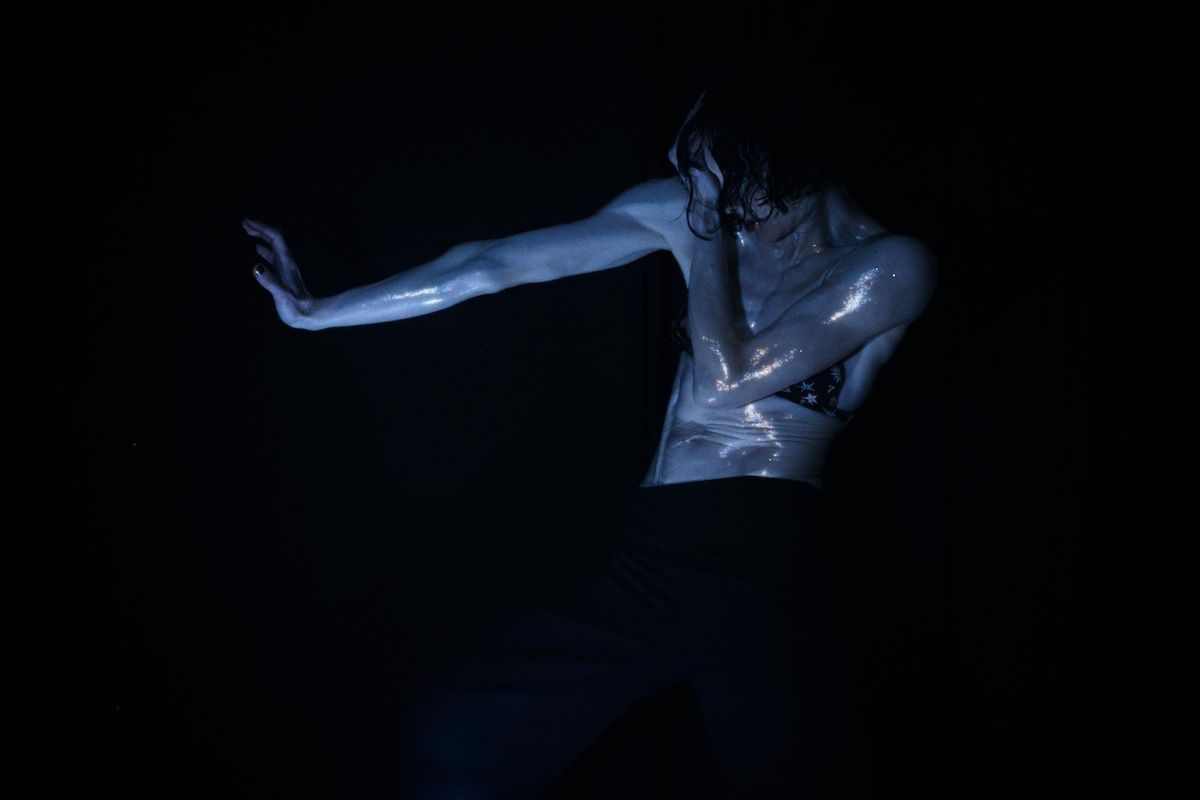
Thompson dances across her drawing, smudging its lines. Her spine makes a sinuous S; her crossed arms leave two forearms wriggling independently, like creatures from a rock pool. A finger twitches. Then she's lunging, biting her thumb, shielding her breasts and genitals. The precision is astonishing, especially when the movements become ungainly or verge on the grotesque. At times she's magnificently rooster-like, thrusting her limbs or displaying herself to an imaginary mirror. The woman in that mirror is a difficult audience. She seems alternately bewitched and a little appalled by what she sees.
We are another audience, of course, and Thompson knows it. Her gaze passes above our heads, towards a reflection only she can see. She has made herself the object of an attention she cannot switch off. The arrangement is peculiarly lonely.
The production is almost belligerent in its excess. Félicia Atkinson's birdsong becomes an assault; Joe Paradise Lui's lighting jumps between yellow, red and an icy blue. The familiar consolations of nature have turned near-nasty. There is considerable sophistication in this refusal of subtlety. The sounds invade our bodies, making it harder to sit comfortably outside Thompson's ordeal.
Her silver bikini top comes loose, exposing a breast. She covers herself, hangs the charcoal drawing on the wall and disappears behind the audience. When she returns, she's wearing a severe black suit, sipping red wine and scrolling through her phone at a little cafe table. A knife follows. She scores circles into the floor, holds the blade in her mouth, then extends it away from herself while covering her eyes. The threat is impossible to locate precisely, which makes it difficult to dismiss.
“Could we put a record on?” she asks.
The Ellington standard In My Solitude begins to play, with its absent beloved and memories that won't leave the singer alone. Thompson asks someone to fetch her wine. An audience member obliges. It's funny, this sudden conscription into the goddess's domestic arrangements, though she has requested a servant rather than a companion. Soon she's shucking oysters in a metal glove. The drawing, it finally dawns on me, is an enormous oyster too. She holds a shell to her ear, as though something inside might answer.
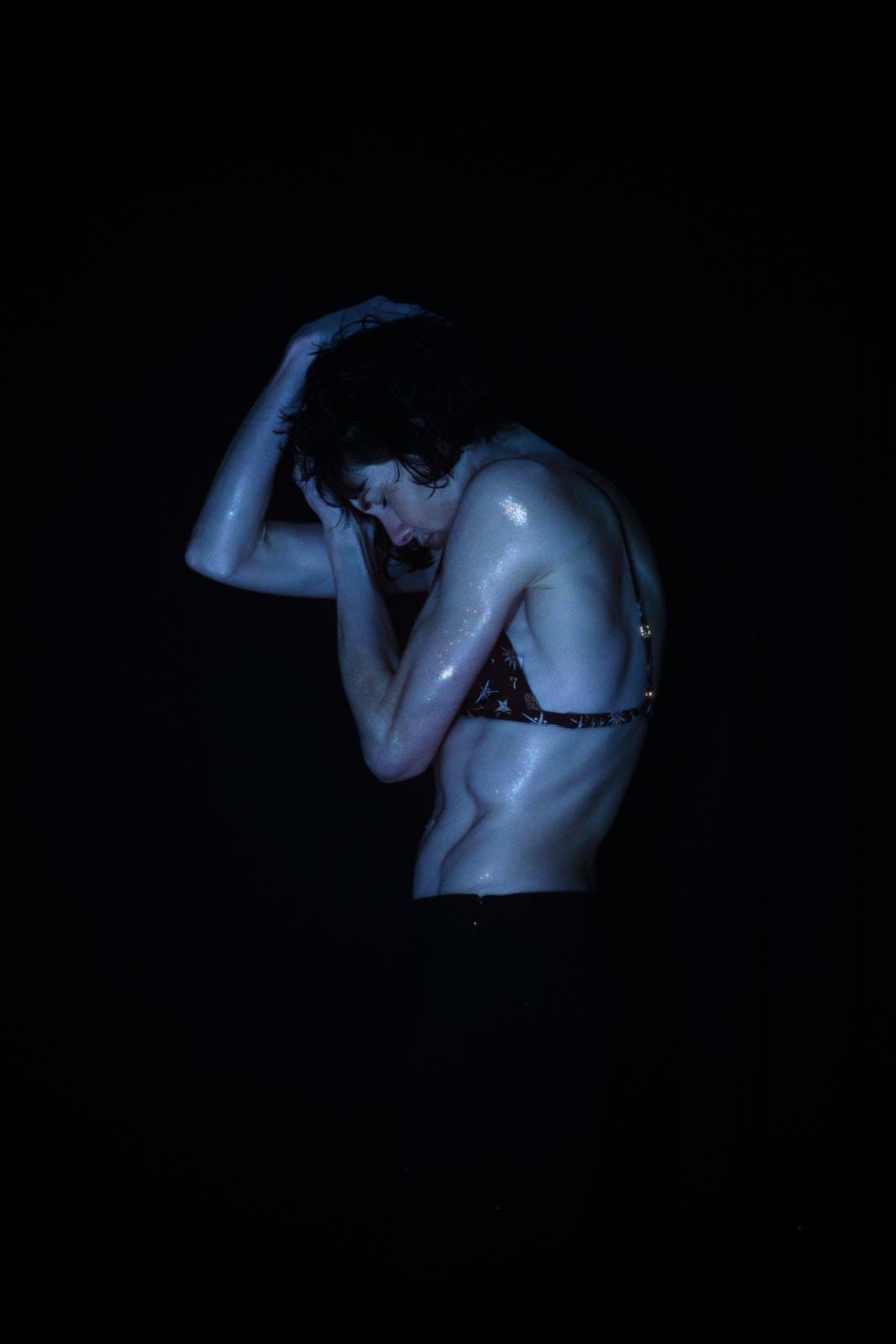
The bath is where the evening becomes almost unbearable. Thompson enters under blue light, briefly relieved, then emerges filthy with charcoal, rose petals crammed into her mouth. She licks the long stretch of porcelain. Water flies. She gasps, thrashes, finally hauls herself out of the bath and looks ready to vomit. Her face passes through anger, terror, pleasure, pleading and disgust so rapidly that each expression seems to ambush the next. The soundscape roars. She appears to cradle a child, then it falls. For all the commotion, the terrible thing is how alone she remains. Nobody can help her, though the audience has already demonstrated its willingness to fetch a drink.
Thompson's command of her body is remarkable. She can make a gesture seem involuntary with no surrender to its exactness, and the bath sequence exploits that contradiction mercilessly. Her distress is spectacular, which implicates us in another uncomfortable pleasure: the more violently she appears to come apart, the harder she is to stop watching.
Afterwards she sits on the bath's edge, breathing heavily and eating the remaining oysters. Portishead's Glory Box asks for a reason to love. Thompson returns to the wall and draws an inky black pearl inside the oyster. Then she puts herself back into the suit, adds heels and earrings, her hands visibly shaking. Charcoal still clings to her skin. She applies bright red lipstick. The wine glass breaks. She lights a cigarette and walks out of the building.
She doesn't look back.
EAT ME was performed at the Norla Dome, Mission to Seafarers Victoria, Melbourne, from 23–24 October 2026.
Disclosure: A complimentary ticket to EAT ME was provided to Melbourne Stage Review for the purpose of review. We retain full editorial independence.