Smaller: By a bureaucratic thread
In David Williams's Smaller, the accidents of family history meet the grinding absurdities of the NDIS. Wry, tender and quietly unnerving, this deftly constructed piece of theatre turns the bureaucratic business of reassessment into a source of palpable dread.

There is something unnerving about watching a piece of documentary theatre whose ending hasn't yet happened. At 8.05 pm on 5 November, David Williams interrupts his own performance to check his watch. He's still waiting for a phone call from the National Disability Insurance Agency about his son's reassessment. It could come tomorrow, next week, at any moment. In the meantime, his family lives with the possibility that the support upon which they depend might change. Williams has been reading us NDIS correspondence received only days earlier. The bureaucracy is practically breathing down his neck.
By this point in Smaller, we have spent the better part of an evening getting to know Williams and his family. And now we're waiting for that phone call, sharing their palpable sense of dread.
This is a considerable achievement for a work that begins with the words de novo, a genetic term describing a variation that arises spontaneously rather than through inheritance. Williams's son has such a variation, and the question of how this particular child came into existence sends his father rummaging through several generations of family history.
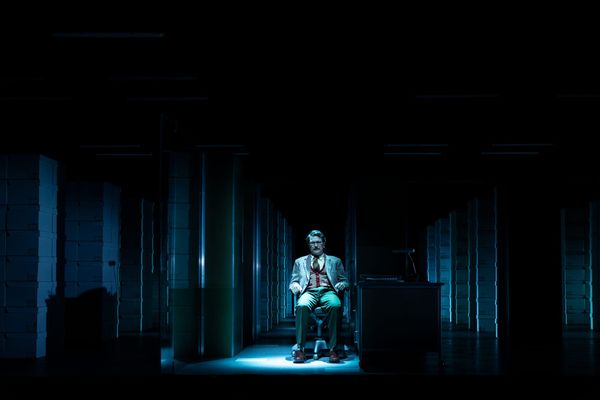
Directed with a sure sense of rhythm by Julian Dibley-Hall, Smaller consists of 23 numbered fragments. Williams moves between three industrial pendant lights, recounting stories that begin in wartime Liverpool, postwar Sydney and East Germany. People migrate, meet, marry, survive accidents, and change the course of their lives by hiding an unwanted letter. An orthopaedic surgeon happens to be in the right place at the right time. The consequences ripple forward, although we're initially given little indication of where they're heading. Williams is an absorbing storyteller, conversational and unhurried, with an instinct for the detail that makes an apparently incidental event worth hearing. Gradually, the connections become apparent. An entire family history has been assembled from accidents, chance encounters and decisions whose consequences nobody could have foreseen.
The same curiosity about contingency takes Williams into genetics, where the information becomes rather less accommodating. He reads from medical reports dense with terminology and bewildering combinations of letters and numbers. For several minutes, comprehension is hard work. I found myself losing the thread, recovering it, then losing it again. It's tempting to wish for an explanation in plain English, but that would rather defeat the purpose. Williams has been trying to make sense of these documents for years. We have the luxury of being confused by them for a mere few minutes.
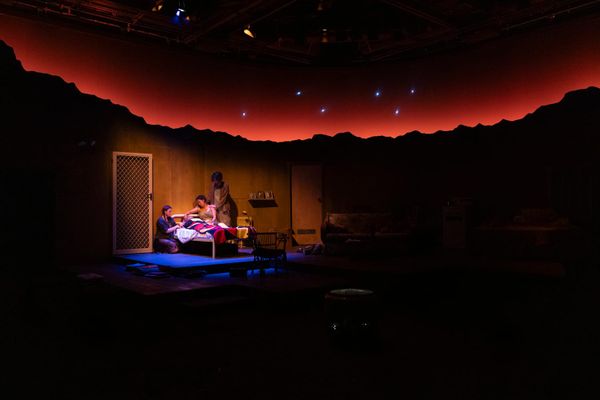
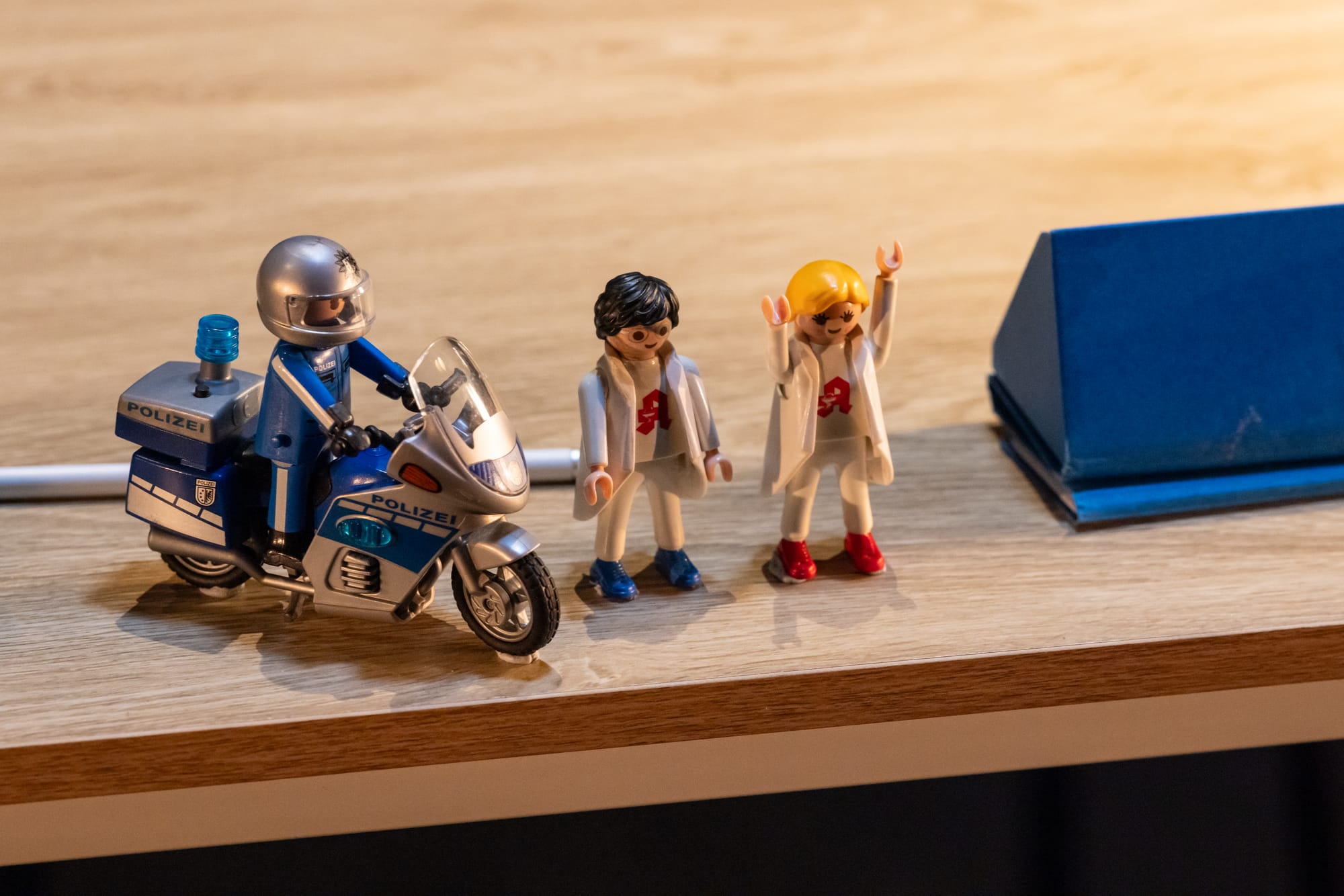
The production is remarkably economical. A small desk, a few lights, papers, and some carefully chosen props. The lighting is restrained and precise, illuminating small areas of the stage while leaving the surrounding space in darkness. Gail Priest's composition and sound design are textured, layered and often unexpectedly playful. Williams can conjure considerable physical discomfort with almost nothing. Recalling his father's disastrous attempt to take blood from him as a teenager, he rolls up his sleeve and directs a desk lamp towards his arm. The scene is so viscerally convincing that I found myself squirming in my seat.
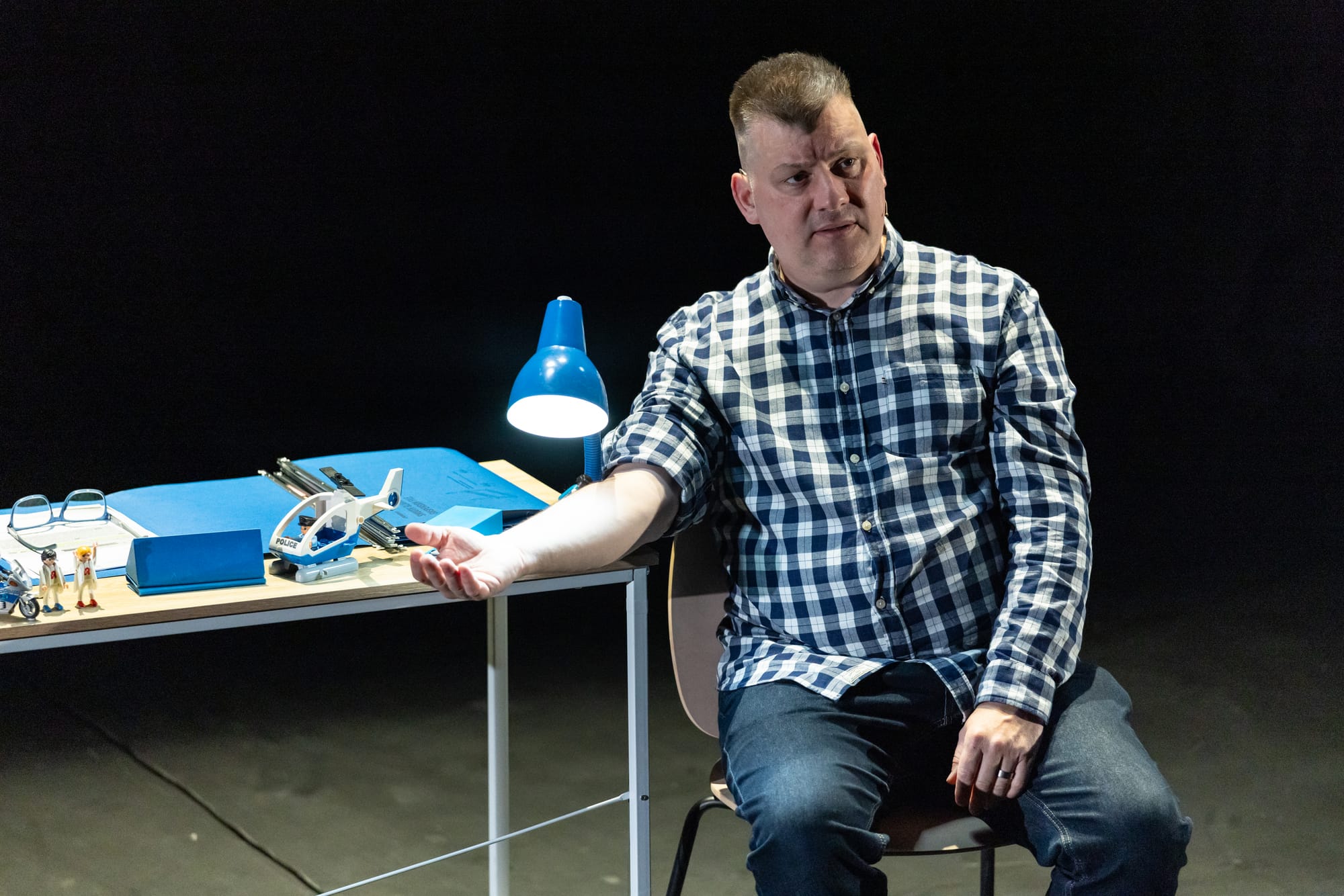
Williams is equally candid about the difficulties of caring for his son. He describes the fear that accompanies his son's physical outbursts, and speaks with unsettling frankness about his own anger. Recalling one such moment, Williams stiffens. His voice remains quiet. Elsewhere, his son repeatedly calls 'Dad?' to check that he hasn't disappeared, followed by 'I love you', sometimes every thirty seconds. Williams answers each time. The repetition is tender, exhausting, faintly maddening. He allows us to feel all three.
These moments carry enormous weight because the institutions governing his son's life demand a very different account of him. To secure the support their children need, parents must become expert witnesses to everything their children cannot do. What an appalling record of a life to be obliged to produce. Williams draws on the testimony of other parents, including two women who worry about their children eventually discovering the awful things written about them in assessment files. Perhaps, they suggest, a note should be placed on top: remember that I love you. It's a heartbreaking thought.
And the process doesn't end once support is granted. There are further assessments, changing requirements, more correspondence. The uncertainty becomes a permanent, brittle feature of family life.
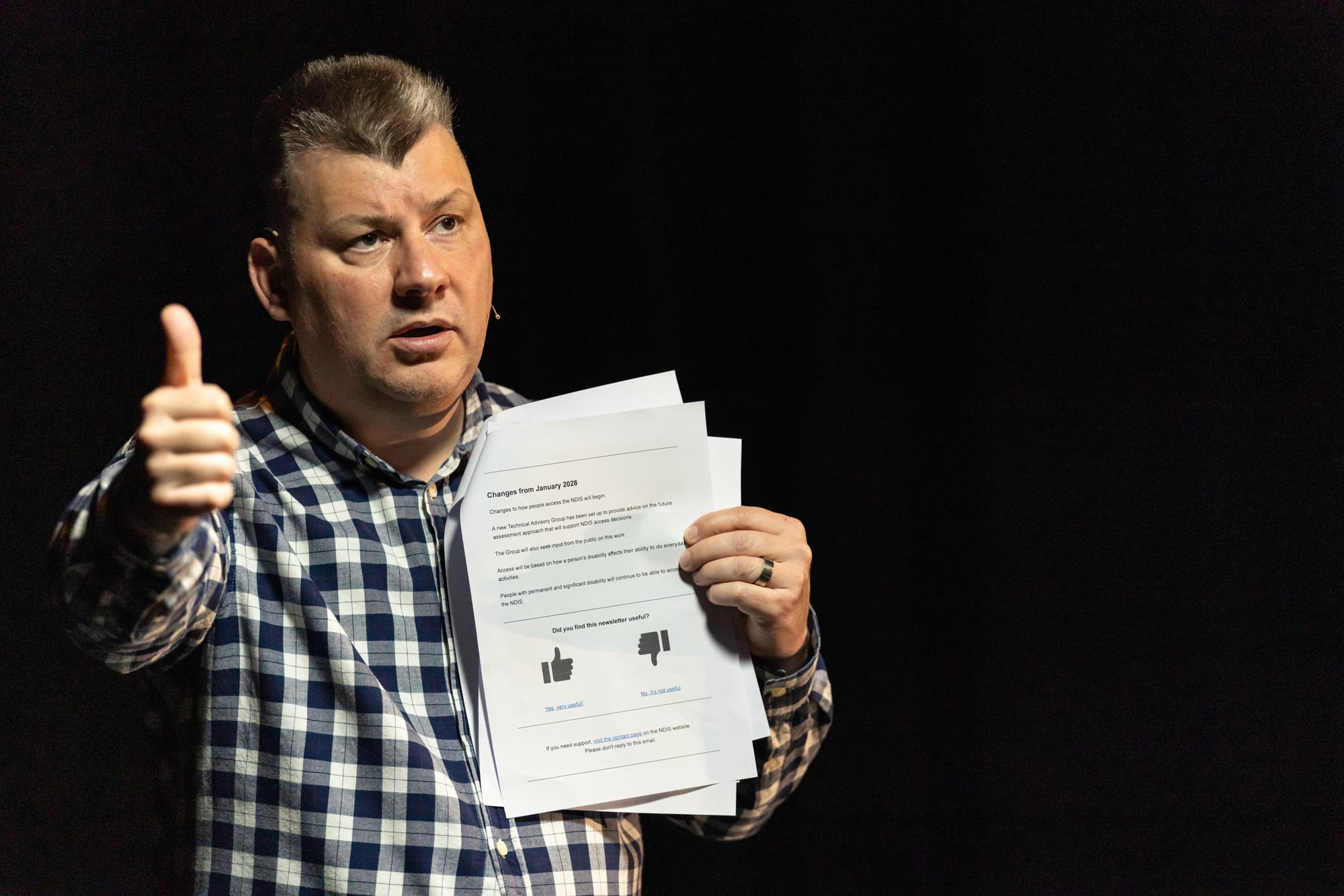
We've all encountered stories about the NDIS's shifting rules and political controversies. I read them in the news, feel appalled, and get on with the afternoon. Williams cannot. His correspondence keeps arriving. The next decision may alter his family's life. And because he's spent the evening allowing us into that life, I find myself frightened of what might happen to them. These are political decisions, made by people who are answerable to us.
Smaller ends with a memory of Williams's son at eighteen months, visiting relatives in Germany and encountering falling snow for the first time. Williams turns his desk lamp towards the floor, opens the little compartment beneath a hole punch and gently scatters its contents into the light. Tiny paper circles drift down. For a moment, the documents have disappeared, and there's a small boy discovering the world.
I found myself wishing his father could stay there with him. But the phone could ring tomorrow.
Smaller was performed at Burrinja Cultural Centre, Upwey, on 5 November 2026, and will conclude its three-venue season at Kingston Arts Centre, Moorabbin, on Saturday 7 November at 7.30 pm.