Learning to see: The Memory Mirror
A beautifully nuanced and superbly realised new Australian play, The Memory Mirror reveals its layers with exquisite control. Georgina Luck’s writing, Drew Tingwell’s direction and a stellar ensemble create theatre that is at once playful, mysterious and profoundly affecting.
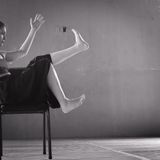
There is a lot going on at the Blue Mountains Mind, Body and Spirit Festival. Meditation, a poetry slam, tarot readings, candle-making, creative cooking, bicycle-powered smoothies — and an annual memory competition whose reigning champion, Mr Munro (Jim Daly), has held the title for thirteen years. Somewhere among the trees is also a mysterious mirror said to return a lost memory, though only once in a person’s lifetime.
Writer Georgina Luck lets us enjoy the eccentricity of this world before asking very much of us.
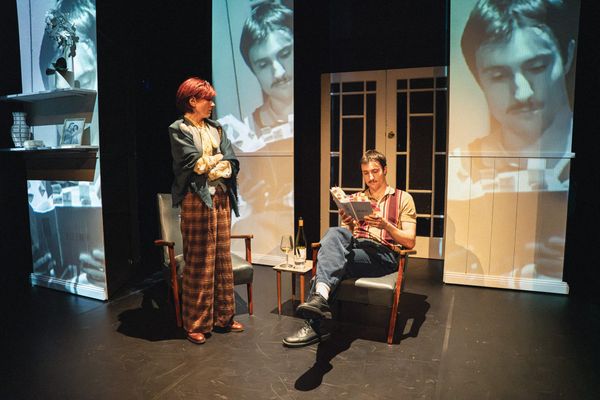
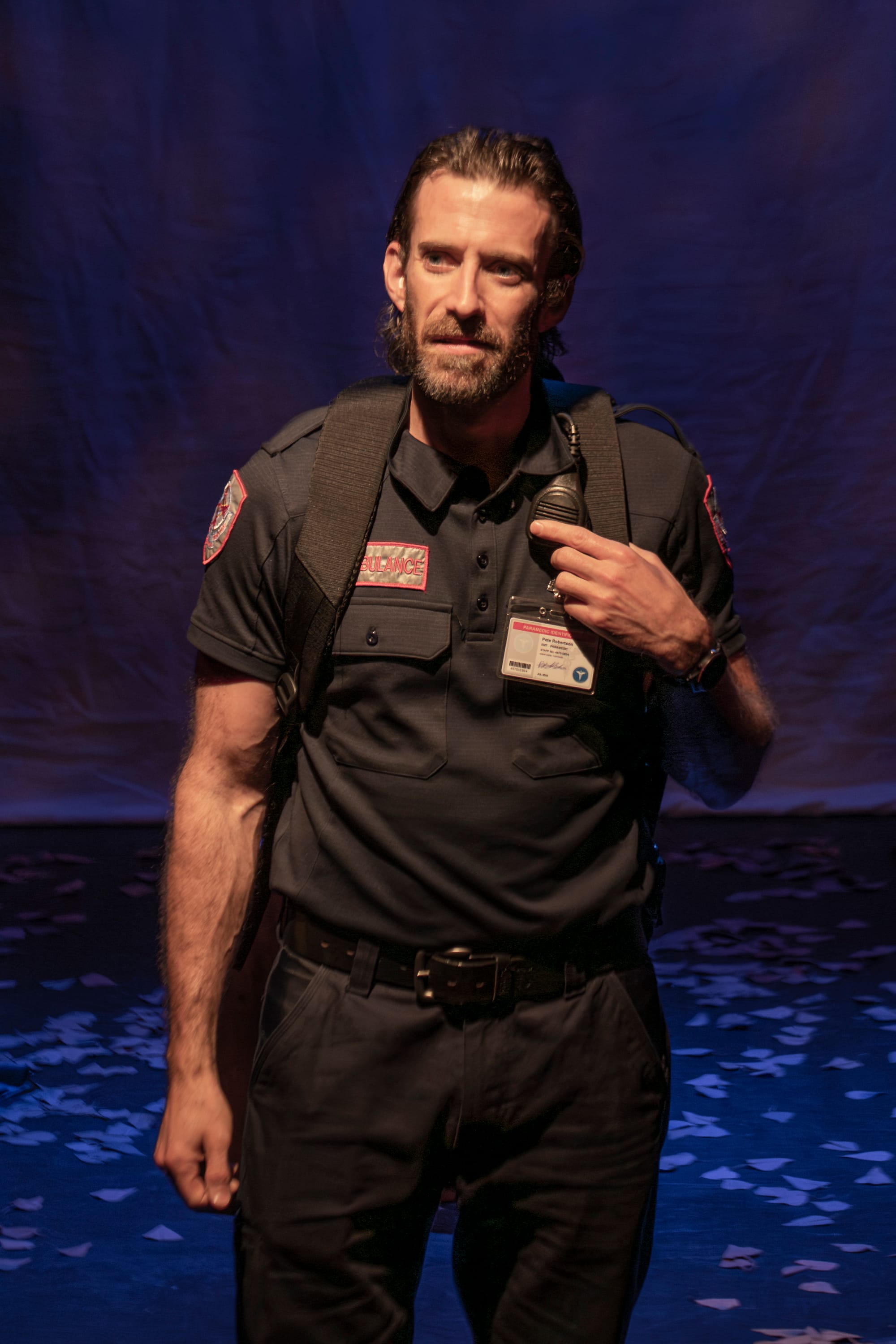
Paramedic Daniel (Gabriel Partington) has somehow avoided working the festival for years, though he has history here. As a trainee, he formed an easy connection with Mrs Munro (Margot Knight), who helped him prepare for his final exams by transforming clinical facts into elaborate mnemonic stories. Fifteen milligrams become fifteen red roses; imagined lovers dance their way through the information he needs to remember. The act of remembering is playful, imaginative, and something co-created between people.
Around them bustles Banjo (Don Bridges), the festival’s indefatigable organiser, forever rushing off to roll up yoga mats, do a shift at the bicycle-powered smoothie demonstration or appease sponsors. Bridges is an absolute delight: lithe, flashing past in rainbow trousers, part dogsbody, part fairy godfather. He carries much of the festival’s quirkiness — and its great big communal heart.
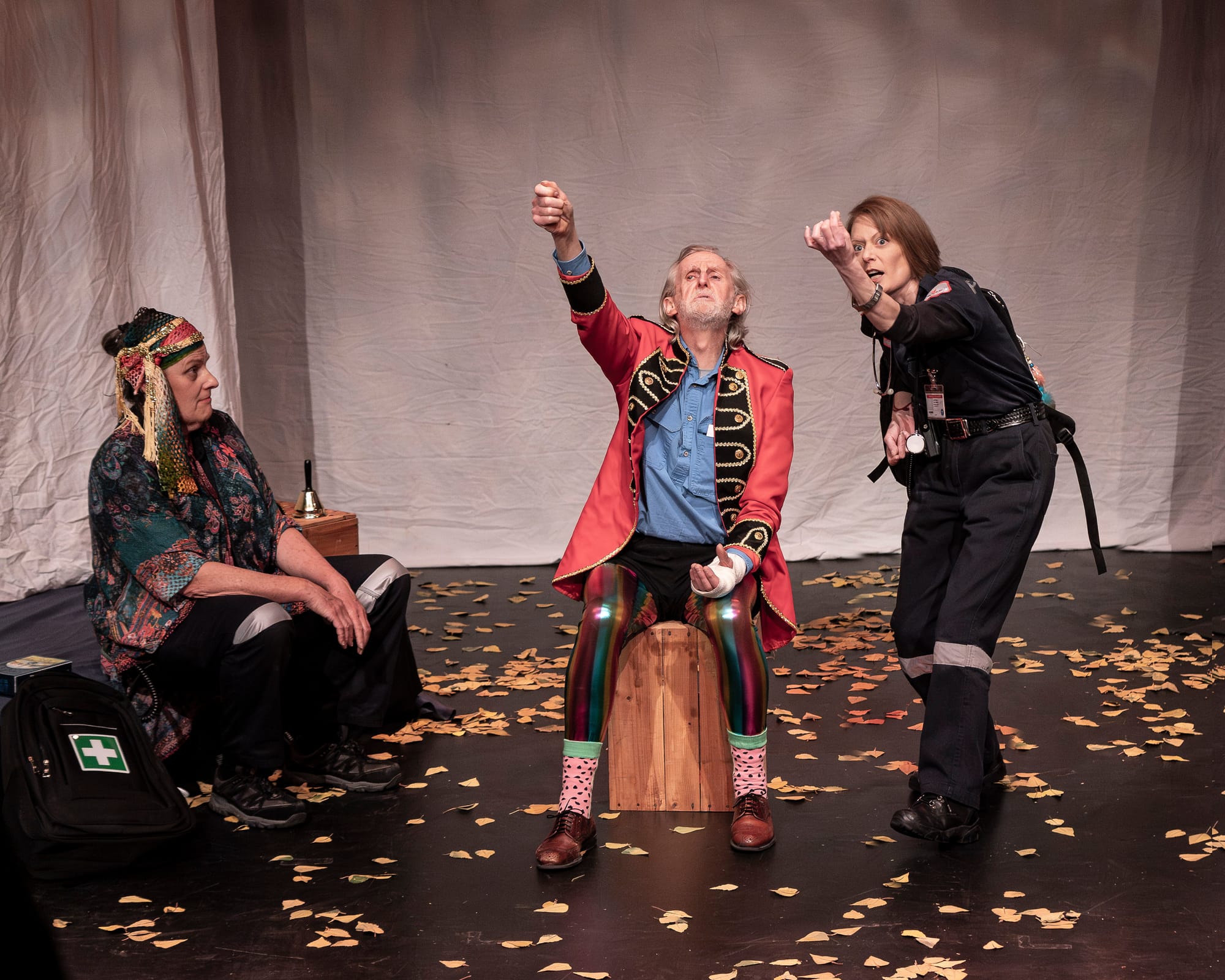
For Daniel, though, this is not simply a return to a familiar place. There is something here he has spent years not remembering.
Luck lets this negative space emerge slowly, through repetitions whose significance changes as the play deepens. Daniel is now an assured clinician, but his confidence can sometimes calcify into subtle intimidation. When paramedic intern Pip (Christine Husband) blanks under his questioning, he takes the hesitation as evidence that she has not studied enough. Moments later, the answer comes. Pip knew it all along, but Daniel’s sharp manner had rendered the knowledge temporarily unavailable.
This same pattern becomes more troubling with the Munros. Mrs Munro is herself an accomplished mnemonist, yet under her husband’s scrutiny she falters. Daly gives Mr Munro both the vulnerability of emerging dementia and an unmistakable capacity to dominate, while Knight makes visible how his judgement reorganises the space around his wife.
Although we won't know it until deeper into the play, beneath both sits a far more horrifying encounter from Daniel’s past: a young woman with a burn, a controlling man beside her, and something in her expression Daniel noticed without fully understanding. He treated the injury presented to him. He accepted the explanation her partner offered. She died the next day, we gather, at his hands.
These situations are not equivalent, and Luck never attempts to make them so. What she layers instead is their relational architecture. At different levels of intensity, a man’s authority begins to occupy the available space, and a woman’s access to what she knows — to speech, confidence, action, even her own interpretation of events — narrows in response.
The Memory Mirror understands something crucial about power: it does not only act upon the person subjected to it; it also warps the perception of the person wielding it. Daniel’s certainty makes him less curious. His idea of competence blinds him to Pip’s considerable relational intelligence: while he has been worrying about what she knows clinically, she has been learning the community, its people and the things they do not always say outright. And so much of her capacity to help people rests on the trust she has built by paying attention to who they are, not simply what is wrong with them.
Such is the production’s nuance that the cost of Daniel’s failure to see clearly is present from the beginning of Partington’s performance. Anxiety registers in minute shifts of face and body, in tension held and tears that gather without becoming a display of grief. In the intimacy of Brunswick Mechanics Institute, we can watch that burden working on him throughout the play, before he can fully make sense of it himself.
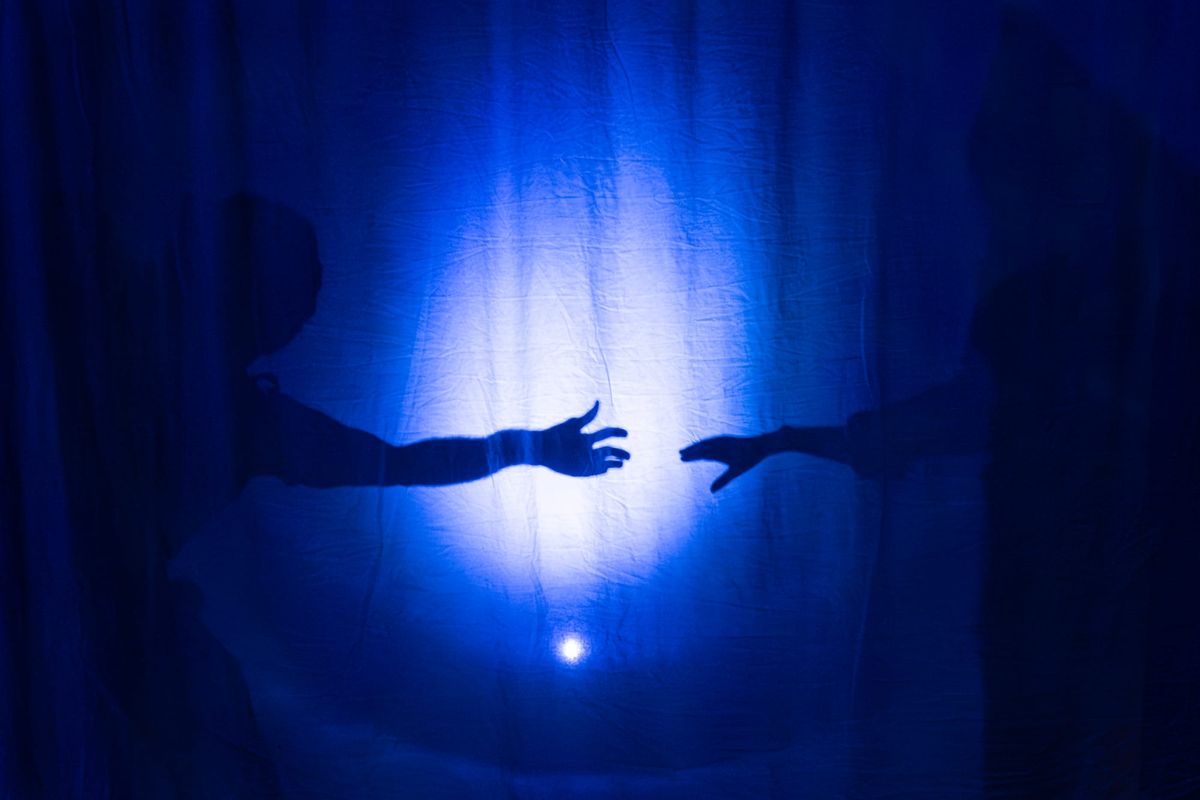
Luck places these acutely human dynamics inside a world willing to hold space for the mysterious. Black cockatoos become Huginn and Muninn, named for Odin’s ravens of thought and memory. Scout McDonald’s puppet design, realised by Charlie Whiter, conjures them through shadow, fabric and bodies moving behind hanging sheets. Director Drew Tingwell lets this surreal register sit lightly beside the everyday. The production is materially modest but imaginatively expansive: paper leaves, birdsong, silhouettes and handmade magic.
The mirror, too, is allowed to keep its secrets. Myra (Anthea Davis), Daniel’s older colleague, once used it to recover an obscured memory of the baby taken from her through forced adoption when she was seventeen. When Daniel responds carelessly to that intimate disclosure, the usually gentle Myra erupts. Davis makes the sudden ferocity electric. Again, Daniel is forced to confront what his own manner prevents him from seeing.
By now, Luck has laid enough echoes around Daniel that the past is becoming harder to keep beyond reach. When he follows a distressed Mrs Munro to the Memory Mirror, those echoes start to converge.
Here, the production slows almost to stillness.
Behind Daniel and Mrs Munro, the puppetry traces the outline of the mirror against the hanging sheets. In front, a warm pool of light catches their faces as they stand looking out towards us, as though the auditorium itself has become the glass. This is the moment Daniel’s buried memory finally returns. In flashes, he sees the young woman who died in his arms the day after he had seen her fear, treated her burn and failed to understand what she was trying to tell him.
Recognition does not arrive as a single beat but travels through his body: his face tightens, folds, almost crumples as the old scene returns and he understands, finally, whose daughter he held as she died. Mrs Munro does not mirror his distress. She gazes into the light with an almost sculptural composure, her face nearly emptied of expression — not vacant, but marked by the persistent weight of a profound grief carried for years.
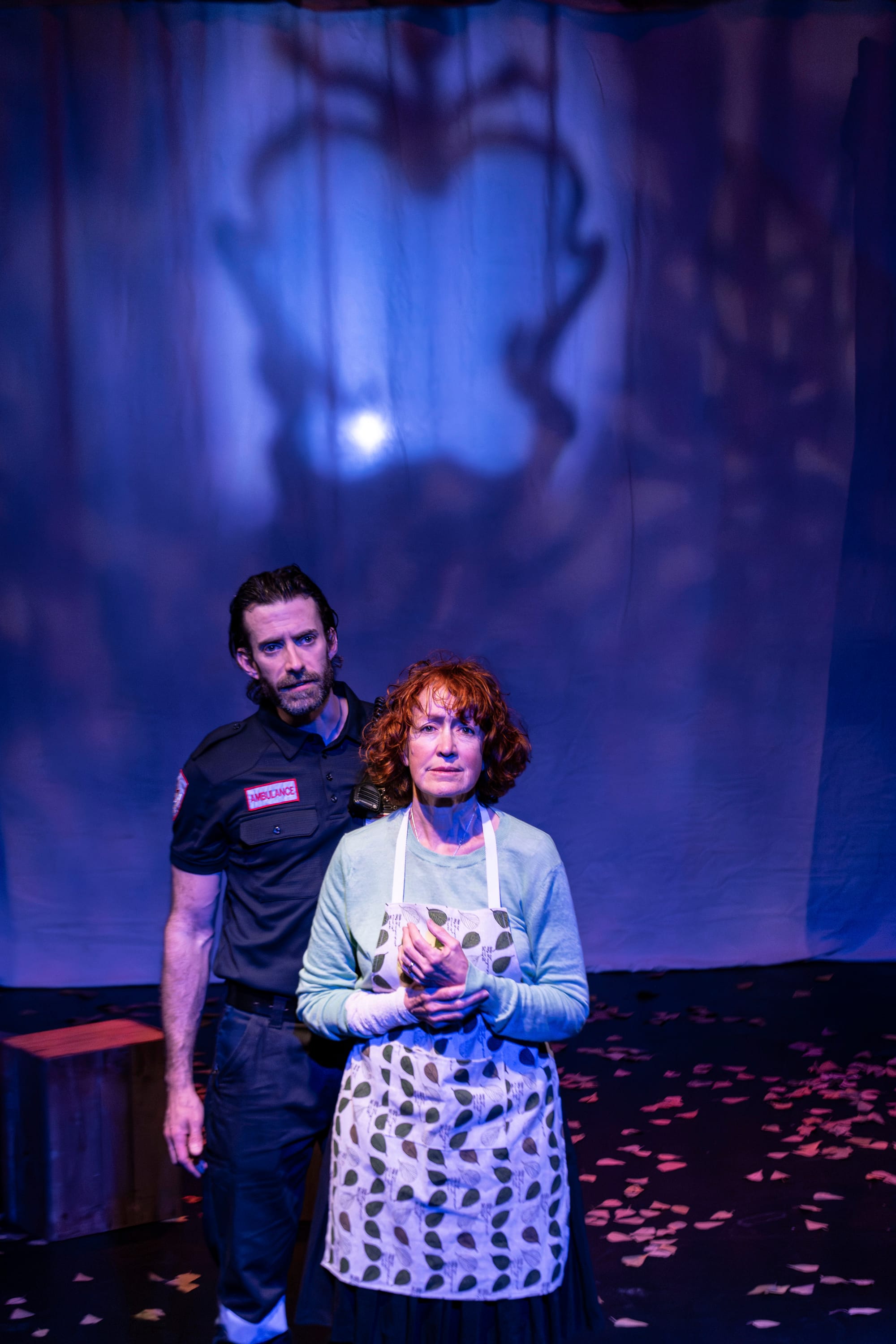
I felt this contrast deeply in my own body, before all the pieces had quite fallen into place: a heavy lump rose in my throat.
And then another detail returns to his mind: the expression on her daughter’s face as Daniel carried her dying body, something he remembers as almost resembling forgiveness. The discovery lands with force: the forgiveness another person may offer can still remain beyond the reach of the self.
Remembering, though, cannot repair the past. What Daniel can do is act differently in the present.
The opportunity comes almost immediately. When Mrs Munro again falters under her husband’s scrutiny, Daniel and Pip help alter the conditions around her. At first, she needs support. Then she does not. Freed from the pressure to prove herself, Mrs Munro begins to trust her own capacity. And she shines.
* * *
In the final moments of the play, Daniel and Mrs Munro return to the movement that first connected them. This time, they complete it: they dance.
The dance does not absolve him. Nor does it undo what has been lost. What it offers is something quieter and, for me, more moving: the possibility that once we recognise the patterns of power shaping our relationships — and the ways they can blind us from within — we might learn not to reproduce them.
Luck’s mirrors, burns, blank minds and recovered memories accumulate with remarkable control in The Memory Mirror. Each recurrence deepens what came before, allowing the play to move from workplace intimidation, through the subtler coercions of a marriage, to the devastating consequences of intimate partner violence. Tingwell’s direction trusts those layers to emerge gradually; the extraordinary ensemble give them emotional and relational precision; and the play’s strange, handmade theatrical language allows memory, grief and guilt to hover at the edges of the recognisably everyday.
I so admire the simple challenge that The Memory Mirror gifts us, and offered with such tenderness: to see more clearly what power can obscure, and to make room for one another to think, speak, remember and act with freedom.
The Memory Mirror’s world premiere season plays at Brunswick Mechanics Institute, 270 Sydney Rd, Brunswick, until 13 September 2026.