Hidden a little longer: Beneath the Surface
Moving from lockdown balconies to sibling rivalry, boardroom manoeuvring and an impossible bargain, Edge of the Heart Productions’ four-play collection finds humour, tension and simmering unease in the textures of ordinary lives.

Tensions and social undercurrents animate Beneath the Surface, a collection of four new Australian short plays from Edge of the Heart Productions. Moving through strained relationships, family resentments, corporate misconduct and dissatisfaction with an ordinary life, the evening is at its most interesting when it leaves room for uncertainty.
In Adèle Shelley’s Coffee in the Time of Coronavirus, two neighbours encounter one another across adjoining balconies during Melbourne’s lockdown. Their relationship is already underway as the audience enters: One is attempting to work, laptop open and headphones on, while the other practises guitar, each registering the other's presence and intrusion. It is a quietly effective beginning — before we have witnessed them speak to one another, we have already watched them negotiate proximity, irritation and perhaps a little curiosity. The play progresses from irritation to eventual conversation and connection, though I found the careful establishment of their relationship the more interesting part of their journey.
Mazz Ryan’s Mine turns our attention to two sisters brought together by their mother’s death and the boxes of possessions she has left behind. Objects become provocations and reopen a simmering sibling rivalry as the sisters circle questions of what their mother gave each of them — materially and otherwise. There is something recognisable in the impossibility of settling such an account: neither sister can quite make the other see her life, or their shared history, as she does. I appreciated the resistance of a neat resolution.
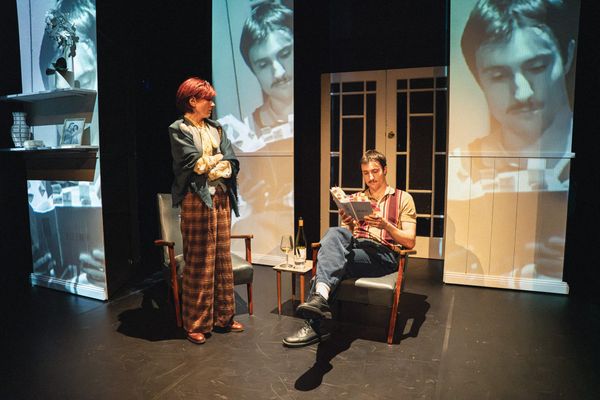
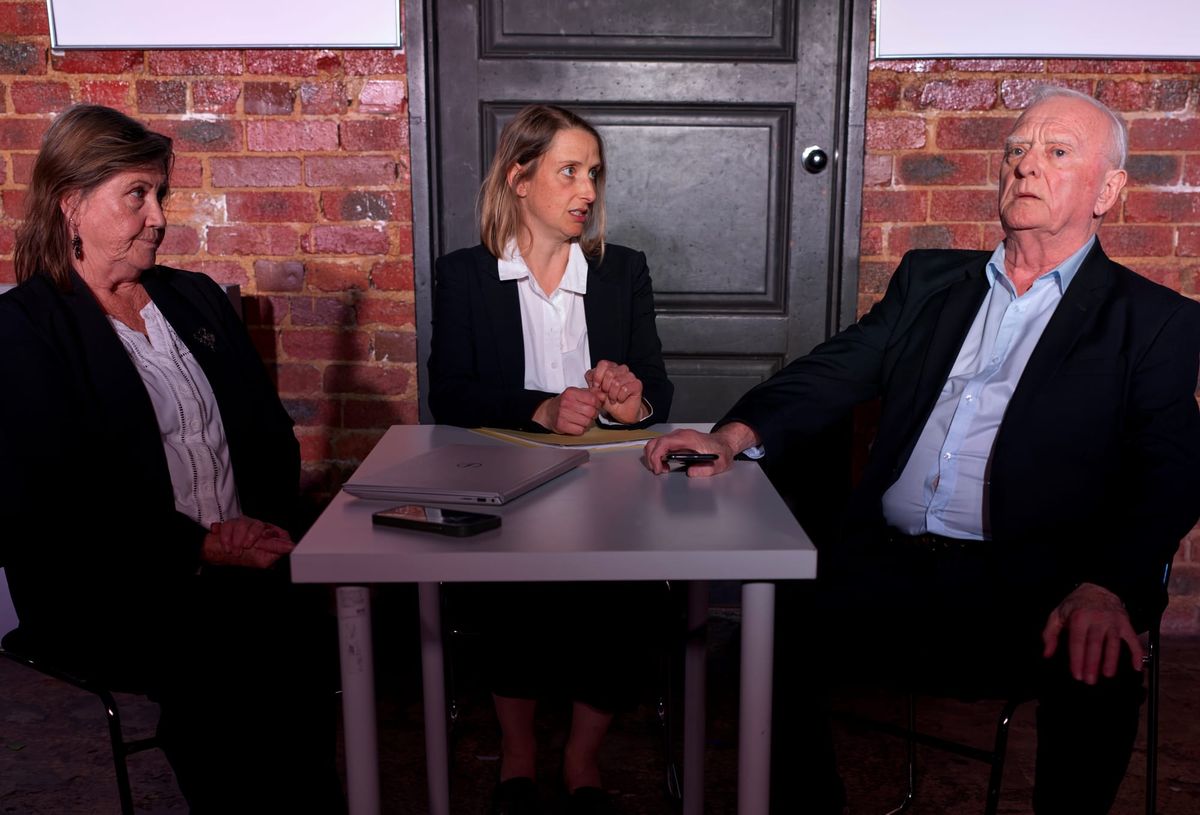
The evening gathers considerable force with Carissa McPherson’s An Internal Matter. An allegation of workplace sexual harassment sets executives, HR and legal advisers into motion as an organisation confronts the collision between its proclaimed values, its internal loyalties and its exposure to risk. And, almost as an afterthought, the harm done to women. The procedural and legal detail is persuasive, and some assured performances make the corporate manoeuvring unsettlingly credible. The play is strongest when it trusts this specificity. For me, the interspersed video sequences contrasting corporate rhetoric about integrity with the conduct unfolding before us underline a hypocrisy that the boardroom exchanges have already made clear. I would have welcomed more room to sit with the discomfort those exchanges produce before the production moved to explain them.
Shelley’s The Trading Place is the most theatrically playful of the four works, finding rich territory in an impossible bargain. A woman exhausted by the demands of husband, children and ordinary life encounters a mysterious trader who holds the power to return twenty-five years to her. The price, however, must be something worth trading. As the bargaining escalates, the premise begins to complicate the dissatisfaction with which the woman arrived: the children whose demands overwhelm her become intolerable to contemplate losing. The cosmic trader reminds her that other people are waiting to trade years of their lives to save someone they love, throwing her own desire to escape into uncomfortable relief. For a time, the play resists choosing between those truths, allowing us to recognise her privilege without dismissing her discontent.
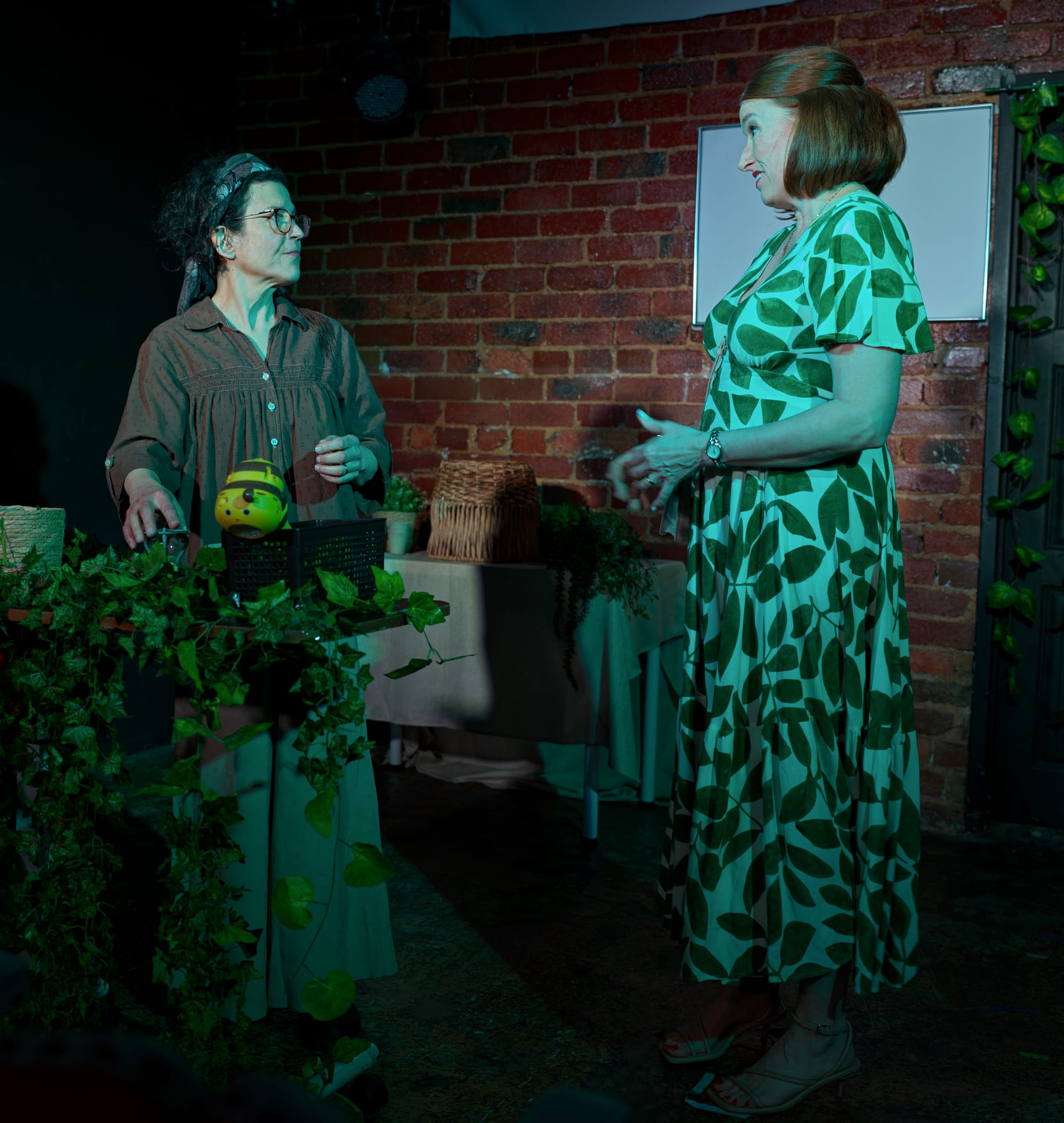
Eventually, The Trading Place moves towards a gentler revelation: perhaps another life is not required so much as a different relationship with this one. It is a neat resolution for a premise that briefly opens onto something stranger, but I enjoyed the playfulness with which the work gets us there, and the space its improbable bargain creates for competing truths.
Across the four plays, Beneath the Surface moves warmly between comedy and drama, with several particularly assured performances within its ensemble. Nadia Andary and Paul Canlan were especially compelling, with strong work also from Ian Rooney, Carissa McPherson and Fi Scarlett. The production's humour found many receptive listeners in the room, even where it did not always find me.
I was most engaged in those moments when the plays trusted their conflicts enough not to resolve their meanings for us — when what lay beneath the surface was allowed to remain there long enough for us to discover and make sense of it ourselves.
Beneath the Surface plays at The Motley Bauhaus, 118 Elgin Street, Carlton, until 12 September 2026. Full production credits are available in the digital program.
Disclosure: A complimentary ticket to Beneath the Surface was provided to Melbourne Stage Review for the purpose of review. Melbourne Stage Review retains full editorial independence.