A tender ecology: 7 Dances for 7 People
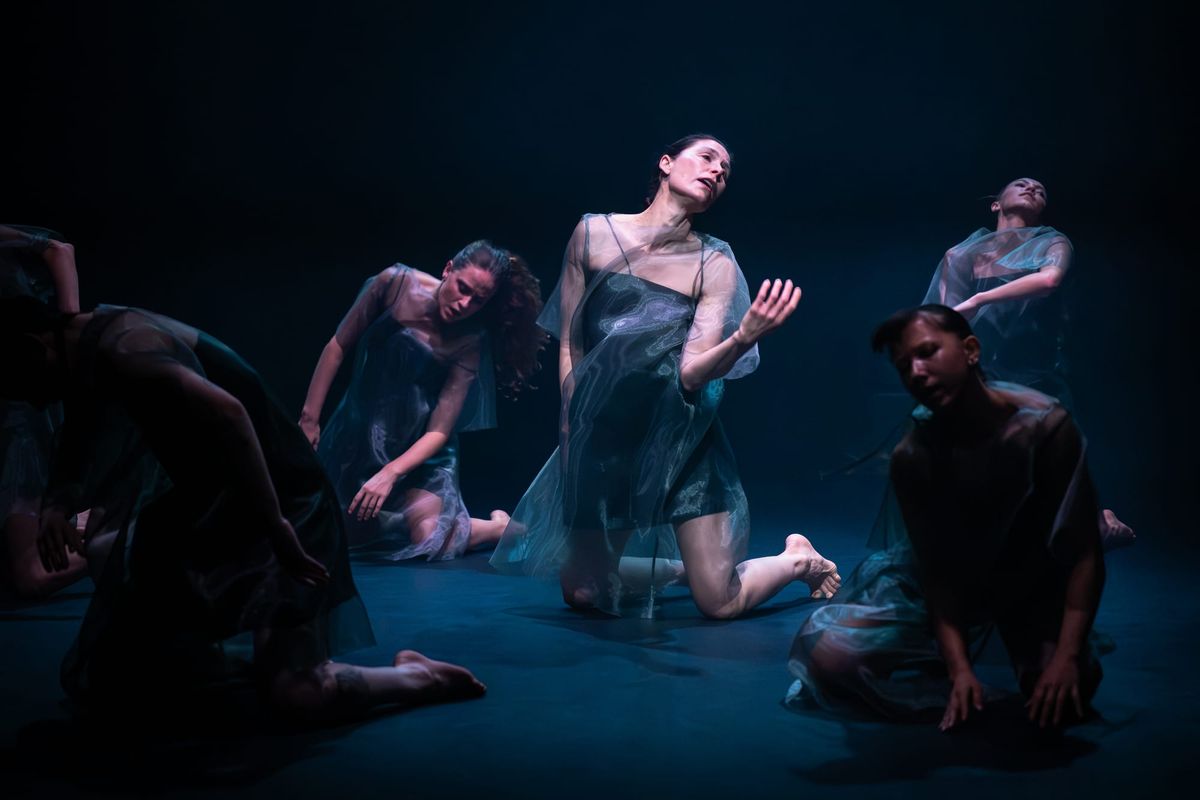
Tender, sensuous, and exquisitely attuned to the elemental, 7 Dances for 7 People dissolves the boundary between bodies and their environment. Seven dancers gather and disperse through haze, sound and light, loosening something in my own body as they go.
I usually arrive at a performance ready to meet it. On Wednesday night, I arrived at 7 Dances for 7 People tired and a little bound up in the world. It had been a long day; a long week. My shoulders carried its small stresses — some part of me might have happily stayed home and climbed into bed.
Fifty-five minutes later, I felt myself floating out of Northcote Town Hall.
Trà Mi Dinh's 7 Dances for 7 People had worked on me almost imperceptibly. Seven bodies emerging from haze; light gathering and receding; the knock of timber, birdsong, water, voice; movement finding unison and then gently abandoning it. Somewhere along the way, the day's little knots had loosened.
The performance space is already thick with haze when we enter. Against the black, two figures emerge from somewhere at the rear, hand in hand. Their first movements are recognisably balletic: pointed feet, turned-out legs, mirrored bends. Another pair appears. Bodies accumulate. Tilman Robinson's sound shifts beneath them, from something atmospheric into a mechanical pulse, then firmer beats that might have been made by pieces of timber struck together.
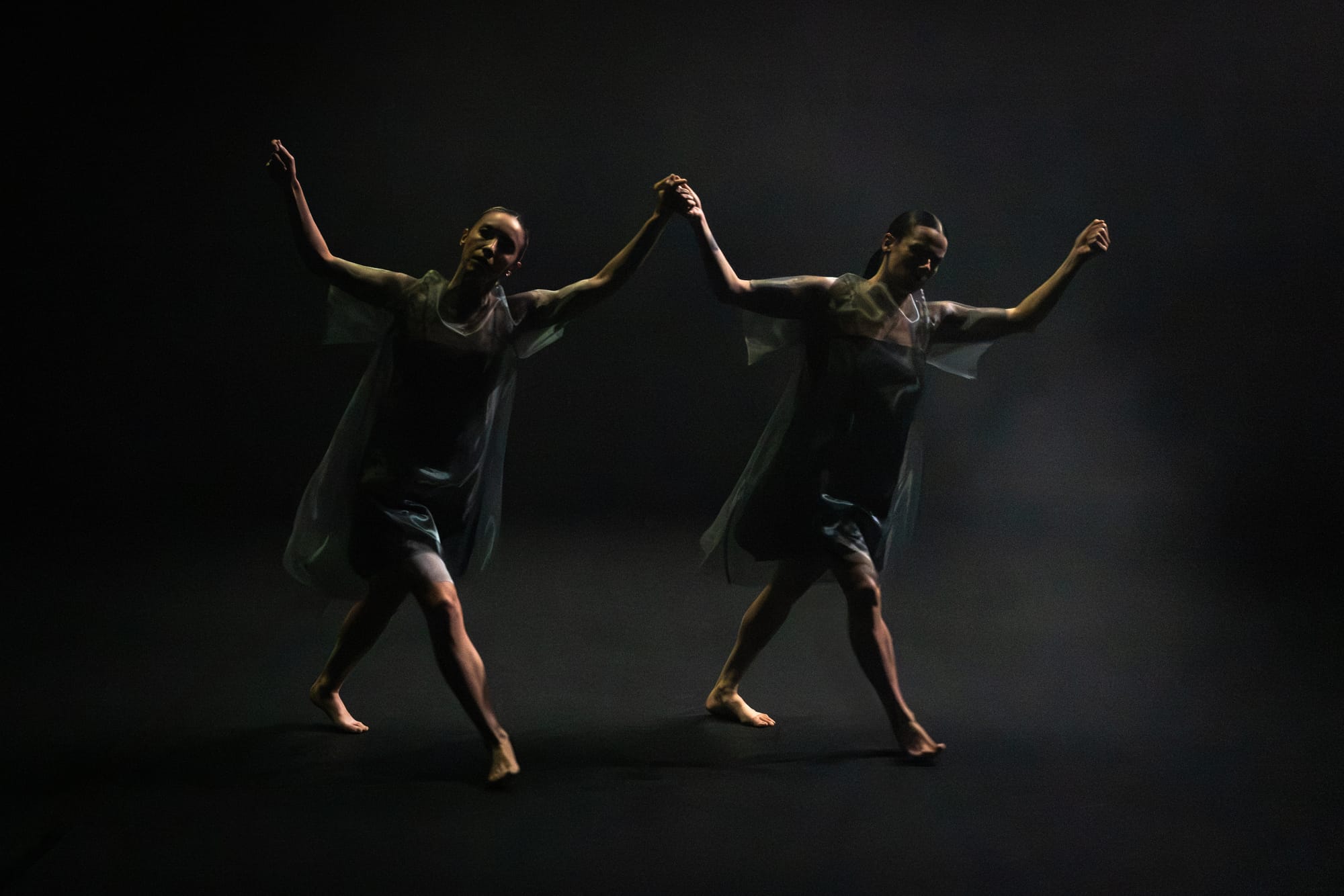
Gradually, the formal symmetry loosens. The seven dancers find one another and drift apart. Sometimes all move in unison, but only briefly, before the pattern dissolves again. At other times three share one phrase and four another, interspersed across the space rather than separated into groups. Or all seven inhabit the same movement sequence at different points within it, one body moving ahead while another lingers behind.
Dinh's seven bodies begin to feel less like a unit than an ecosystem. Difference does not disturb their coherence. Even when their movements diverge, they seem to belong to the same grammar.
There is something environmental, too, in the movement itself. Much of it is graceful, rounded and extraordinarily fluid, but sudden angular gestures punctuate the flow: a wrist flicks, an arm changes direction, something fast and birdlike darts through an otherwise expansive phrase. The distinction between angular and organic begins to seem false. Trees turn corners. Branches grow around obstacles. Birds make abrupt adjustments in flight. A tiny motif flickers through the movement: wrists meet and hands open like little seed pods after fire.
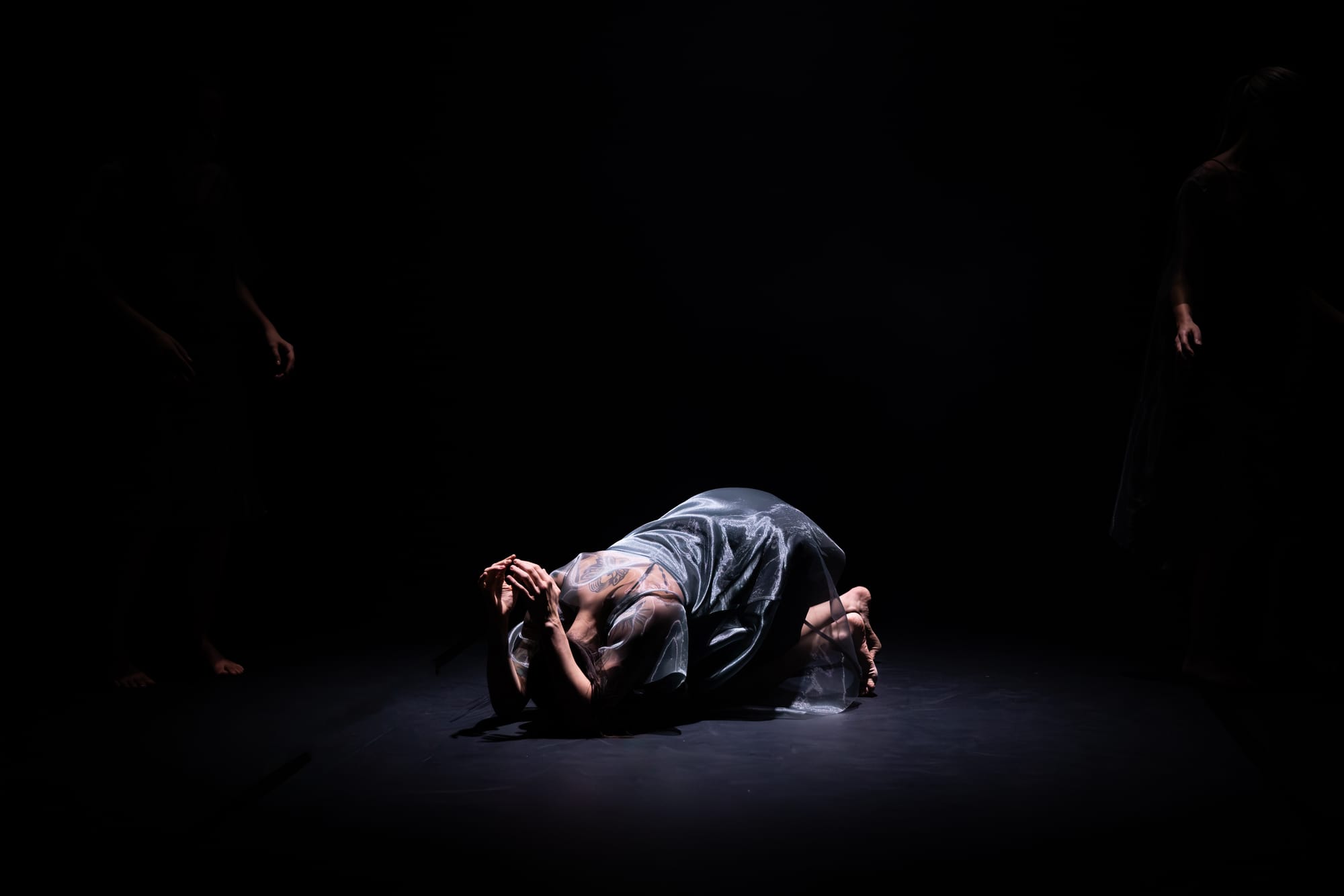
Light belongs to this tender ecology too. Rachel Lee's finely controlled palette rarely strays far from warm tungsten, daylight and occasional blue. A dancer can be isolated under a delicate downlight while the remaining world disappears gently into blackness. One stays close to the floor, moving as though emerging from some dark swamp, slowly rising until she looks towards the light.
Robinson, meanwhile, gives us sounds that seem elemental without remaining pristinely so. Birds enter the soundscape and warp into more electronic textures. There are allusions to wind, water, the knocking together of small wooden things; later, something like water dripping onto wet fabric. Natural and manufactured sounds bleed together.
In one sequence the dancers begin to move faster and more forcefully, running and dancing through the space with a muscularity that carries flashes of anger. Maybe need. Perhaps desire. A female voice enters the soundscape. For the first time in some while, I become acutely aware of their humanity: these are human bodies again — fallible, wanting, seeking power, comfort, safety. The recognition is brief. Soon they recede again into something harder to name.
Seven itself becomes a pulse running through the work. The performers count, their voices layered and slightly out of sequence, turning enumeration into something closer to the repetitions of ritual. Later the counting returns through the soundscape, increasingly distorted until numbers become fragments, like the remnants of a transmission.
Among this exceptional ensemble, my eye keeps finding Marni Green. I had the same experience watching Green in Stephanie Lake's VISTA earlier this year: wherever she appears, there is a potency to her presence that pulls my attention, as if we are joined by a long piece of string. Her movement lacks economy in the most beautiful way. Nothing seems abbreviated. A gesture travels fully through her, its emotional register so completely embodied that it seems to travel down that imaginary string and land cleanly in my own body: nameless, but somehow understood.
Eventually, incense appears. Dancers enter incrementally carrying smoking sticks, each finding an idiosyncratic relationship with them. Movement travels more expansively across the stage now, seven bodies traversing the space before each leaves their incense burning in the large rock at the stage's edge.
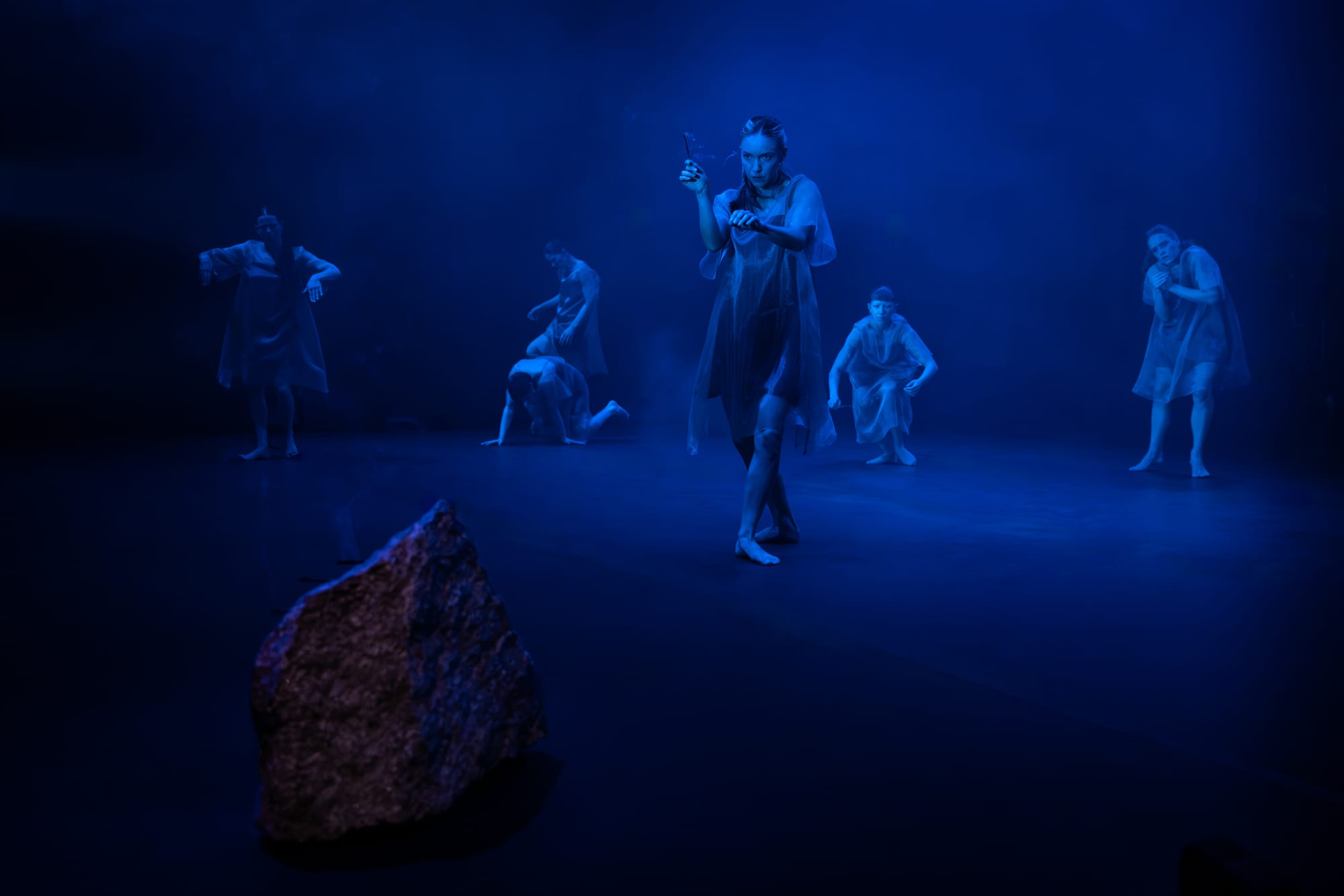
Near the end, the seven gather tightly at centre stage. Again, they share a grammar without becoming identical: different phrases echo through bodies interspersed within the cluster. Robinson's sound opens into a great atmospheric swell, rising through the register like the curve of a mountain. Together, the dancers sync.
Then they begin to leave.
With their backs towards us, the seven slowly recede again into the blackness. They don't so much exit as disappear into the haze from which they first emerged, becoming less distinct until the space fully engulfs them. It feels less like an ending than a continuation, as though the dance has simply moved elsewhere. I think of wallabies gathering in a paddock, staying for a while, then disappearing back into the bush.
What remains is the rock, holding seven sticks of burning incense. A warm light settles upon it. The music continues. Dinh lets the image remain, giving it — and us — time to breathe.
I arrived bound up in a world of “to dos” and small urgencies. I leave seduced by a more elemental world: breath, scent, water, smoke and light.
7 Dances for 7 People is performed at Northcote Town Hall Arts Centre until 19 September 2026, presented by Darebin Arts Speakeasy.
Disclosure: A complimentary ticket to 7 Dances for 7 People was provided to Melbourne Stage Review for the purpose of review. Melbourne Stage Review retains full editorial independence.