The limits of tenderness: Never Closer
Wickedly witty and superbly acted, Grace Chapple's Never Closer is directed by Marni Mount with unnerving sensitivity. Old friendships have rarely looked so treacherous, or their smallest gestures of tenderness so consequential. Exquisite theatre, with a potent understanding of human frailty.


A man is sobbing so hard he can hardly breathe. His whole body heaves with the effort. Three people stand around him, watching. They have known him since childhood, loved him, quarrelled with him, endured him. One friend has already tried to comfort him. She has stepped away in the interests of loyalty, and nobody takes her place.
It is a peculiar thing to watch someone suffer while waiting for somebody else to do something about it. In Marni Mount's superb production of Grace Chapple's Never Closer, the waiting becomes almost unbearable. Conor (Damon Baudin) has been drunk, aggressive and thoroughly unpleasant. His oldest friends have had enough. Now he's on the floor, struggling for air, and they remain where they are. Before the evening is over, he will commit a catastrophic act of violence. For now, he is crying. What would it take to reach towards him again?
* * *
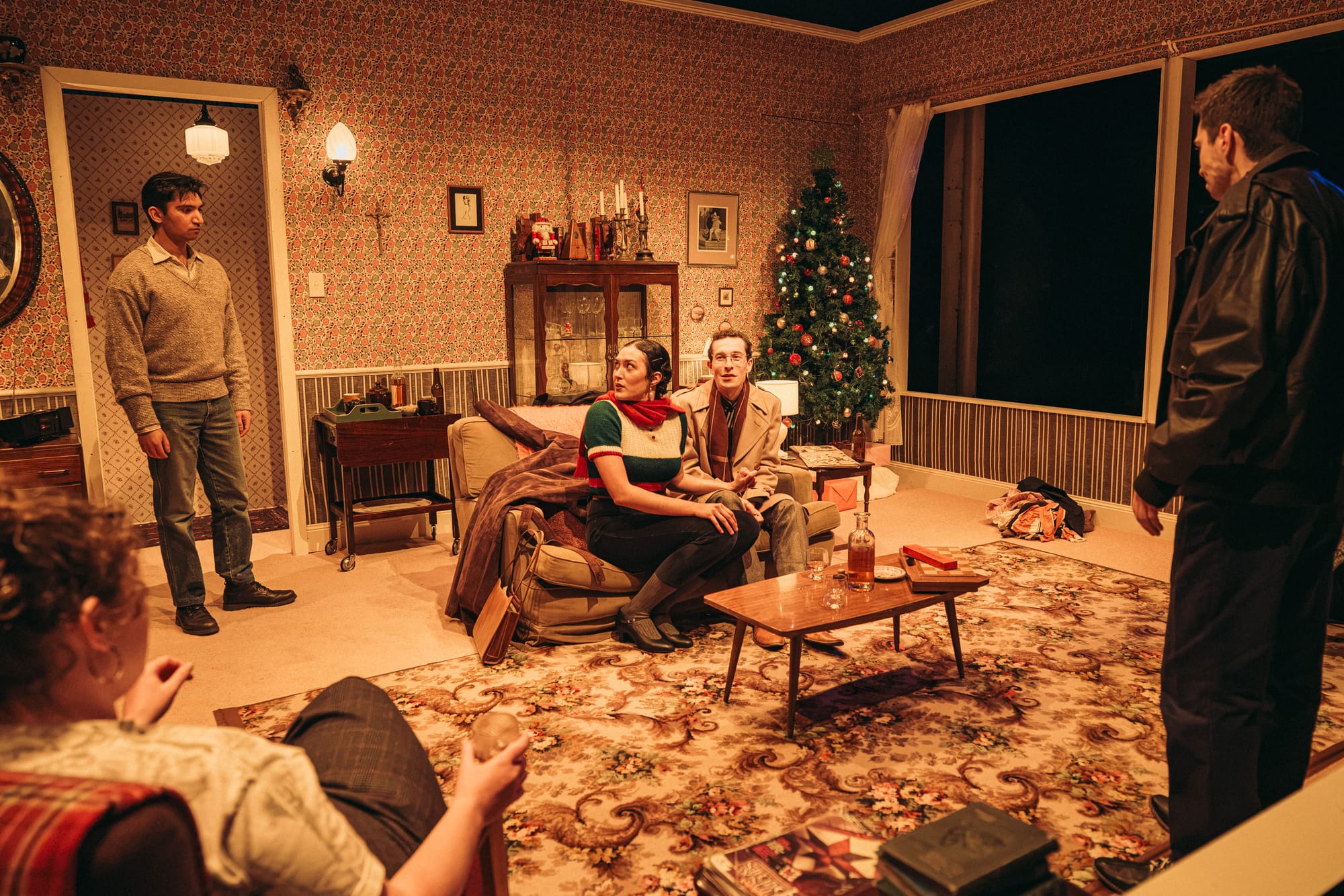
Ten years earlier, in 1977, five Northern Irish school friends are drinking, flirting and telling ghost stories. Conor is a cheerful young man, apparently taking his girlfriend Niamh's impending departure for London in his stride. When we meet him again, at Christmas in 1987, he is almost unrecognisable. His father has been killed in the Troubles. Niamh (Ella Ferris) has returned with an English fiancé. Deirdre (Enya Daly) still lives in the house where they gathered as teenagers, attached to its memories and griefs in ways her friends seem to regard as a failure of ambition. Jimmy (Kaivu Suvarna) is still in love with her. Mary (Molly Holahan) has made a fine art of speaking her mind, though Holahan lets us see some of the feelings she would rather her friends didn't get their hands on.
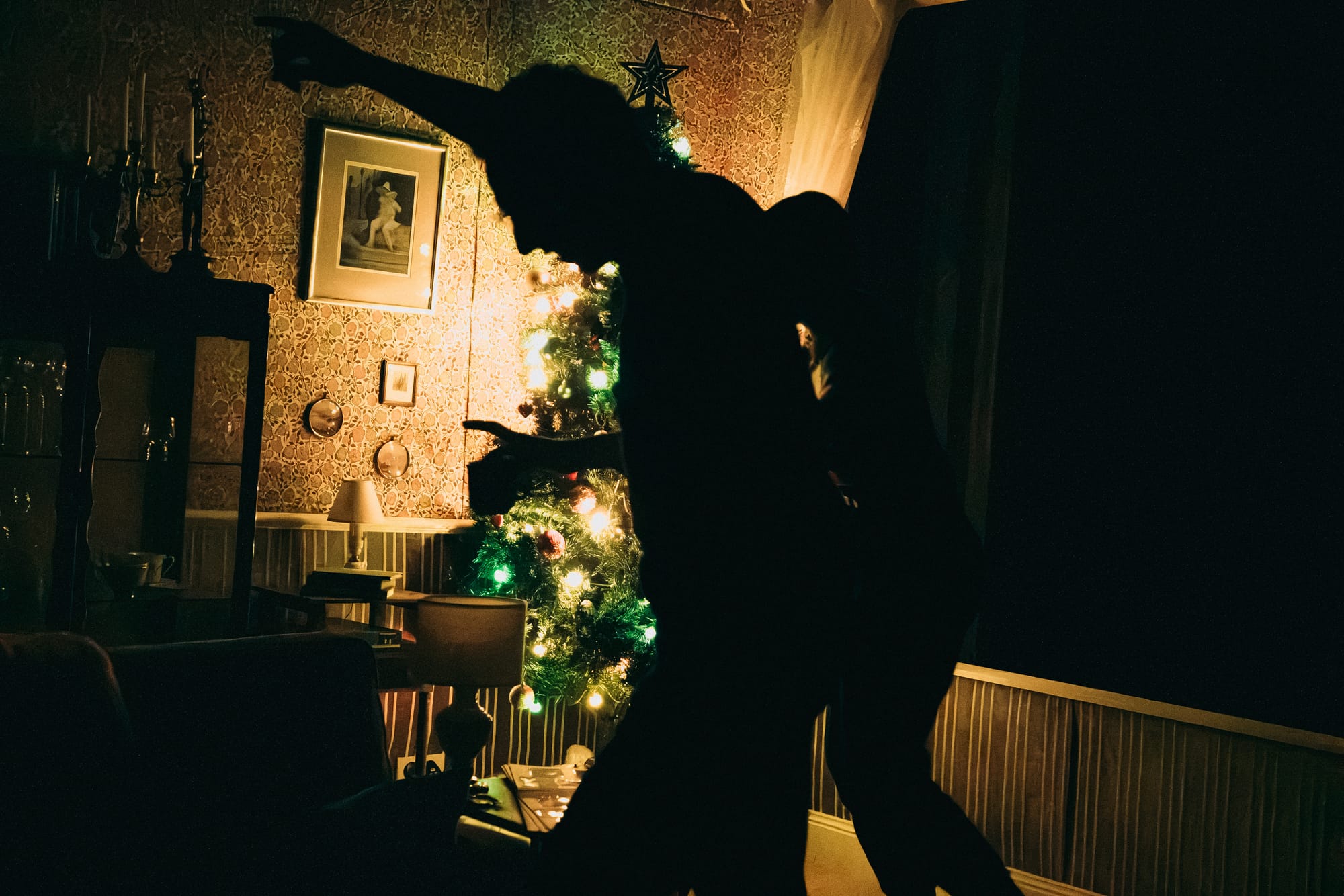
Old friends can be dangerous company. They remember what you were like at seventeen and know precisely where to prod. Chapple makes excellent use of this peculiar intimacy. Her dialogue is quick, funny, and rolls with frequent interruptions; Mount's actors have the timing of people who can anticipate an insult before it arrives. Harry (Rupert Bevan), meanwhile, has no such advantage. An English barrister of considerable politeness and rather less self-knowledge, he keeps discovering that his perfectly reasonable remarks are anything but. Bevan makes his bewilderment very funny, and his complacency just uncomfortable enough. Niamh's years in London have left their mark too. Ferris gives her acquired London accent the faintest Northern Irish undertow, an exceptionally fine piece of vocal work under dialect coach Anna McCrossin-Owen.
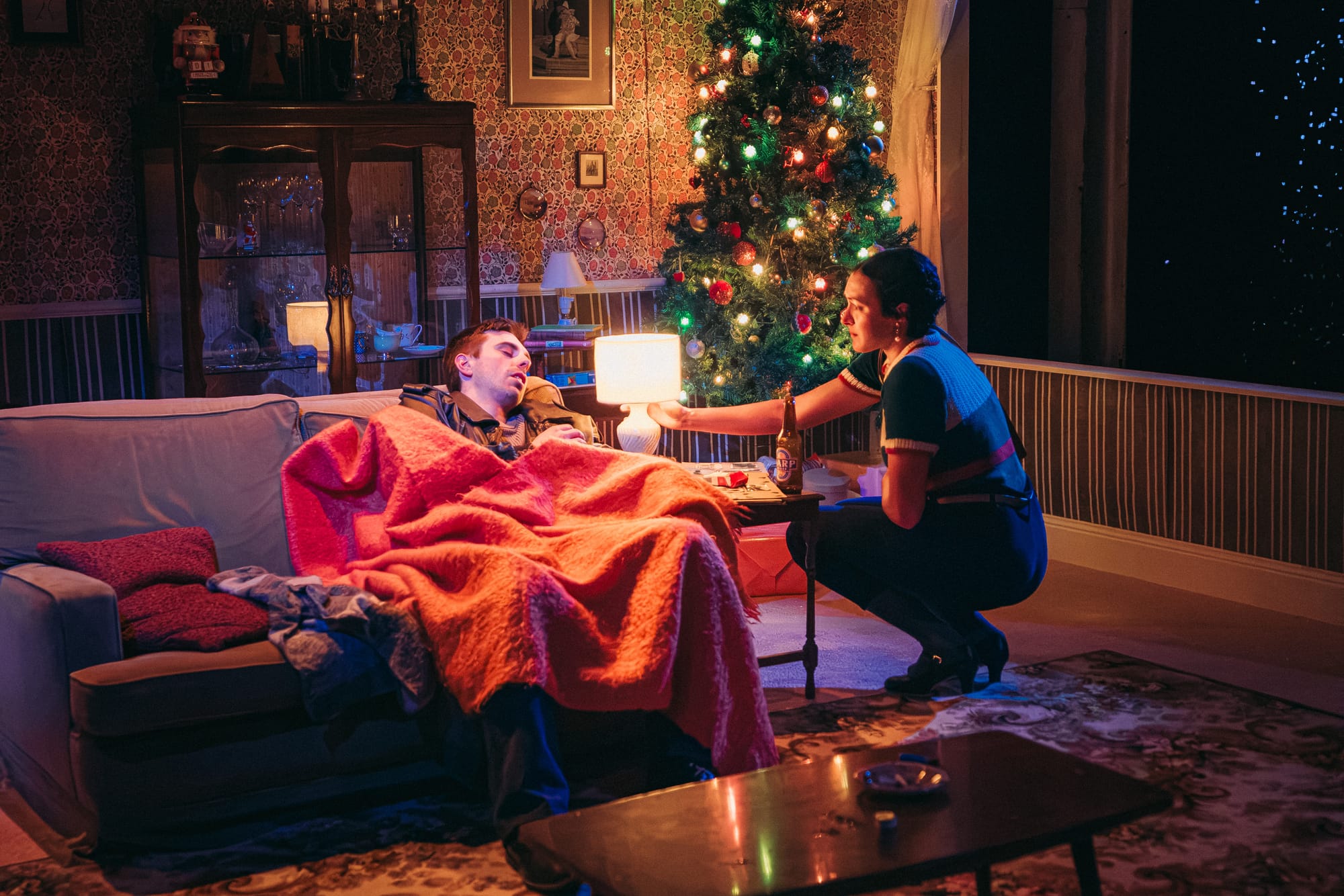
Dann Barber and Ella Butler have built an entire room for the stage, four walls and a ceiling, its large windows facing an audience seated on three sides. We peer in like neighbours who know they ought to look away. Patterned lace curtains lend the opening scene the flattering haze of nostalgia. By 1987, they're drawn, exposing the messier realities of adulthood and faded dreams. Our vantage points differ; a glance visible to one spectator may escape another.
There is much to admire in this production: the precision of its ensemble, the wit of Chapple's dialogue, Mount's command of the room and its shifting allegiances. But I keep returning to those few moments when Conor is cracked open on the floor and nobody takes Niamh's place beside him. Chapple gives each of them good reason to hesitate. Mount makes us watch the hesitation. And Damon Baudin is extraordinary. His Conor is by turns charming, vicious and almost frighteningly vulnerable, and Baudin makes the distance between these states feel terribly small. When he breaks down, the sobs seem to seize his entire body. There is nothing decorous about his suffering.
There is a ready explanation for Conor's transformation during the friends' decade apart. Political violence has made a bitter man of a cheerful boy. His father is dead; his anger has something to hold. But an explanation can become a way of ceasing to look. What happened in the intervening decade, in the thousand ordinary encounters that make or unmake a friendship? How many times has Conor been forgiven? How often has he made forgiveness impossible? We know the rupture. We don't know the attrition.
When his sobbing finally subsides, Jimmy sings for him. Quietly, with the sincerity of accumulated sorrow. Conor settles on the couch and falls asleep; the women cover him with a blanket. Care remains, though it seems safer to extend it to the sleeping body than to the anguished man. The song, the blanket: small acts of tenderness whose poignancy becomes almost unbearable in retrospect.
And what becomes of a person whom everyone has had enough of? The question reaches well beyond Northern Ireland in 1987. Consider how memories of the Holocaust, generations of persecution and fears of annihilation have been invoked in defence of Israel's military campaign in Gaza. Historical suffering can help us understand the fears through which violence is justified; it cannot make that violence innocent. Conor, too, has suffered. He really is intolerable at times. His friends have their own lives to protect, and their exhaustion deserves as much consideration as his grief. Compassion cannot require them to endure his aggression indefinitely. Yet if condemnation leaves no room for understanding, how does anyone find a way out of the violence they have inherited?
* * *
By the final scene, the house has passed into another generation's keeping. Its history is now another ghost story told over drinks, received with curiosity rather than reverence. There is something almost indecent in the ease with which one generation's suffering becomes another's anecdote. Yet Chapple and Mount seem to find a peculiar mercy in that ease. The dead deserve remembrance, but must their grievances be inherited too? Perhaps there is something to learn from the children's carelessness.
Never Closer plays at fortyfivedownstairs, Melbourne, 15 October – 1 November 2026, presented by Patalog Theatre in association with fortyfivedownstairs.
Disclosure: A complimentary ticket to Never Closer was provided to Melbourne Stage Review for the purpose of review. We retain full editorial independence.