Small wonders: The Village Square
I found something deeply replenishing in The Village Square: the warmth of its storytelling, the musicians’ sensitivity, and the delight taken in small things. Amid Melbourne Fringe’s many competing energies, its unhurried rhythm held me happily in its care.
When I stayed at my grandparents’ house as a child, my grandfather would conjure stories before bedtime. Dogs found children lost in the bush; native animals helped one another escape a bushfire. In one story, first told to my mother when she was a child, a kitten fell asleep beneath a seat at a football ground. After the game was over and the gates closed, a bird rescued her, carrying her out on its back as onlookers gazed up in astonishment. There was trouble, certainly, but also an abundance of creatures prepared to help. I relish those stories.
The Village Square brought that pleasure back, touching a gentle ache in my chest. Down in the Cavern at the Motley WhereHaus, the masterful Richard Piper opens a small woodgrain suitcase with metal clasps and a leather handle, and introduces us to a community with some unusual problems. Nobody here is having an entirely ordinary day.
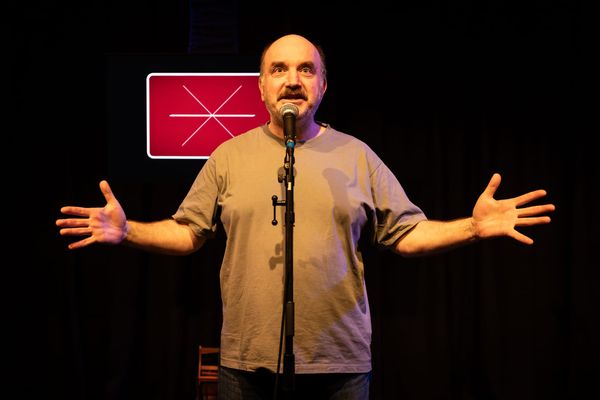
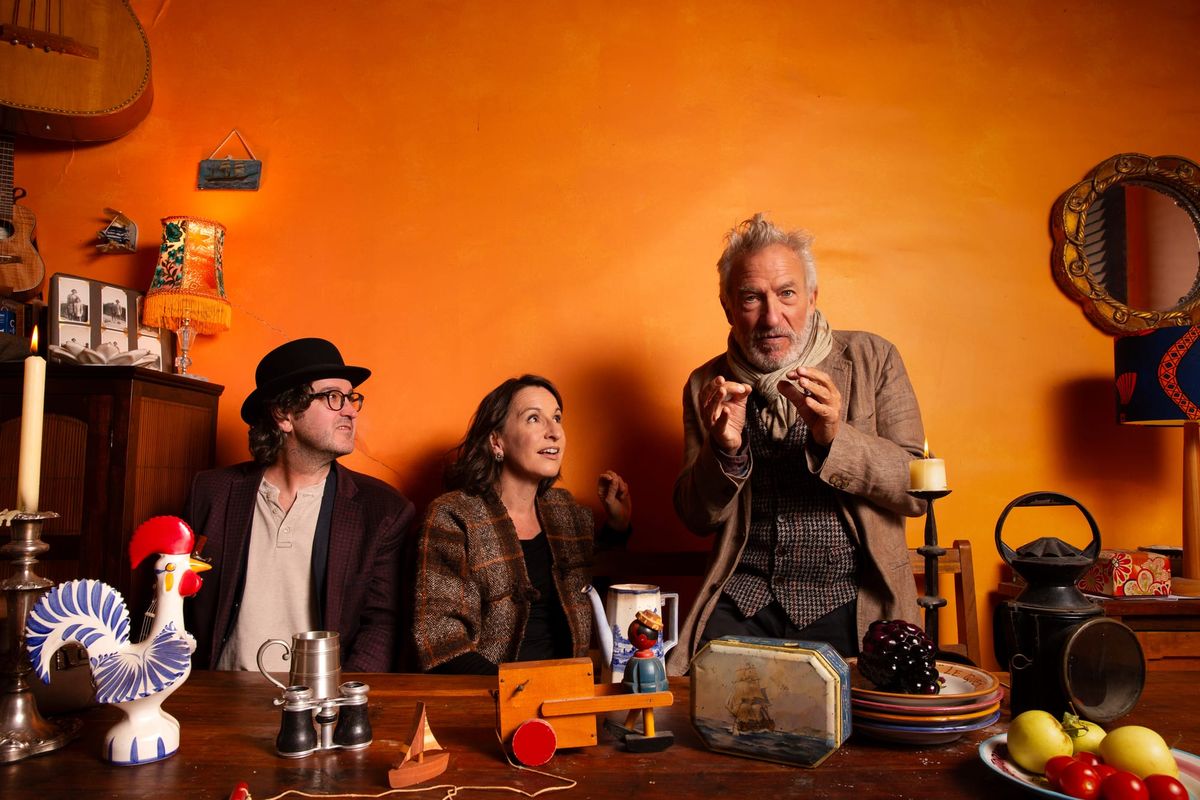
Created by guitarist and composer Robbie Melville, and performed with cellist Zoe Knighton and Piper as narrator, this beguiling evening alternates storytelling with music. There is time to listen, and time for the imagination to wander.
Piper’s suitcase has a whimsical boat painted on the front and a small population inside. Out come timber figures, a boat and a whale, each furnished with sound effects and a little theatrical spark. Corky the dog is made from cork. Of course he is. Piper’s pleasure in these tiny arrivals is catching: he makes the presentation of a small object an event in itself.
Melville’s village has its share of inconvenience. An unwelcome visitor’s motorcycle is making a dreadful racket, so the villagers keep him distracted while the “Fruit Mechanic” replaces its parts with vegetables. When a fog puts the townsfolk to sleep, the dogs discover that chasing their tails will disperse it. Soon the whole pack is at it. There is considerable satisfaction in watching a community put its peculiar resources to use, especially when an outbreak of inspired foolishness succeeds where a meeting has failed.
The stories accommodate sorrow as readily as mischief. A river spirit saves a drowning man in return for his company one night each year. He forgets their agreement, but she does not. When she finds him with his wife and baby daughter, her longing turns to murderous jealousy. Elsewhere, a man and the finches living in his beard dream of an ocean voyage on the back of a whale. The fantastic is treated with an appealing matter-of-factness. Naturally the birds share his dream. They share his beard.
Piper presides over these curious lives with a twinkle and a relish for their absurdities. He gives each inhabitant the pleased attention of someone introducing a favourite acquaintance, and soon we are happy to make room for another. After each story, Melville’s guitar and Knighton’s cello allow its feelings to find another shape. Mischief dances; longing stretches; sorrow accumulates. These passages are pleasures in themselves, carrying us further into a tale after its telling is done.
Occasionally, sounds from other performances reach our small room. Fringe is carrying on around us, pursuing its many noisy and necessary experiments. Here, three performers hold to a quieter rhythm. Their confidence in a voice, two instruments and a suitcase is well placed.
I thought again of my grandfather, and the modest means by which he could summon a whole world. The Village Square understands that pleasure, including the pleasure of sharing it. We sit together, listen, and trust the dogs to do their work.
The Village Square plays at The Motley WhereHaus – The Cavern, as part of Melbourne Fringe Festival until 18 October.
Disclosure: A complimentary ticket to The Village Square was provided to Melbourne Stage Review for the purpose of review. Melbourne Stage Review retains full editorial independence.