Funeral Flowers: Still growing
Emotionally devastating, psychologically astute and quietly transformative, Funeral Flowers is a remarkable Australian premiere. Lucy Ansell's extraordinary solo performance brings Emma Dennis-Edwards' compassionate meditation on care, resilience and hope vividly to life.


Some plays leave you thinking about the characters. Others leave you thinking differently about the world. Funeral Flowers (Red Stitch, 25 July-23 August 2026) somehow does both.
Inspired by the life of London florist Gina Moffatt, the play follows seventeen-year-old Angelique through foster care, first love, sexual violence and an unwavering dream of becoming a florist. Directed by the deft hand of Candy Bowers and anchored by an extraordinary solo performance from Lucy Ansell, this Australian premiere is a work of uncommon compassion, refusing sentimentality without ever surrendering hope.
Ansell's achievement is immense. Playing seventeen-year-old old Angelique and the constellation of people who shape her life — her foster carer Sam, controlling boyfriend Mickey, floristry teacher Carol, her imprisoned mother and many others — Ansell transforms with such complete physical, vocal and emotional conviction that it becomes easy to forget only one performer stands before us. Voice shifts, certainly, but so too do posture, rhythm, breath, gaze and emotional temperature. Each character seems to arrive with an interior life already unfolding, as though we have stepped briefly into lives that existed long before the lights came up. It is a performance of extraordinary precision and astonishing emotional generosity.
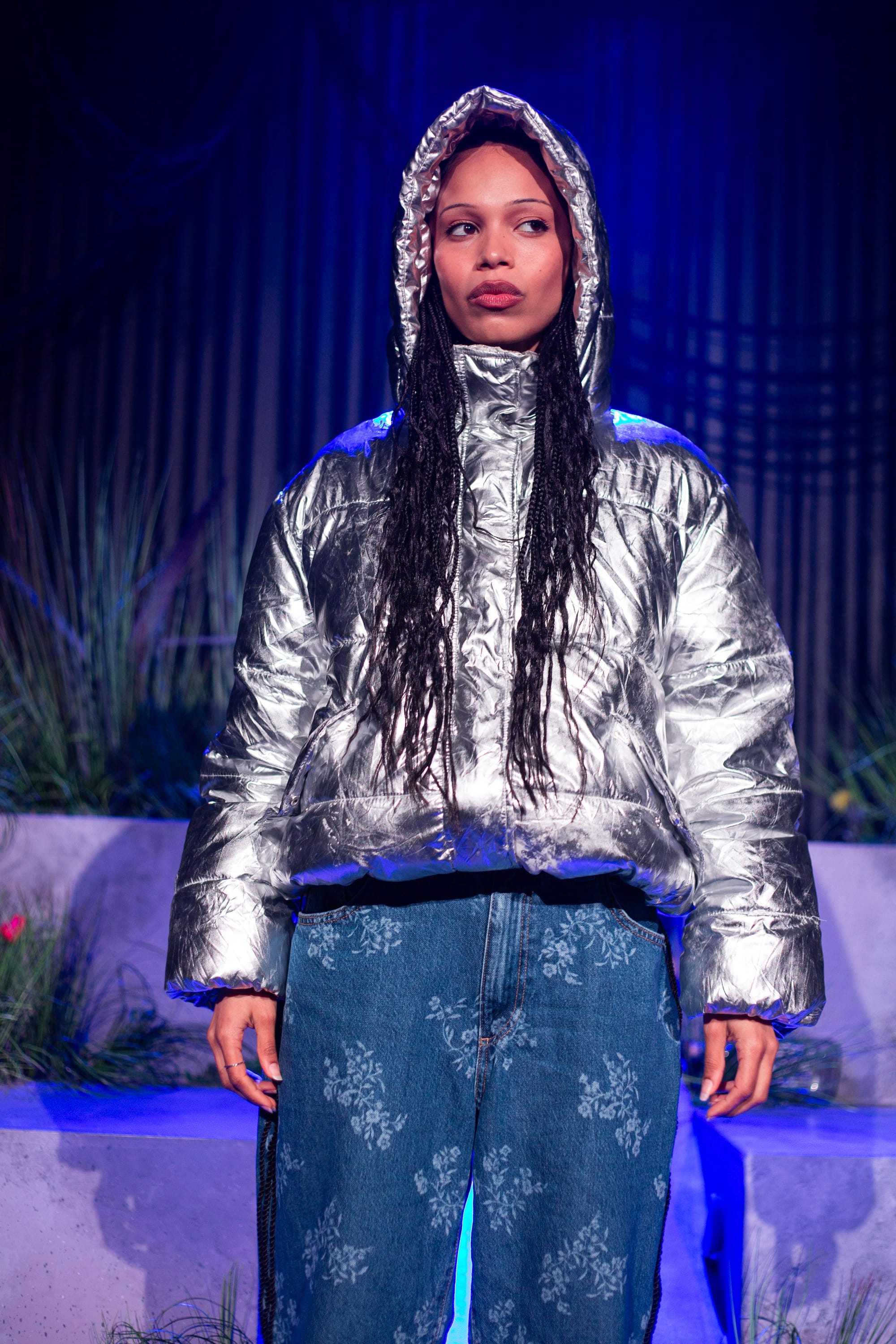
Dennis-Edwards' writing is every bit as accomplished. Flowers are not merely recurring symbols but an evolving poetic vocabulary through which Angelique understands herself and the world around her. Early in the play she gently dismantles the common association between lilies and death, describing them instead as symbols of innocence:
"...the soul departing the body and giving new innocence to the person who has died."
Later, after one of the play's most harrowing scenes, Angelique imagines lilies pushing through the soil on her skin before they disappear with the devastating realisation:
"...but I'm not innocent again."
The image is unforgettable because the play refuses the comfort it seems momentarily to promise. Trauma cannot simply be washed away. Innocence cannot be restored through metaphor. Rather than reaching for redemption, Funeral Flowers searches, stubbornly and beautifully, for something more difficult: dignity.
That same raw honesty extends to every relationship in the play. Dennis-Edwards pushes us to go beyond the reassuring simplicity of heroes and villains. Mickey's coercive control unfolds with painful accuracy, revealing how intimate partner violence can disguise itself as devotion. Yet even after his betrayal, Angelique comes to see the frightened child beneath the violent young man.
This is not forgiveness, nor does the play ask us to redeem him. It is the moment she finally sees him in his entirety—and herself separately from him. In a lesser play, such recognition might become absolution. Here, it becomes liberation. Funeral Flowers asks what becomes possible when people are finally seen as they are, rather than as fear, shame or longing has taught us to imagine them.
Yet the production's most profound insight lies elsewhere.
Following an assault, Angelique returns home consumed by shame. Convinced she is "dirty and soiled inside", she cannot imagine anyone meeting her with anything but disgust. Her foster carer, Sam, has spent the night desperately trying to contact her. When Angelique finally walks through the door, Sam's fear emerges first as anger. Neither is wrong, yet they miss one another entirely. Sam cannot yet see the shame consuming Angelique; Angelique cannot recognise the love beneath Sam's frustration.
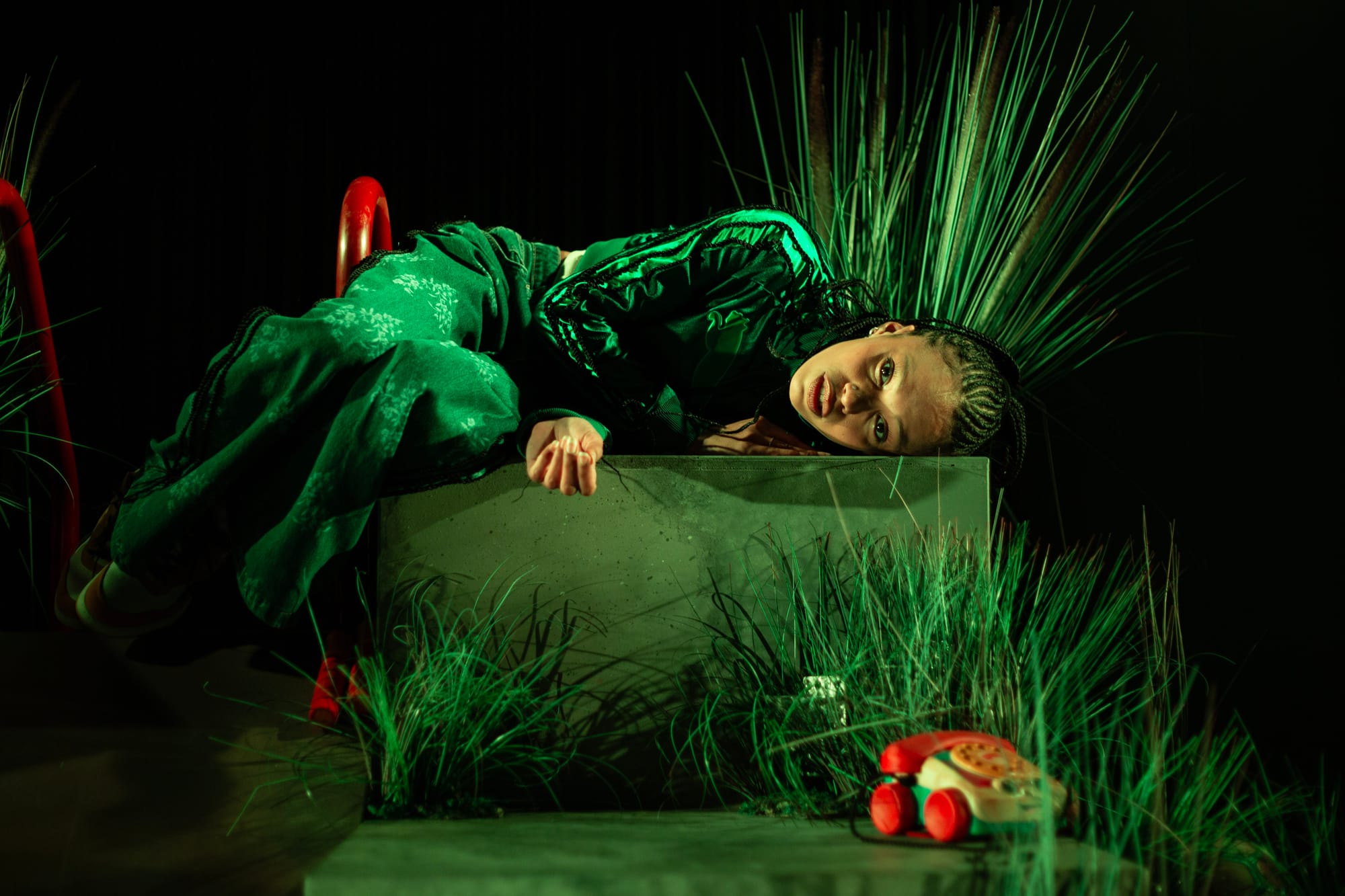
It is an exquisitely observed moment because of its psychological truth. Dennis-Edwards understands that profound shame can render care almost impossible to receive. At precisely the moment Angelique most needs comfort, she is least able to recognise it.
Bowers' production meets that emotional complexity with remarkable theatrical confidence. Bianca Pardo's vibrant, multi-level design, Christian Biko's richly textured soundscape and Kyra Ryan's expressive lighting embrace theatricality without ever overwhelming it. Just as importantly, Bowers knows exactly when to let those elements fall away. The production repeatedly trusts silence, stillness and human presence to carry the emotional weight, giving moments of genuine connection the space they need to unfold.
The production’s confidence in restraint finds its fullest expression, as Angelique apologises before leaving Sam’s care. She reaches across and tenderly wipes the tears from Sam's face. Bowers allows the gesture to linger without embellishment, trusting its simplicity. Nothing more needs to be said. It is one of the most affecting moments I have witnessed on stage this year.
And it was also the moment that stayed with me after I left. Not because it resolved the relationship, but because it gently expanded it. Watching Sam and Angelique finally find one another, I found myself thinking about the conversations we have around children in care—and the ones we don't.
I have read a great deal about resilience over the last few years, particularly in relation to children in out-of-home care. Over the past four decades, research has evolved from viewing resilience as an individual capacity to "bounce back" from adversity, towards a far richer understanding of resilience as something socially enabled through relationships, belonging, recognition, opportunity and the meanings young people make of their own lives.
Yet watching Funeral Flowers, I found myself wondering whether our broader public conversations about resilience—particularly once translated into policy, funding priorities and service design—sometimes stop too soon. We speak confidently about "protective factors": stable placements, supportive relationships, educational engagement, independent living skills. These are essential conversations. They shape where resources flow, how services are designed, and what practitioners are asked to prioritise.
But they are not the whole conversation. Or they shouldn’t be.
More than twenty years ago, Anne Deveson described resilience as "the life force that flows and connects every living thing, continually prompting regeneration and renewal."
Although contemporary resilience research has likewise moved well beyond notions of resilience as an individual trait, Funeral Flowers reminds me that the things which make a life worth living are often the hardest things to measure or develop policy ‘interventions’ for.
Survival is not the same thing as having something to live towards.
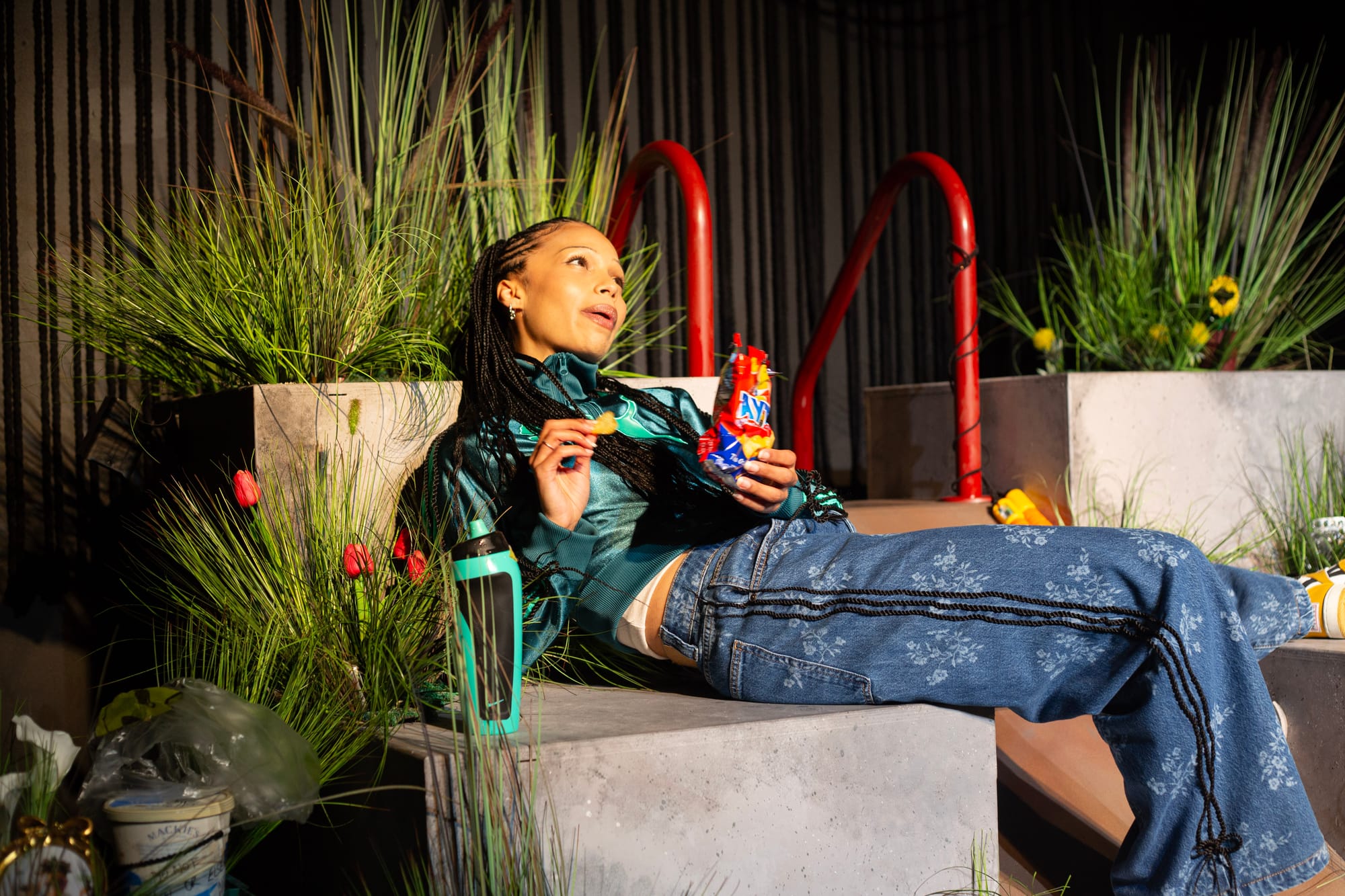
Angelique's flowers matter because they become the place where identity, beauty, vocation and possibility converge. Carol does more than teach floristry; she recognises Angelique's gift before Angelique fully trusts it herself. The flower shop Angelique dreams of owning is more than employment. It is a future she authors for herself.
That distinction feels important.
Protective factors create the conditions in which a life can begin to unfold. They are not the life itself.
Watching Funeral Flowers, I found myself thinking about the people who notice what makes kids come alive—and who is there (or not) to nurture those fragile beginnings until they become part of a life.
And I wonder about the more than 34,000 children currently living in out-of-home care across Australia, whose passions may look entirely different. Music. Football. Mechanics. Dance. Caring for animals or Country. The thing itself almost doesn't matter. What matters is that someone notices it. That someone makes room for it to grow. That alongside protecting children from harm, we remain equally committed to nurturing the identities, relationships and vocations that make a life feel worth living.
In keeping with Dennis-Edwards' refusal of easy redemption, the closing scenes offer no false consolation. Angelique does not recover her innocence. She does not receive justice. She remains permanently altered by the brutality of her experience. She wonders whether she is "more a weed than a flower" before answering her own question:
"But I'm still here.
I'll rise through the dirt,
Even when it hurts."
It is a quietly magnificent image.
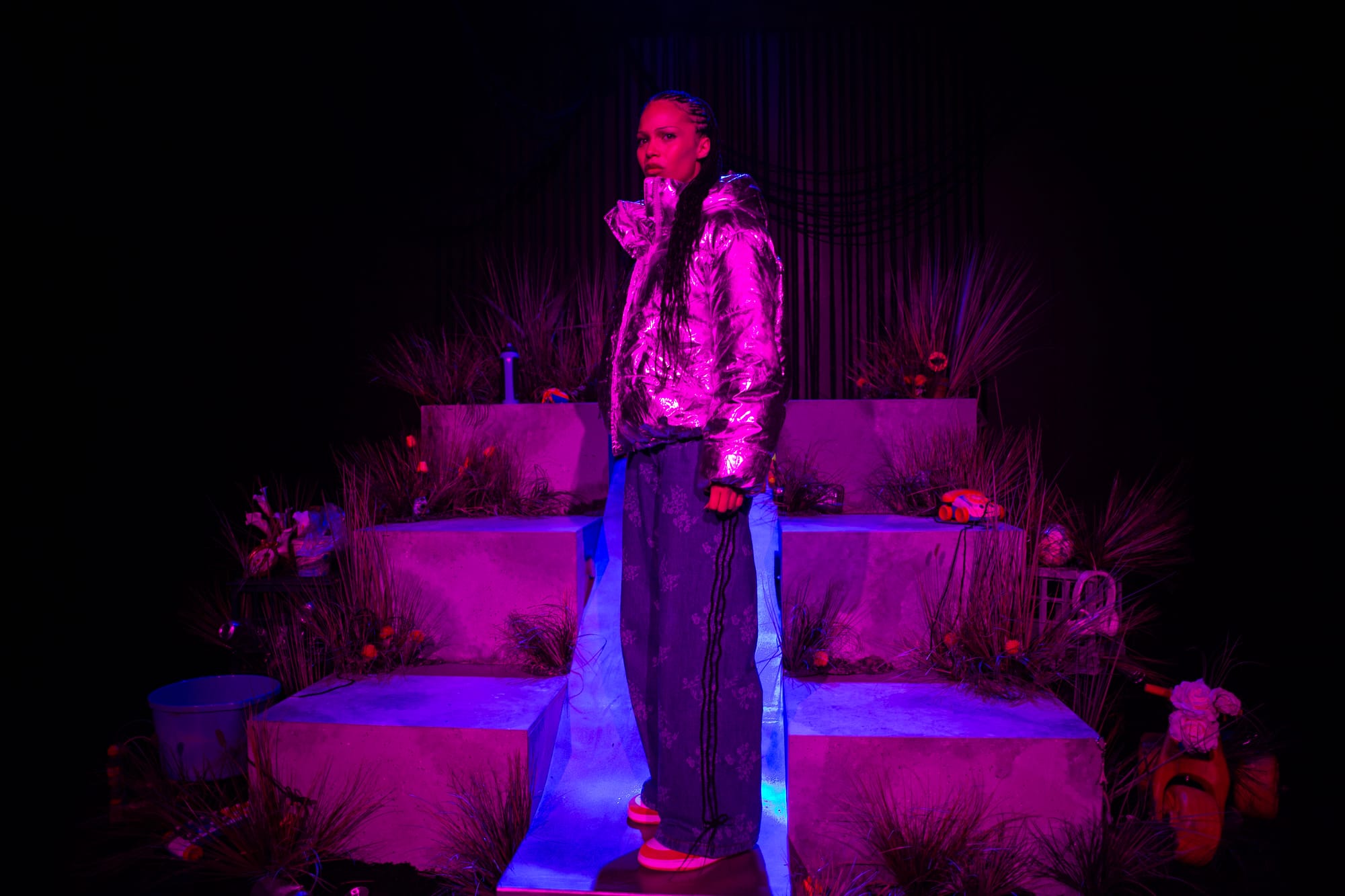
Not because weeds are beautiful, nor because suffering somehow ennobles them. But because they continue reaching towards the light, even after the world has buried them.
So does Angelique.
And perhaps that is the quiet gift Funeral Flowers leaves us with: a reminder that flourishing begins when someone notices what is waiting to bloom.
Funeral Flowers plays at Red Stitch Actor's Theatre, Rear 2 Chapel Street, St Kilda East, until Sunday 23 August 2026.