Circles in the water: A credo for theatre criticism
What do I owe myself when I go to the theatre? An essay about attention, expertise, repetition, astonishment, and the kind of critic I hope to become and to remain.
Water
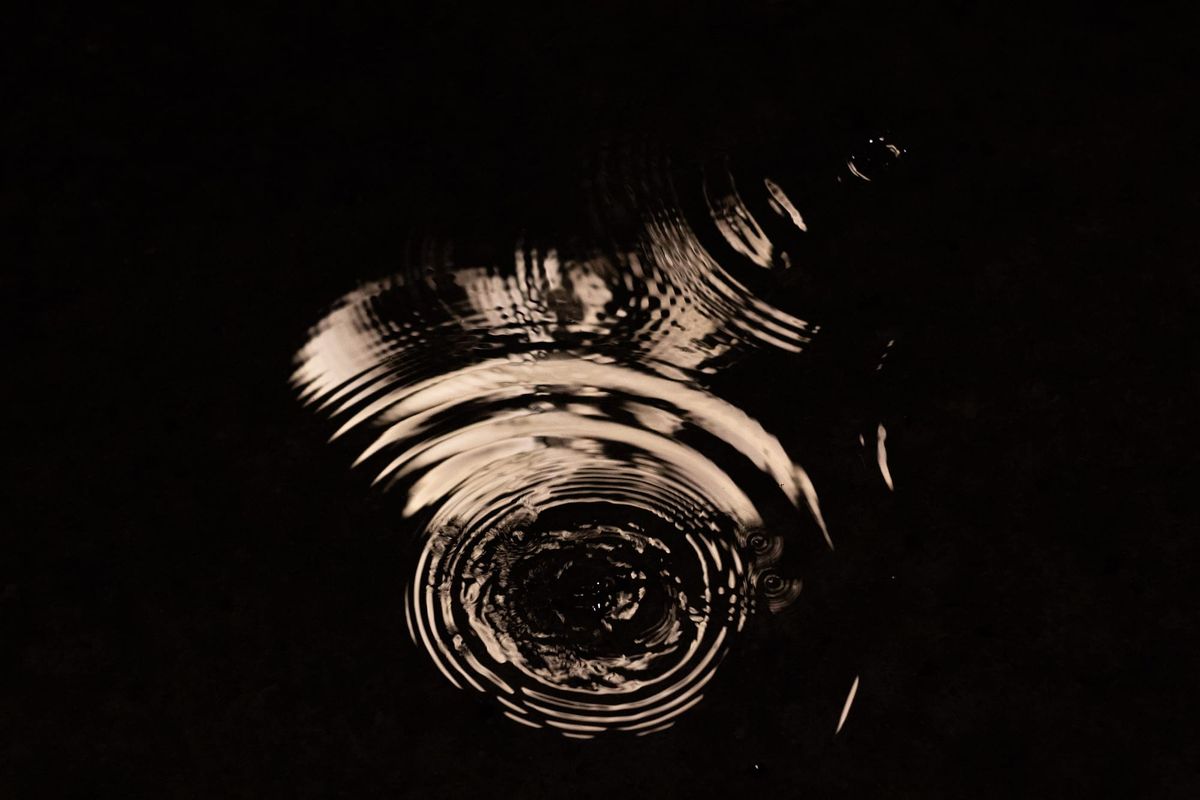
Years ago, on an aeroplane, I asked for a cup of tea. The flight attendant handed me one of those paper cups of hot water and a tea bag. I put the cup down on the tray table, but before I dropped the tea bag in, I noticed the water.
The aircraft was vibrating. Not dramatically; just the constant, almost imperceptible movement of a machine hurtling through the air at 38,000 feet. And that vibration was passing through the little plastic tray table, through the paper cup, into the water. Tiny pulsations moved across its surface.
I watched them. I don't know how long I sat there looking into this cup of water, but apparently it was long enough to become conspicuous. The flight attendant came back and looked at me.
“Is everything okay?”
Everything was superbly okay. I wasn't upset. I wasn't frozen or distracted. I hadn't forgotten what I was doing. I was completely absorbed. There was something exquisite about those tiny movements in the water. I suppose for a moment, I was inside them. Eventually, I made the tea.
I have been thinking about that cup of water lately because I have started writing about theatre.
Criticism
There is currently a public conversation unfolding about what critics owe theatre and artists. It has raised old and difficult questions about critical generosity and severity, expertise and responsibility, and what criticism is for. But listening to the discussion, I have found myself preoccupied by a different question.
What do I owe myself when I go to the theatre?
I don't mean owe myself in the consumer sense. I mean something closer to the quality of attention I bring with me. I want to arrive curious, interested in what is actually happening before deciding what kind of thing I think is happening.
I want to learn, too. I'm greedy for all the knowledge I can gather about theatre—its histories, forms, techniques and arguments.
But there is a tension in that desire. I don’t want knowing more to make me less available to experience. I want to remain capable of being surprised. Or moved. Delighted, irritated, bored, unsettled. Perhaps even changed. None of those responses can be demanded from a work, and I don't think openness means manufacturing them. I don't want to arrive requiring an experience. I want to remain capable of having one.
That responsibility begins with me, but it doesn't end there. Theatre is made between people. Whatever I bring into the room becomes, however minutely, part of what happens there: my attention, my laughter, my restlessness, my stillness, my breathing. And if I later write about the work, something of that encounter travels further still.
Perhaps this has been occupying me because I know what can happen when I am open enough to let a performance really get under my skin.
Cracked
A few years ago, I went to see Back to Back Theatre’s Multiple Bad Things, at Malthouse Theatre.
It wasn't the first time theatre had moved me deeply, and it certainly wasn't the last. I have cried in theatres plenty of times. I have laughed until I hurt. I have felt disturbed and completely alive. But what happened to me during Multiple Bad Things was peculiar. It remains one of the most profound experiences I have had in a theatre, and I still can't fully explain it.
The work takes place in a workplace of sorts, where three people have been assembled to perform an apparently pointless task. Power shifts. One worker is bossed around, bullied, made vulnerable. Eventually another worker, who has repeatedly struggled to get help from the people around her, turns elsewhere for support.
She calls a helpline.
What follows is very funny.
She waits on the phone while a recorded voice delivers the kind of institutional language that promises care while making actual care almost impossible to reach. The longer she waits, the more absurd it becomes. The recording keeps talking. Its assurances become increasingly useless, then grotesque.
I was losing my mind laughing.
It wasn't polite laughter. It was full-bodied, helpless laughter, the kind that takes over breathing. The recording would continue and somehow become more absurd, and the laughter would come again. My diaphragm was already caught in its rhythm: breath, contraction, release; breath, contraction, release.
And then, abruptly, she got through.
I can't now remember exactly what she said. I remember what happened to me when she said it. Suddenly there was a frightened person where the joke had been. She was scared. Sad. Alone, asking for help. And somehow, without a moment of transition, I began to sob.
Even now, what strikes me is that my body barely had to change what it was doing. Laughter and crying are physiologically strange neighbours. My breathing was already broken up; my body was already contracting and releasing; I was already surrendered to something I wasn't consciously controlling. The laughter didn't finish and then make way politely for grief. The crying merged with it, seamlessly.
And something inside of me cracked open.

Tears poured down my face for the rest of the performance. Not noisily after that initial rupture, but continuously, like the flow of a persistent stream. They were still coming twenty minutes after the performance ended. I remember leaving the theatre still somehow inside whatever had happened to me.
I don't think everyone else in the audience experienced what I did. I may have been the only person in the room having quite that experience.
It would be easy to say that Multiple Bad Things made me sob, or that Back to Back engineered an extraordinarily effective transition from comedy to pathos. There is truth in both. The work had constructed the conditions of that moment with exacting precision. But neither quite accounts for what happened. Something in the work met something in me.
I brought something to it. I don't entirely know what. I arrive with a body, a history, a temperament, whatever happened to me that day, whatever I am carrying without knowing that I am carrying it. Other people arrive differently. We sit together and something happens—or doesn't.
I don't want every performance to do to me what Multiple Bad Things did. God, no. I would be a wreck. Nor do I think the intensity of my response proves that it was a great work, or that somebody who remained dry-eyed failed to understand it. My response isn't a verdict.
But it tells me something about what I am capable of bringing to a theatrical encounter.
And I don't want to lose that.
Intimacy
I had been thinking about all of this on a dog walk when I arrived home to find a book waiting on my doorstep.
It was Alison Croggon's Remembered Presences, a collection of her theatre criticism. I had ordered it some time earlier. The timing of its arrival was ridiculous.
At the beginning of the book, before the collected criticism begins, Croggon offers a short credo on what it means to think like a theatre critic. Her first instruction is startlingly simple:
First, you mustn't think… you watch and listen and feel… you open your body to the rhythms of the performance.
I had spent much of the walk trying to find words for almost exactly that.
Croggon describes the moment before a performance begins as one of uncertainty. However much you know, however familiar the work, you do not yet know what is about to happen. The performance itself is made not only from everything the artists have prepared but from its meeting with what Croggon calls “the unknown, which is the audience.”
Then, afterwards, something changes.
You remember. You research. You think. You bring knowledge, experience and history to bear upon what you encountered. You begin the different labour of making criticism.
I found the distinction clarifying. To argue for the body in criticism is not to argue that an intense feeling constitutes a critical judgement. I sobbed through Multiple Bad Things. Someone else didn't. Neither response tells us, by itself, whether the work was good.
My body is not an instrument that measures artistic quality. But neither is it irrelevant. Something happened there.
Before I could explain it, before I could place it within an aesthetic tradition or analyse how the dramaturgy had produced it, I had experienced it. Perhaps the thinking comes later because the experience gives us something to think about.
Of course, the distinction is not quite so clean in practice. I cannot leave everything I know in the foyer. Knowledge and recognition are already at work while I am watching. Nor would I want it otherwise. I want that knowledge. I want much more of it.
But I want it to make me more attentive, not less.
Theatre gives this problem a particular intensity because the thing being attended to is happening while we attend to it. Bodies share a room. Performers respond to one another, to the space, to an audience whose attention is itself perceptible. Laughter moves through a room. So do stillness and unease. One person's response becomes part of what another—performer or spectator—encounters.
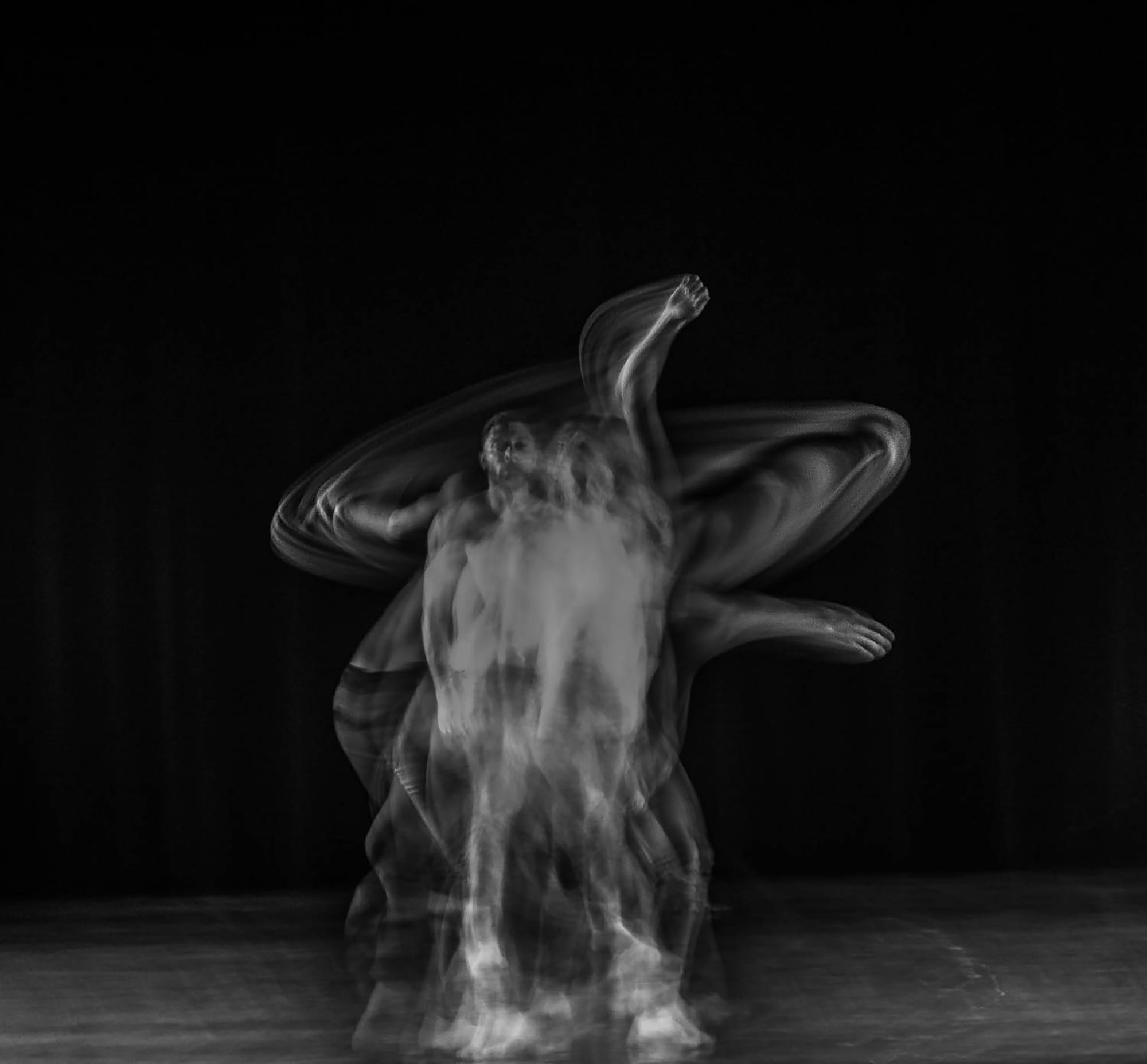
This is where Erika Fischer-Lichte's account of performance becomes useful to me. Her notion of the autopoietic feedback loop describes performance as something generated through the ongoing interaction between performers and spectators. The audience does not simply receive a finished artwork. Our presence becomes part of the event.
That complicates artistic intention too. Intention is extremely relevant: it helps me understand the choices artists have made and what they may have been reaching towards. But once those choices meet bodies, space and an audience, they can produce meanings and effects that no one person planned.
Back to Back made that moment with extraordinary precision, but my response was not simply contained within the work, waiting to be delivered. Something emerged inside the encounter.
The word I kept circling on that dog walk was intimacy.
A performer may be costumed, speaking somebody else's words, inhabiting a history entirely unlike their own. There may be layers of theatrical artifice between performer and audience. But the material of performance remains stubbornly human. A body. A voice. Breath. Weight. Timing. Attention.
Breathing, especially, seems important.
We hear it, sometimes. We see its effects. It supports speech, movement, effort, stillness. And our own breathing changes in response. We hold it. Release it. Laugh with it. Sometimes, as I discovered in Multiple Bad Things, it gets completely rearranged for us, beyond our own volition.
There is an intimacy in allowing another person's presence to alter your own.
Perhaps this is what I mean by openness. Not simply paying attention, but permitting some degree of permeability: allowing what is happening in front of me to get close enough that I cannot entirely determine in advance what I will make of it. What it will do to me.
And I think that requires a kind of trust.
Not trust that the artists will be ‘good’ or that I will agree with them, or admire what they have made, or even enjoy the experience. Certainly not trust that they will take care of me. The trust is in the encounter itself. Something can be offered without knowing exactly what will happen when it is received.
Like falling in love.

You cannot force yourself to fall in love. Nor, maddeningly, can you demand that another person make you fall in love and judge them a failure when it doesn’t arrive. The experience cannot be summoned by wanting it badly enough. But it is possible to make yourself unavailable to it.
You can arrive defended. Fear can stifle it. So can expectation. You can hold another person against an image already formed in your mind, looking for confirmation or disappointment. You can become so occupied with assessing the encounter that you leave no space for the falling.
I wonder whether expertise can sometimes do something similar.
The more theatre I see, the more readily I recognise things. A gesture recalls another gesture. A choice belongs to a tradition I know. A structure announces itself earlier. This is part of learning to be a critic. I want this knowledge. I want much more of it.
But I don't want recognition to curtail my attention. Because I recognise this can so easily become I know this. And I know this can become I have seen this before.
Perhaps what I want, then, is not innocence. Nor do I want to manufacture wonder, walking into every performance determined to find it marvellous. I want something both simpler and more difficult.
Not expecting, but available.
The earth circles the sun on repeat
I have seen this before.
There is nothing inherently wrong with that thought. Sometimes it is simply true.

Theatre repeats itself. Artists repeat one another. Forms accumulate conventions. Devices that once seemed startling become familiar and eventually ubiquitous. Critics should be able to recognise those repetitions. Part of the value of experience is precisely that the work in front of you does not exist in a vacuum: you can see its precedents, notice what it borrows, understand where it departs, or when an apparently radical gesture has a rather long history.
But I have become interested in the pronoun.
I have seen this before.
That is a statement about the work, but it is also a statement about me.
I have spent the past four years seeing theatre across Melbourne with some regularity—often weekly, sometimes fortnightly, increasingly more as my appetite for it has swelled. Inevitably, I am building an inner archive.
That archive helps me see more. It also gives me more opportunities to become bored. There is a peculiar danger here for critics, whose expertise is built partly through an extremely unnatural concentration of cultural experience. A person who spends several nights a week in theatres is not encountering theatre under anything like the conditions of most of the people sitting around them.
That doesn't mean the critic should pretend it is new. Nor does it make boredom illegitimate. But I think there is a difference between recognising repetition and treating one's own saturation as evidence that the possibilities of the repeated thing have been exhausted.
We sometimes say that we need new stories. I understand the hunger behind that phrase, particularly when it means stories historically excluded from our stages, or ways of knowing and telling that dominant theatrical cultures have treated as peripheral. In Australia, Aboriginal and Torres Strait Islander peoples have been telling stories for tens of thousands of years. The question is not simply whether stories are new, but who has been heard, who has been authorised to tell them, and which ways of understanding the world have been given space. Expanding whose lives and imaginations appear on our stages can push at the boundaries of what a culture has learned to regard as ordinary, possible or true.
But taken literally, I am not sure humans have ever been especially good at producing completely new stories.
We fall in love. We lose people we love. Children struggle against parents and become parents themselves. We betray and forgive one another. We seek home, leave home, return home, discover that home has changed. We live with land and water, weather and seasons; we depend upon them, alter them, are altered by them; we remember that we are the land. We are constrained by the structures and norms we inherit, and discover—often painfully but also with great exhilaration—that they can be otherwise. We hurt people while trying to love them. We grow old. We die.
None of these experiences means precisely the same thing everywhere. We understand and organise them through the particular cultures, relationships, environments and histories in which we live. Then we jiggle them around and tell them again.
The repetition may itself tell us something. Cultures become preoccupied with particular fears, relationships, injustices and desires. Stories cluster. A device appears everywhere for a while and then recedes. What looks to a saturated spectator like artistic repetition may also be a culture returning to something it has not finished with.
And even when the story really is old, the encounter is not.
A teenager encountering a theatrical idea for the first time has not somehow arrived too late because I encountered it five years earlier. Nor is my fifth encounter necessarily the same as my first. I have changed. The world around the work has changed. The people making it are different. The bodies gathered to receive it are different.
This is where we have seen this before begins to trouble me.
Who is we?
Often, I suspect, it means a relatively small group of people who have had unusual access to a great deal of art. Critical experience may give us more authority to locate repetition. I'm not convinced it gives us the right to declare that repetition culturally spent.
Astonishment
Years ago, during a strange period in my life coloured by grief, someone gave me Ben Okri's Astonishing the Gods.
I read it in an afternoon.
I have since bought the book more times than I can count on my fingers. The trouble is that I keep thinking of someone who might love it as I do, and giving my copy away. Eventually I buy another. Then, soon enough, I give that one away too.

Astonishing the Gods is a rather odd, slim book.
Its unnamed protagonist is invisible, as are his mother and his people. He grows up without finding anything remarkable in this. It is only when he encounters the written histories of the world and cannot find himself or his people in them that invisibility becomes a problem. He leaves home and travels for seven years, searching for the secret of visibility.
Eventually, he arrives by ship at a strange city. It appears deserted, but he can sense people around him whom he cannot see. When the ship calls him back, he chooses to stay on the land.
What follows is an odyssey of sorts, though the journey becomes increasingly inward. He encounters guides, riddles, trials and dangers; he is frightened, tempted and bewildered. Again and again, the categories with which he arrived prove inadequate to what he encounters. His bewilderment, rather than something simply to be overcome, becomes part of his education.
The book met me when something in my life had already shifted. I had become unexpectedly receptive to experiences I didn't have particularly good language for, and Okri's fable met me there.
I don't remember reading it analytically. I remember drinking it, like a tonic. I remember something in its world corresponding to something that had opened in mine.
I was astonished, like the gods, I suppose.
I have always loved that word because of this book: astonish.
Not impress. Not entertain. Not even surprise.
There is something almost destabilising in astonishment. For a moment, whatever arrangement of the world you had been carrying proves insufficient for what has appeared in front of you.
The book left me with an idea I have returned to ever since: that experience may sometimes need to be repeated until it can be experienced properly and fully for the first time. I keep returning to that paradox.
Repeated until it can be experienced for the first time.
It seems impossible if firstness belongs only to chronology. I cannot see my first play twice. I cannot unknow Brecht so that I might encounter a Brechtian device without recognition. I cannot empty the theatre I've already seen out of my head before entering the next one.
But perhaps firstness can mean something other than ignorance. Perhaps it is a quality of encounter.
A performer, I am led to believe, knows this problem inside out. Performance is built on repetition. A gesture is rehearsed. A line is spoken again and again. A sequence becomes sufficiently familiar to enter the body. Then the performer comes before an audience and has to do it again. And again tomorrow. And perhaps again a hundred times.
Yet we don't usually expect all this accumulating experience to make the performer increasingly impervious to what is happening. Quite the opposite. Technique and repetition can create the conditions for responsiveness. The line is known so well that it can be spoken now. The choreography is held deeply enough in the body that the performer can remain responsive to another body. Mastery need not abolish presence. At its best, it makes presence more possible.
I wonder if I can ask something similar of myself as a critic.
The point cannot be to preserve ignorance. I would not wish away the treasure of memory simply to clear the archive. But perhaps all that accumulated knowledge can become more like a performer's technique than a suit of armour.
Held. Available. But not necessarily deployed at every moment.
This may be what I mean by wanting to remain astonishable. Not perpetually astonished. That sounds exhausting, and probably unbearable to sit beside.
Astonishable.
Capable of recognising something I have seen before and still allowing for the possibility that I have not seen this.
That distinction—between what I know already and what is happening to me right here, right now—is one of the things I first learned about encountering performance, from someone who knew much more about making it than I did.
To be: Who am I?
I may be an artist, but I am not a theatre maker.
That seems worth saying plainly. I haven't trained in performance or directing or dramaturgy. I don't know what it is to spend six weeks in a rehearsal room and then put the result in front of an audience. There are forms of knowledge that come from making theatre that I don't possess, and I don't think seeing a great deal of theatre magically confers them.
But I haven't arrived at criticism entirely from outside that world either.
For several years, as I became an increasingly regular theatre-goer, I had the good fortune to encounter theatre alongside someone trained in making it. We would see something and then talk about it, often for hours.
I learned an enormous amount that way. About performance and craft, theatrical histories and traditions, things I didn't yet have names for. But perhaps the most important thing I learned was much simpler: my verdict wasn't very interesting.
Or, rather, it wasn't interesting yet.
I might emerge from a theatre declaring that I loved something or hated it, and the conversation would gently be guided elsewhere.
What happened? What did the work seem to be reaching towards? What choices did you notice? What feeling did it leave you with?
I was being taught, without particularly realising that I was being taught, to become intensely curious about my own response.
I didn't like that closes something. What happened there? opens it.
Opening the question doesn't determine where I will land. Sometimes sustained attention reveals an achievement I initially missed. Sometimes it makes the failure clearer. Sometimes the answer remains simply: I don't think this worked.
But now there is something to investigate.
I later came to understand that some of what I was learning had roots in the ways artists respond to one another's work. An artist showing something unfinished to another artist is vulnerable in a particular way. Looking closely is not simply a matter of delivering a verdict from the safety of the other side of the room. You try to understand what happened: where something became alive, where it lost you, what possibilities might exist inside what is not yet working.
Public criticism is not the same thing. A finished production offered to an audience is not a work-in-progress showing, and a critic is not conducting a feedback session for its makers. But I am grateful that some of my earliest education in criticism came indirectly from a practice in which attention precedes judgement.
If I can offer anything to the artists I write about, I hope it is the feeling that their work was closely seen—not only for what they intended, but for what it became in the encounter.
And sometimes, what it became will not work.
I think artists should be allowed to “fail”, whatever that might mean.
That sentence sounds almost embarrassingly obvious until we consider how uncomfortable failure can make us. Particularly in a precarious arts ecology, there can be an understandable impulse to protect the work: to soften criticism because people have worked hard, because careers are fragile, because money is scarce, because making anything at all under these conditions is an enormous achievement.
And the work can still leave us unmoved.
Generosity, as I understand it, cannot mean pretending otherwise. If I approach a work openly and something doesn't connect, I want to be able to say so precisely. If the dramaturgy collapses, if a performance choice obscures rather than illuminates, if an idea remains inert, if the work reaches for something it cannot hold, serious attention requires me to notice that too.
But failure does not make the attempt unworthy.
In fact, I am not sure what kind of art we would have if failure were unacceptable. Art that cannot fail cannot risk very much. And a culture that demanded that every artistic attempt resolve into excellence would seem to me to be making a peculiar demand of art: that it present a perfection we would never reasonably demand of human beings.
We are messy. We misjudge. We reach beyond our capacities. We try things we cannot yet pull off. Or perhaps we once could, and painfully discover that we no longer can. Sometimes the attempt teaches somebody else what becomes possible next. Criticism should be able to stay with that complexity: this did not work, and the attempt still matters.
And critics, (in)conveniently, are not exempt.
Once I write about a performance and publish what I have written, I have made something too. My criticism can be inattentive. I can misunderstand. I can overstate an argument, become seduced by a clever formulation, mistake my particular response for a universal one. I can be wrong.
If I ask artists to make their work available to my attention, then my own work has to become available in return.
Perhaps this is where I locate myself as a critic: not outside the encounter, delivering a judgement upon it, but somewhere within a larger ecology of people making things, receiving things, responding, misunderstanding, trying again.
I am present, but not central.
Fallible. And still looking.
That thing I’ve been yearning for: It’s in the giving
There is another, much smaller thing I keep thinking about.
My mother taught me to smile at people when I passed them in the street. I still do it. But I used to get annoyed when they didn't smile back.
It was a tiny indignation, hardly worth mentioning, but apparently I had constructed a little moral transaction without noticing it. I had smiled. I had offered warmth. The other person was supposed to recognise the offering and return it.
Then, at some point, something shifted. I realised that simply passing another person in the world had already given me the experience of smiling. They didn't need to smile back.
Perhaps they hadn't noticed me. Perhaps they were sad, distracted, shy, tired, wary of strangers. Perhaps they simply didn't owe me anything. None of it could undo the smile that had already spread across my face.
I don't want art to owe me anything either.
I don't attend generously so that the work will reward me with wonder. I don't make myself available so that an artist will move me. The performer doesn't owe me transformation because I have paid attention, any more than I owe the performer praise because they have exposed something of themselves.
And I don't think I can prescribe this disposition to anybody else. Nor would I want to. There are critics whose severity I admire, critics whose wit can cut a work open in ways my temperament probably never will, critics interested in questions quite different from my own. Criticism would be desperately dull if we all approached theatre in the same way.
This is not a manifesto.
It is a promise I am trying to make to myself.
My invitation. My plea
I don't expect theatre to astonish me. I want to remain astonishable.
I won't always manage it.
There will be tired nights and bad moods and too many shows in too few days. There will be complex themes treated with insufficient nuance that get on my nerves. There will be familiar devices and fashionable ideas. There will be programming decisions that make me cynical: work that seems chosen because it is safe, prestigious or likely to get bums on seats. I may have serious things to say about the institutions making those choices. But the artists in front of me still deserve to be encountered as themselves, not merely as evidence in an argument I have already begun having with the institution that programmed them.
I suspect there will be moments when knowing what I know makes it difficult to see anything except what I already recognise. There may come a time when I mistake having seen a great deal for having seen everything.
And the danger, I suppose, is that I may not know when that has happened.
I realise this is all very easy for a bright-eyed, bushy-tailed new critic to say. Ask me about it in twenty years, and I may well chuckle.
Nonetheless, I am writing this down now, and putting it somewhere other people can see.
My invitation is this: if one day you notice that my knowledge has become armour; that I've seen this before has become there is nothing here to see; that I am more interested in demonstrating what I know than discovering what is in front of me—
please splash some cold water in my face.
Help wake me up.