Break of Day: Dignity without innocence
A deeply moving new Australian play about class, care, social mobility and the lives we make within forces we did not choose.

What does it mean to live in a “hole”?
Burra Creek is one, at least according to Pamela (Kat Stewart). A nowhere place on the outskirts of a city, neither properly urban nor rural, where the singular promise of employment comes from an enormous online retail warehouse operating around the clock. Pamela works the nightshift there, travelling three buses each way. For seventeen years, she has been determined that her daughter Rae (Sherry-Lee Watson) will have something better. Finish school. Go to university. Get out. But Steve Rodgers’ Break of Day (Malthouse Theatre, 7-29 August 2026) asks what it means to live in a hole when the walls shape not only whether you can climb out, but what you can dare to imagine.
Pregnant at sixteen and left to raise a child while her own mother was dying, Pamela has spent the years since working herself into the ground with painfully little to show for it. Nightshifts barely keep the household afloat; even ordinary material needs, such as menstrual pads, become unaffordable. Whatever room Pamela once had to imagine a different life for herself has narrowed around the task of making one possible for her daughter. Rae makes that hope plausible: fiercely intelligent, in her final year of school, and labouring over an extended essay on Lolita, a text she chose herself.
In these early scenes, I wasn't entirely convinced by Break of Day. Rodgers is grappling with class, gender, generational tensions and social mobility, and occasionally the writing works too hard to make those concerns legible. Some class markers feel especially conspicuous. Pamela's opening image of toddlers with rotten teeth from drinking Mountain Dew, for instance, is vivid but so immediately legible as shorthand for deprivation that it flirts with caricature. I was wary, too, of the easier version of this kind of theatre: poverty rendered as suffering for an audience safely outside it.
But the play soon complicates that suspicion. For instance, Pop (Richard Piper) initially seems easy enough to place: cantankerous, provocative and casually misogynistic, needling Rae with comments about her “sexy” appearance and gendered advice for getting ahead. When she finally turns on him, she confronts him with what she has learned about his history of betrayal and sexual entitlement; his appeals to different times and circumstances cannot quite contain it. The connection back to Rae’s chosen essay text is almost too neat, but the scene itself is not. Rae crosses a line too, taking away his walking frame and leaving it beyond reach, turning his dependence into punishment.
That act unsettles any simple moral arrangement: Rae is wronged but capable of cruelty; Pop is culpable without being reducible to villainy. His own history surfaces too: childhood loss, deprivation, and the stories he has told himself about the choices he made. Break of Day allows harm to remain complicated: something people inflict, inherit, answer for and sometimes pass on.
Piper is extraordinary in holding those contradictions together, and the scene also draws some of Sherry-Lee Watson’s strongest work as Rae. Watson is at her best when Rae’s anger breaks through: fierce, sharp and unsparing, giving the confrontation genuine danger. Piper meets that ferocity with remarkable physical detail. His Pop is frail but still capable of grandiosity, at one point hoisting his walking frame above his head in a burst of bravado before his body abruptly gives way. His voice, gait, instability and flashes of pride are so completely inhabited that seeing Piper walk freely onto the stage at curtain call produces its own small shock.
Later, Pop finds himself physically helpless and dependent on Rae for the most basic forms of care. He resists her help, pride and shame colliding with a body that has left him exposed, before reluctantly allowing her to tend to him. Rae’s tenderness after everything that has passed between them is profoundly moving; so too is the trust Pop must place in her to accept it. Anger does not disappear. History is not rewritten. Shame, dependence and tenderness simply coexist.
The encounter between Rae and Pop is among the production’s most affecting achievements, and it was here that the play finally broke through my reservations. Somewhere in that scene, as Rae washes him, Pop curls over and weeps. So did I. There is something profoundly human in the act of care itself: the recognition that, whatever histories we carry, we remain creatures whose bodies will one day betray our independence. What moved me was the social dignity the play finds within that bodily indignity, without first requiring innocence. Rae and Pop can both know the harm that has passed between them and still encounter each other in care.
What Break of Day keeps worrying at, though, extends beyond the moral complexity of one family. What does agency mean when the field of possible choices has already been radically narrowed? Poverty does not make Pamela's choices for her; deprivation does not absolve Pop of the harm he has caused. Rodgers never lets circumstance become an alibi. But neither does he pretend that choice occurs on neutral ground. These characters act within structures — class, gender, work, migration, family history — that shape what is possible, make some choices ruinously costly, and place others almost beyond imagining.
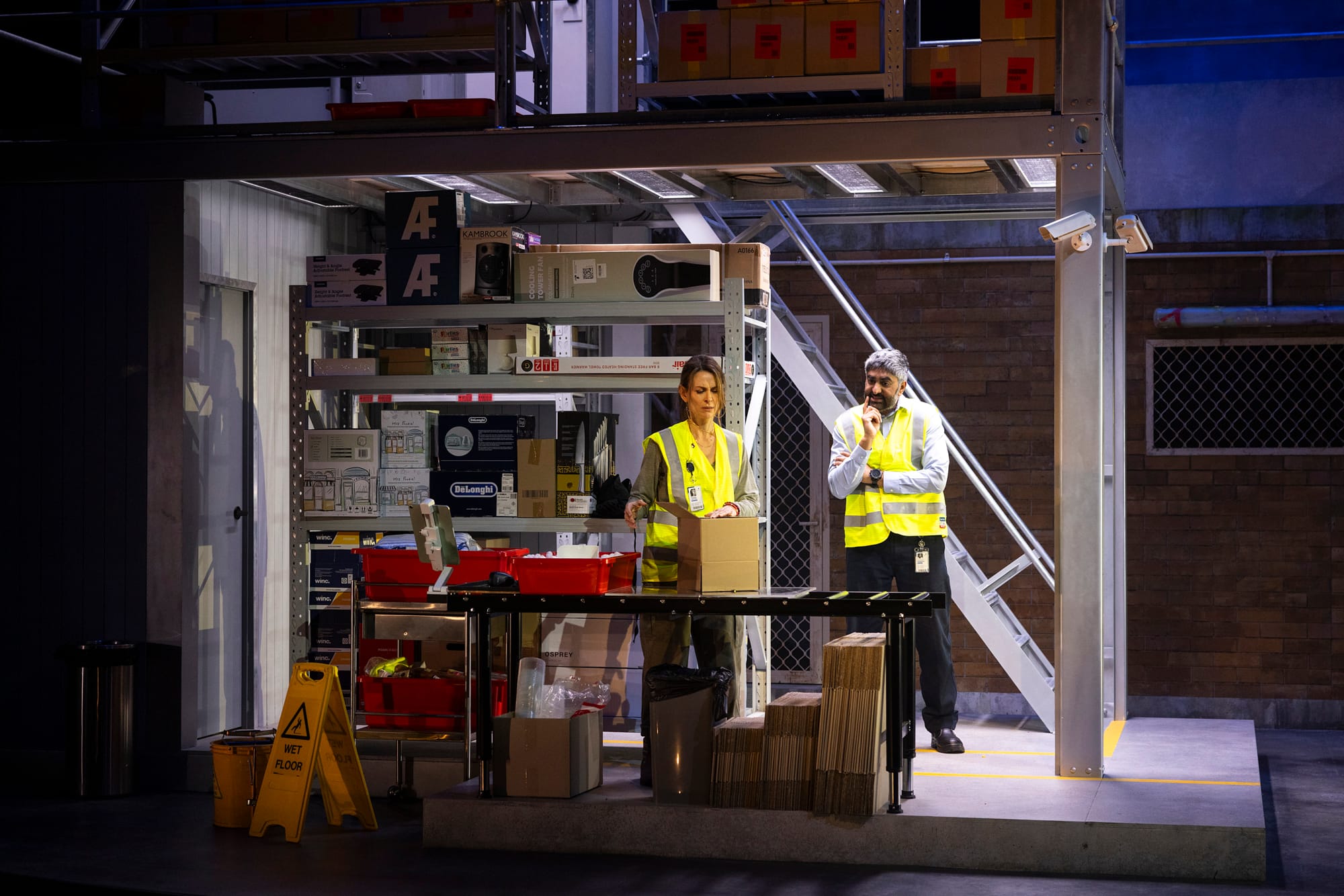
Those structures are not abstract in Break of Day; they are lived through the body. Bodies toil, bleed, sweat, age and desire; eventually, they fail and need tending. Poverty appears in what bodies go without and what labour extracts from them; dependence in bodies that leak and falter; desire in the heat and smell of sex. This is where the play's social and economic structures become intimate — in flesh that bears their costs.
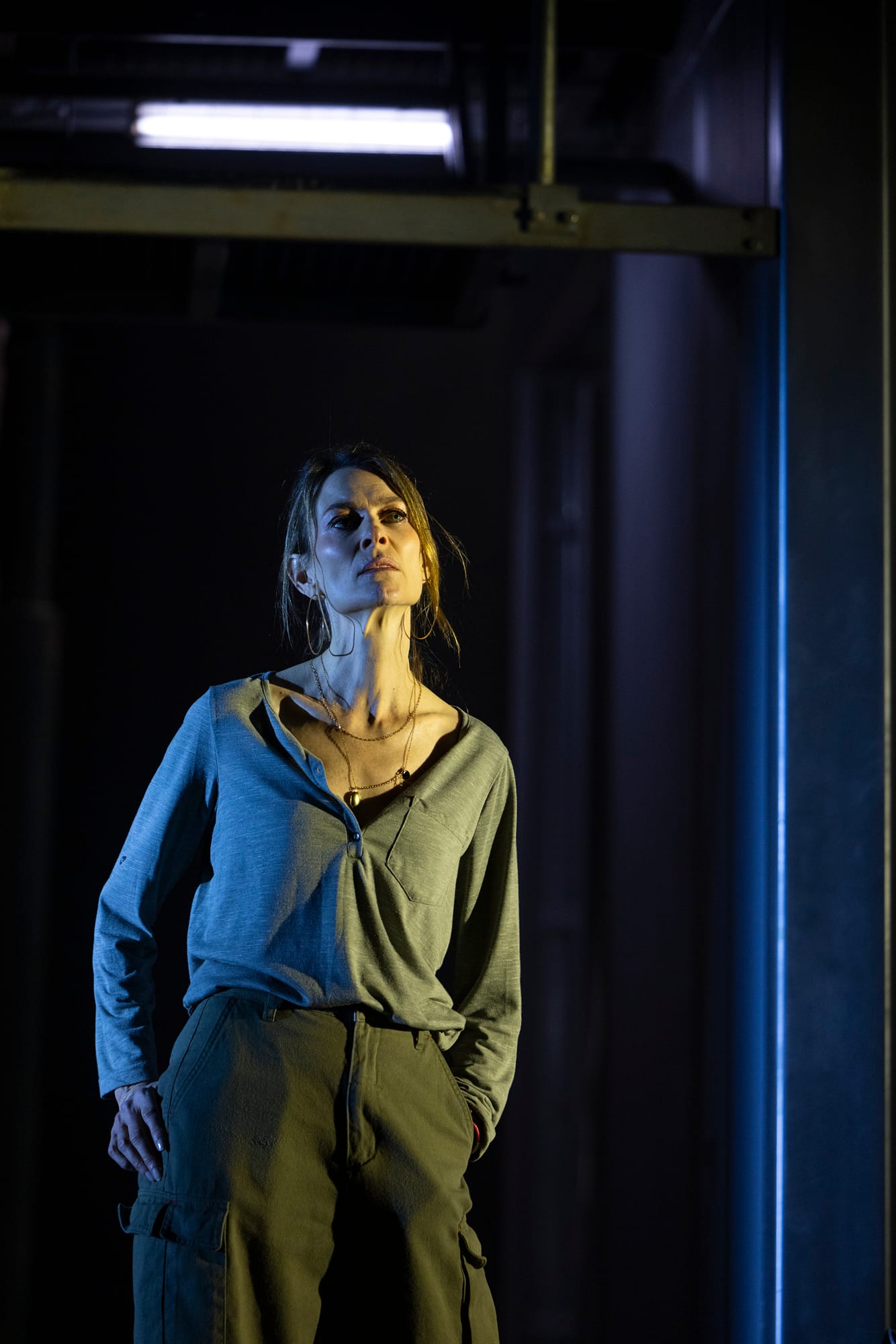
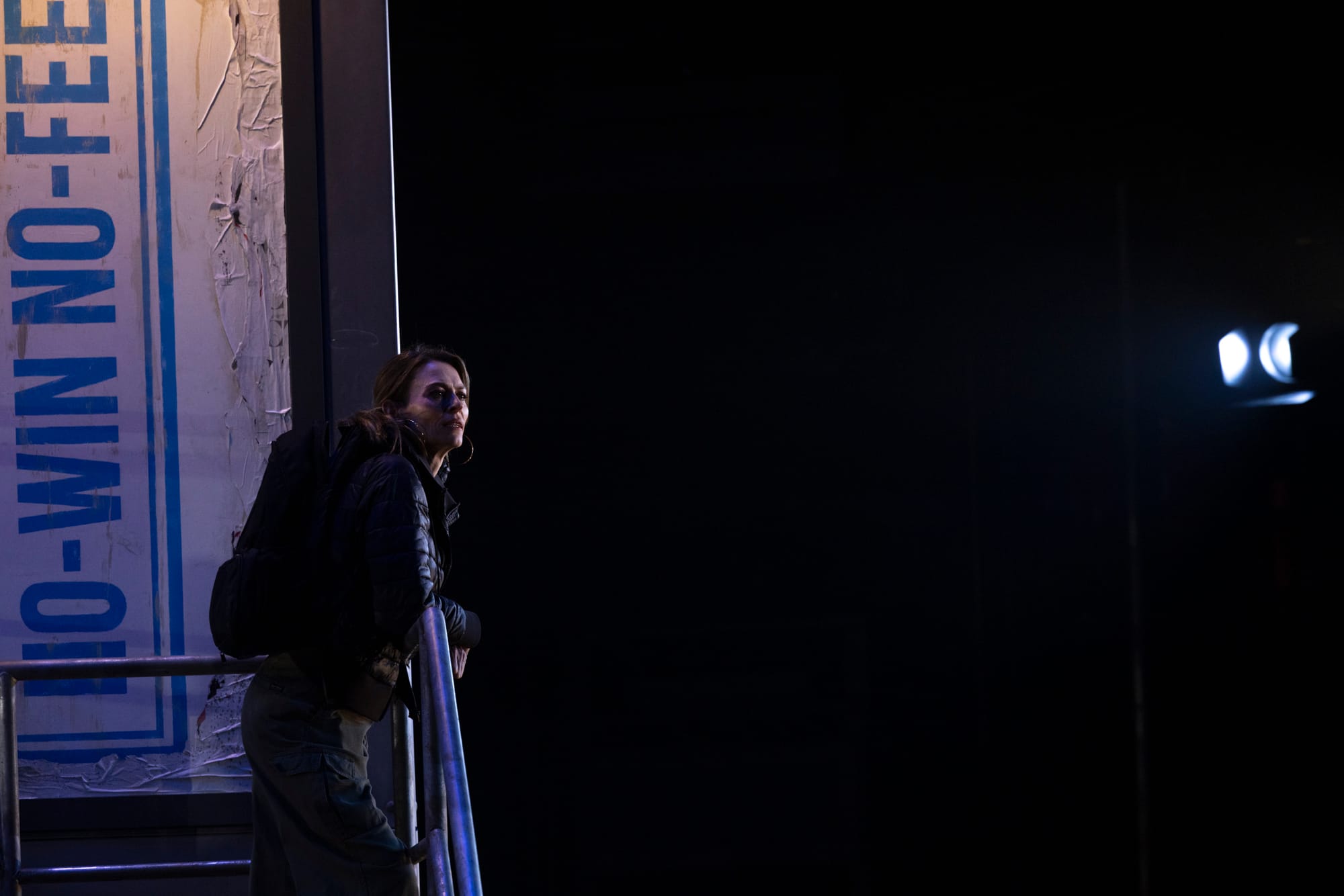
Nowhere is this more potent than in Pamela herself. Periodically stepping out of the play’s naturalistic exchanges, she addresses us directly, returning to the same refrain: she is invisible. She walks home from nightshift unnoticed; waits in a shop while the attendant ignores her. But the monologues reveal a deeper estrangement. Pamela describes floating somewhere beyond herself, watching her body undergo these experiences as they occurred.
Her insistence on invisibility initially feels slightly at odds with what we are seeing — largely because Stewart is such a powerful presence onstage. Gradually, though, the paradox becomes clearer. Pamela is relentlessly active, yet almost all that activity is absorbed by survival. Seventeen years of work and motherhood have kept life going without giving her much room to alter its terms. Stewart makes this vivid: a woman intensely present to us, yet sometimes strangely absent from her own experience.
There is a bitter social counterpart to that invisibility, too. Break of Day understands how a person can go largely unseen in need, while the systems around her remain perfectly capable of making her visible and holding her accountable, when their own rules or interests require it.
If Pamela's life has calcified around the roles she must perform, Rae's boyfriend Jedediah (Theo Clarke) slips freely between them. A cleaner at the same warehouse who wants to be an actor, he rehearses The Tempest while pulling sodden filth from a blocked toilet by hand, after the plunger fails. Preparing Caliban, he resists dismissing the character as simply a “beast”, looking instead for another dimension in him. There is a small barb here, too, about an education system that talks earnestly about colonisation and then hands its students Shakespeare; Jedediah's response is neither rejection nor submission: he makes the role his own.
Clarke is superb. There is an ease to his performance that is difficult to manufacture: loose, playful, physically assured, his movement and speech springing coherently from the same impulse. Jedediah can move from Shakespeare to a hilariously ill-advised attempt at a contemporary monologue from Chopper without either feeling incongruous. He seems freer than almost anyone else in the play to move between possible selves without mistaking any one of them for the whole of him.
Jedediah also insists on something Pamela cannot imagine: that getting out need not be the only future available to the young people of Burra Creek. Why not stay and make their corner of the world better? At first, I found the optimism almost irritating. But the idea gains force, particularly as Rae begins to question how much of the future she has spent years rehearsing, is actually hers.
Here, Break of Day complicates one of the more comforting stories we tell about inequality: that getting the exceptional child out constitutes success. But even the meaning of “getting out” depends on where you are standing. Burra Creek’s status as a “hole” proves relative. Pamela’s supervisor Sanjeeva (Chum Ehelepola), an old schoolmate now charged with enforcing the warehouse’s rules, rejects her description of the place as hell. Set against his family’s experience of violence and migration, Burra Creek is not somewhere to escape from, but somewhere his family once escaped to. Trap, refuge, home: Burra Creek can be all three. Ehelepola holds those competing truths with quiet precision.
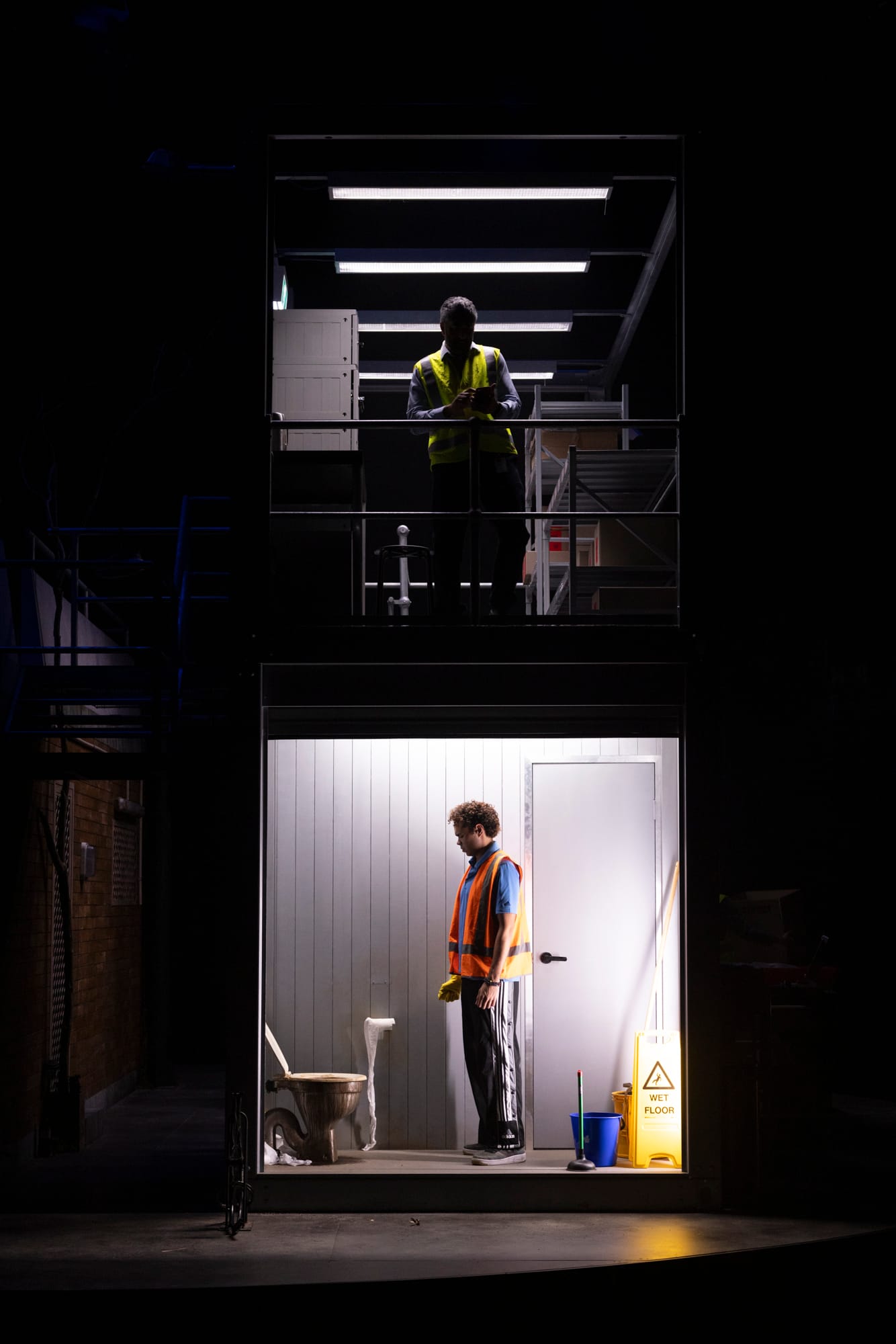
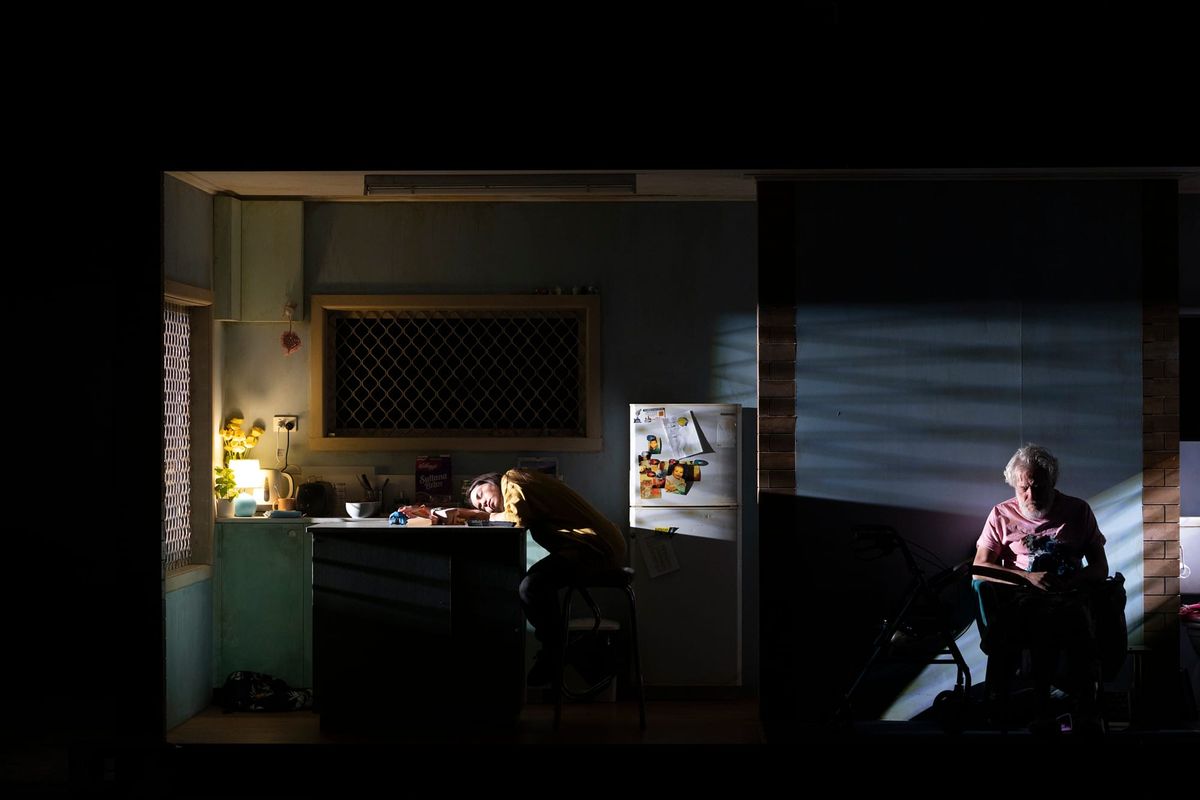
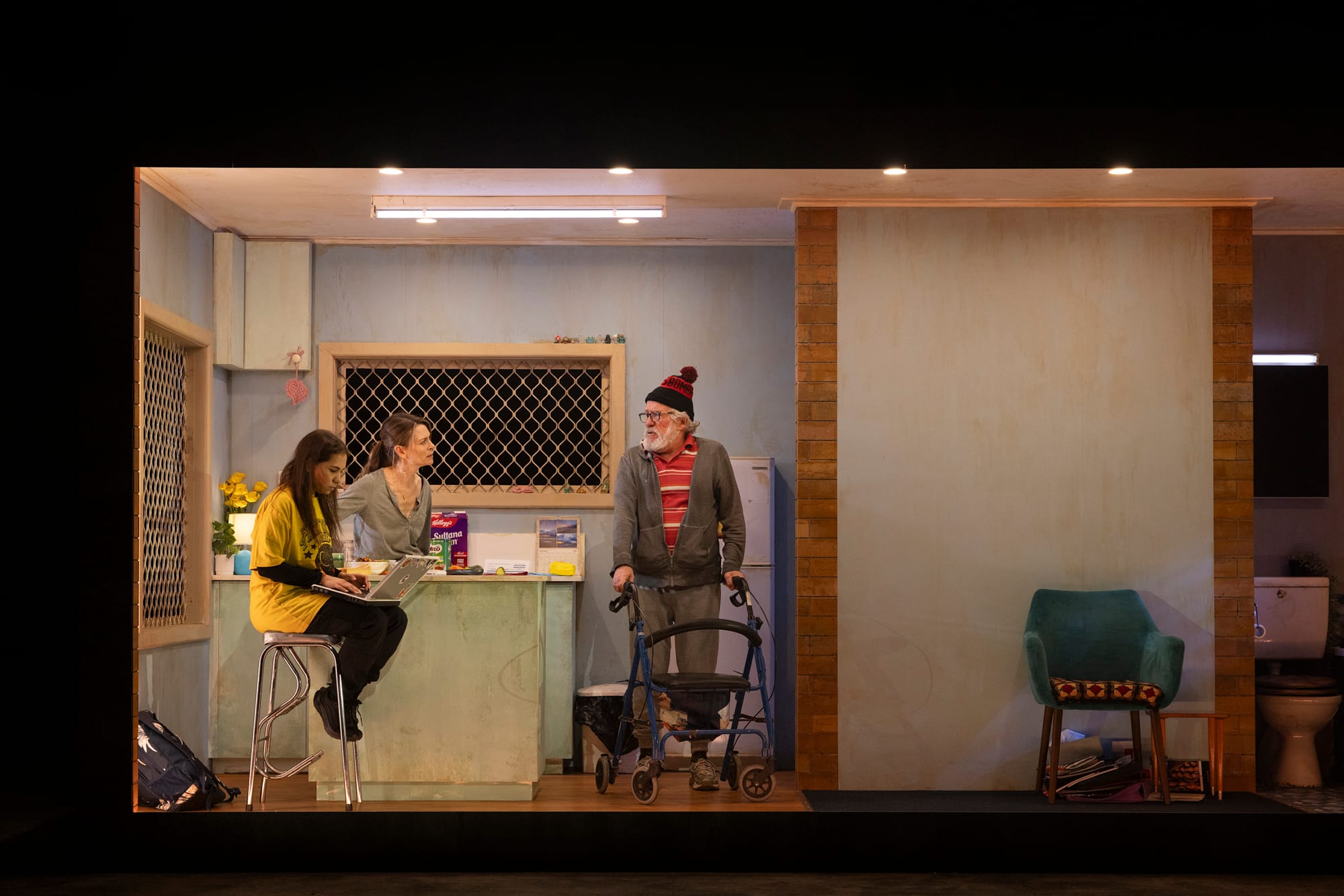
Goodes and designer Anna Cordingley make those limits spatial. Cordingley’s staggering two-storey revolve shifts between Pamela’s worn brick-veneer home and the warehouse, turning distance into labour as Pamela walks and the architecture moves around her. Paul Jackson’s lighting works deftly through windows, doorways and exterior light to mark the passing hours. The warehouse looms above and around the home, binding work and domestic life into the same structure. It organises time, sleep, movement and possibility: Sanjeeva administers its rules; Jedediah cleans its toilets; Pamela gives it her nights. It offers employment, but no real way out.
Jethro Woodward’s composition and sound design give the production much of its pulse, particularly through transitions. Not every transition is as well judged, however. One comic callback badly misjudges its moment. Pamela earlier recalls that Sanjeeva used to sing; he insists he still does, posting performances online. When this returns immediately after the encounter between Rae and Pop, the thematic logic is clear — another self persisting beneath the role Sanjeeva now occupies — but the writing and direction place it too quickly against the preceding grief, crashing through the pathos before it has had time to settle. I longed to remain in the grief the production had earned. I wasn’t ready to be moved on.
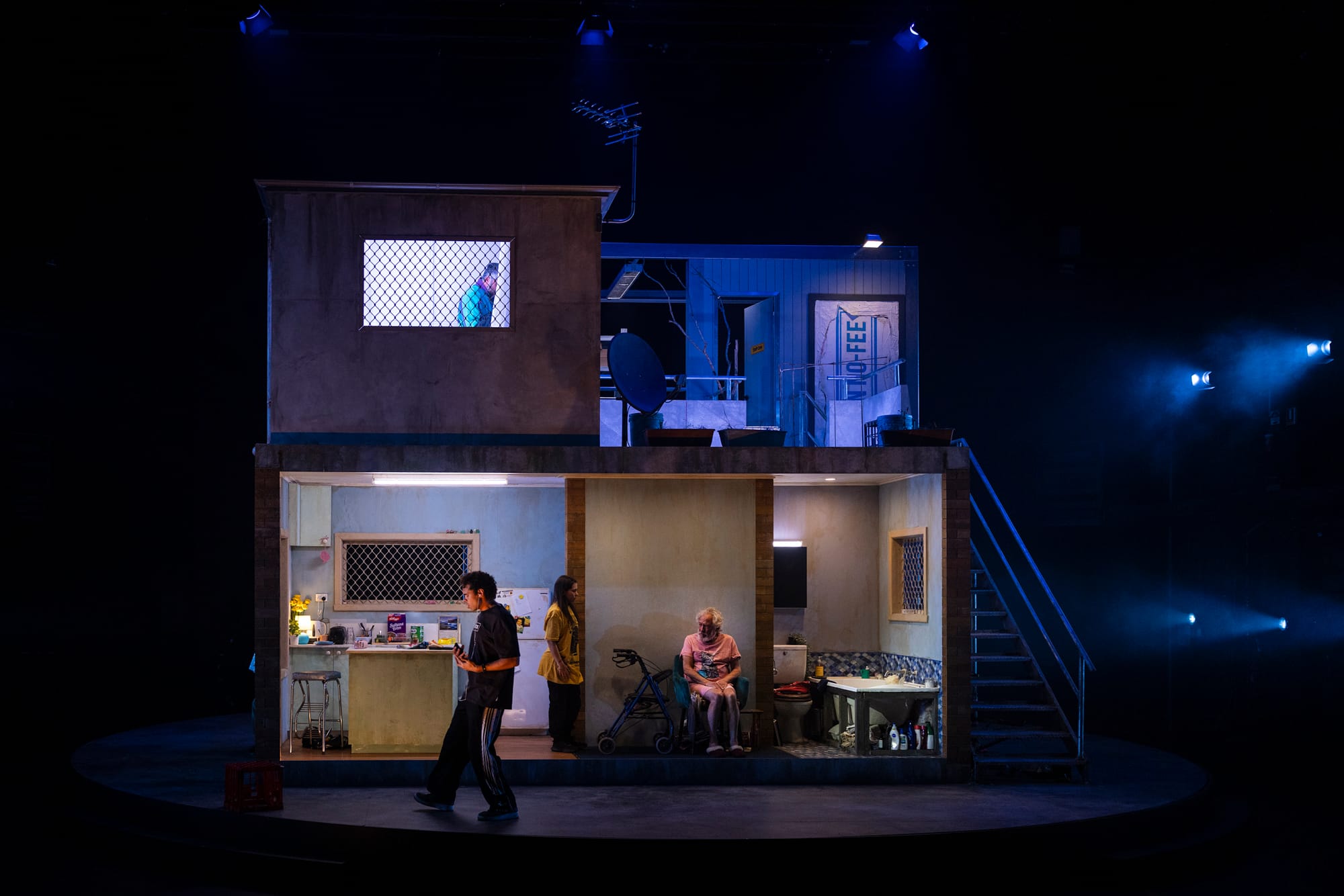
That tonal misstep stands out because elsewhere Rodgers and Goodes are incredibly adept at letting contradiction and pain sit unresolved, keeping politics embodied rather than abstract. Stewart anchors an ensemble alive to those tensions: frailty and swagger, anger and tenderness, constraint and possibility.
By the final stretch, the reservations I had carried through the first few scenes had fallen away. What begins as a story about escape and social mobility becomes a harder reckoning with how people make lives within conditions they did not choose. What kind of social order calls it opportunity when flourishing requires leaving the people and places that made us who we are?
Break of Day refuses easy answers. Social and economic conditions cannot simply be willed away, but neither do they determine us.
I walked out of Malthouse with tears rolling down my face. Break of Day had not convinced me that Burra Creek isn't a “hole”, nor that leaving it would be a mistake. The question was knottier than that. Its characters cannot simply choose their way out of poverty, trauma, history, or the structures that delimit their lives. But nor are they reducible to them. A hole has walls. People inside still move between them. Do we claw at the earth for a way out, or plunge our hands into the same soil and help something grow?
The world premiere of Break of Day plays at Malthouse Theatre, 113 Sturt Street Southbank in Melbourne, until Saturday 29 August 2026.