A sticky little mess: Fuck Your Funding
For all its fury about governments, institutions and wealthy benefactors, Fuck Your Funding keeps turning its attention back onto the artists themselves. Hamilton allows each person inside the argument enough humanity to become inconvenient. The result is messy, funny, fiercely intelligent theatre.

Fuck Your Funding sounds like it might be 60 minutes of independent artists yelling about arts funding at an audience of independent artists.
To be fair, there is quite a lot of yelling.
There is also an opera singer called Philanthropy Philharmonica, an Arts Minister called Richard Head, a terrorist cell called ACT (Australian Cultural Terrorists), a gun acquired from Chekhov and three hooded figures who eventually reveal themselves as Gina Rinehart, George Brandis and Rupert Murdoch. At one point somebody performs Macbeth in order to summon them.
Ryan Hamilton's play is very silly. It is also one of the smartest things I've seen at Melbourne Fringe.
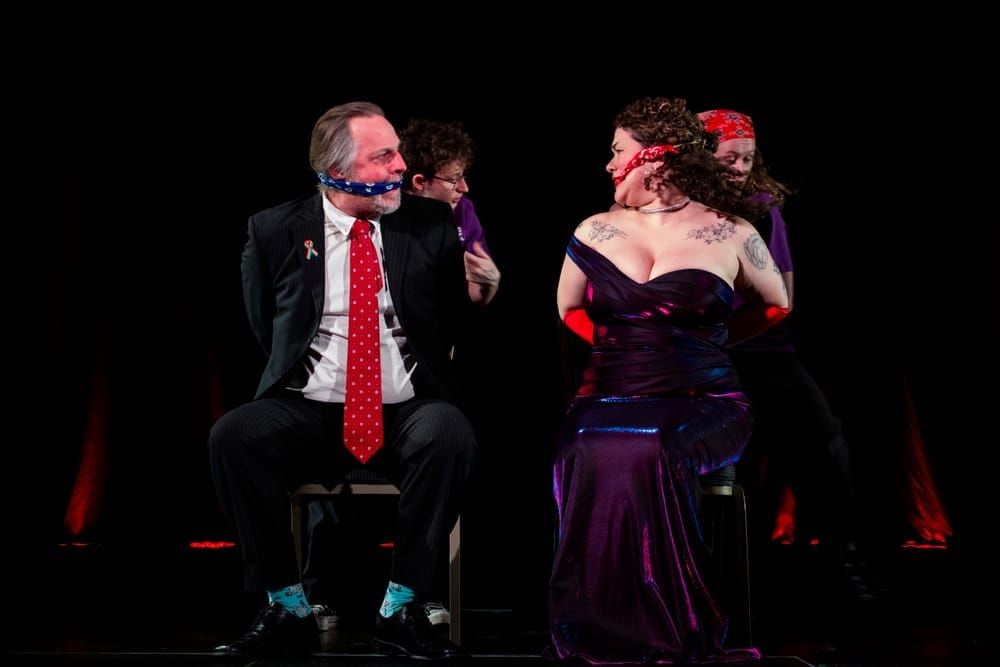
The premise is cheerfully unhinged. Melbourne Fringe needs $75,000. The arts sector is fucked. So ACT hijack the fictional Melba Awards and take Head (Scott Gooding) and celebrated opera singer Philanthropy (Mon Wing-Yun) hostage until somebody agrees to fix it.
At the centre of the operation are Grant Smith (Oriana Morris-Johnson) and Chase (Cynda Jace Beare). Grant is the more militant of the pair. Chase is warier.
This distinction will not survive the evening.
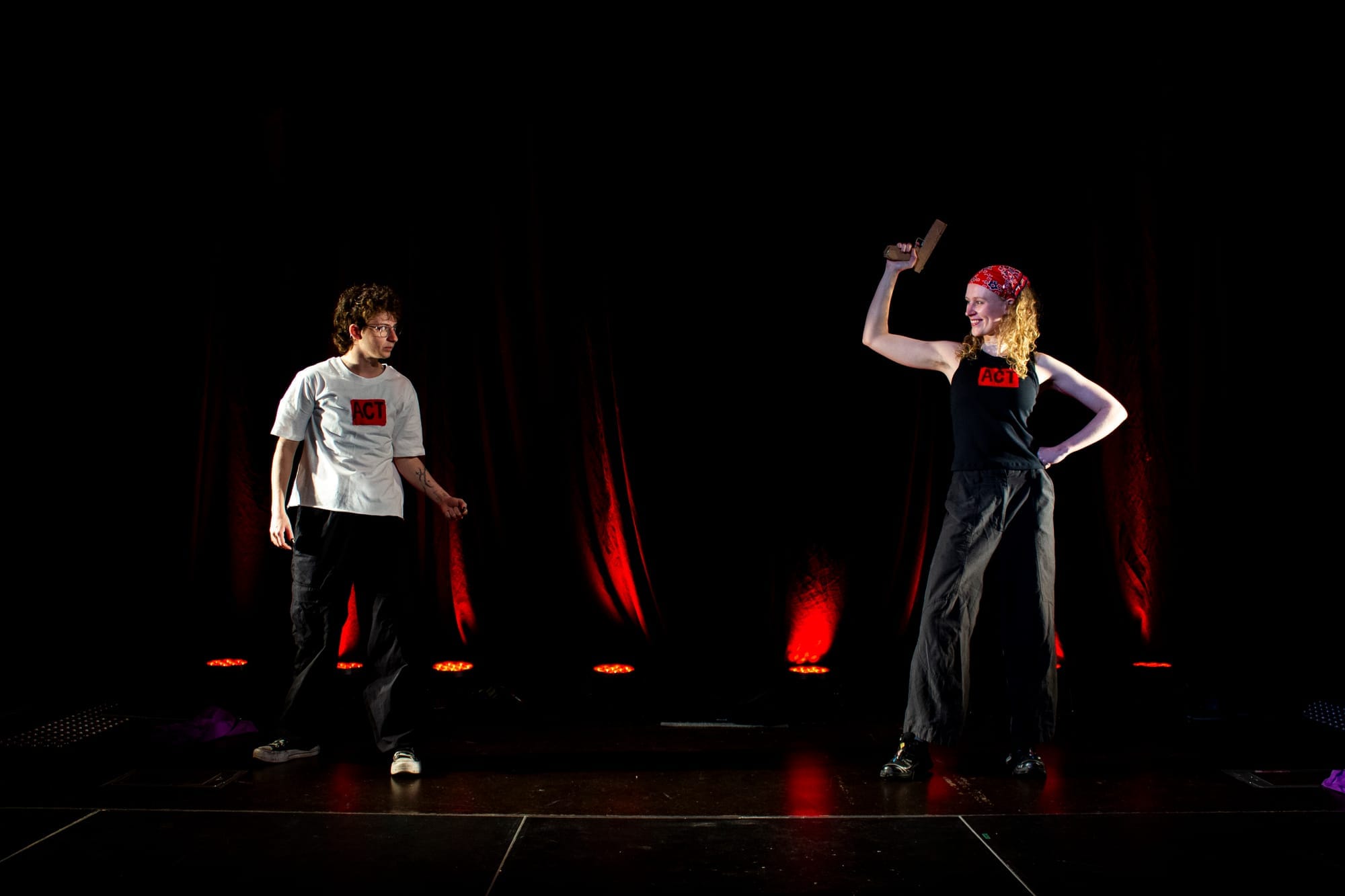
Head initially assumes he's participating in immersive theatre. Gooding is extremely funny here, gamely “yes, and”-ing his way through his own kidnapping. Morris-Johnson's Grant is having none of it. Under Chelsea Jones's direction, their confrontation begins as broad hostage farce and gradually sheds its comic certainty: two people furiously insisting that the other has failed to understand who they are.
Hamilton keeps setting up easy targets and then, rather inconveniently, allowing them to speak.
Head's opening rhetoric about the value of art is almost embarrassingly good. Art contributes to the economy; it nourishes the national soul; monocultures are bad; artists are brilliant. Even his captors admire the spiel. But once the hostage situation settles in, he starts asking less comfortable questions. Who are these artists actually protesting to? Other artists? What does political theatre achieve inside an echo chamber of solidarity? And why, exactly, should the public go see or fund an artist's proposed work about late ADHD diagnosis performed through butoh?
Ouch.
Hamilton is plainly having fun skewering his own sector, of course, with some healthy tongue in cheek.
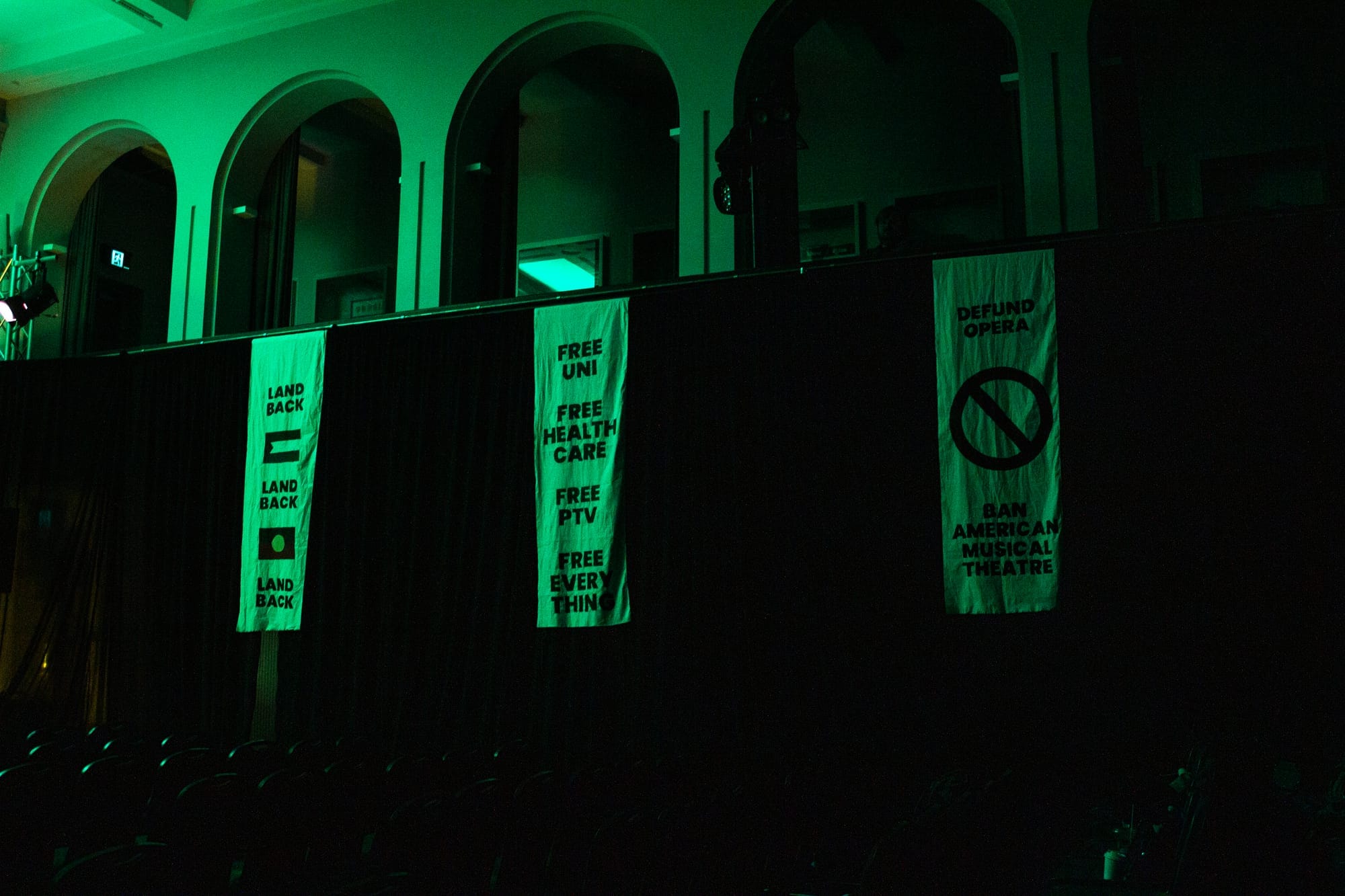
Banners demand DEFUND OPERA and BAN AMERICAN MUSICAL THEATRE. Philanthropy (not the character) is accused of funnelling money towards the same ageing recipients while allowing government to retreat from its responsibilities. Artists fight each other for tiny pots of money and then call it politics.
Wing-Yun's Philanthropy is an inspired creation. They enter lip-synching Gotye's Somebody That I Used to Know as opera—bizarre, ridiculous and somehow magnificent—and spend much of the play embodying everything ACT thinks is wrong with the sector: prestige art, old money, philanthropic patronage, the same people getting funded over and over again.
Yet Philanthropy, too, proves irritatingly difficult to dismiss.
That's Hamilton's trick.
He doesn't make Head the sensible centrist who arrives to explain why the angry children are wrong either. The play is much too slippery for that.
Pushed hard enough, Head explodes.
“I am you.”
Gooding suddenly strips the joke out of the room. Head was an artist. He knows the dirty share houses, the hustling, the making-work-with-nothing existence Grant thinks separates them. Eventually, he decided he didn't deserve to be poor anymore. He chose compromise and spent decades working his way towards political power. As a gay man, he has also lived through a form of incremental political change with rather more at stake than a grant round: he has spent his life changing a system sufficiently that he could marry.
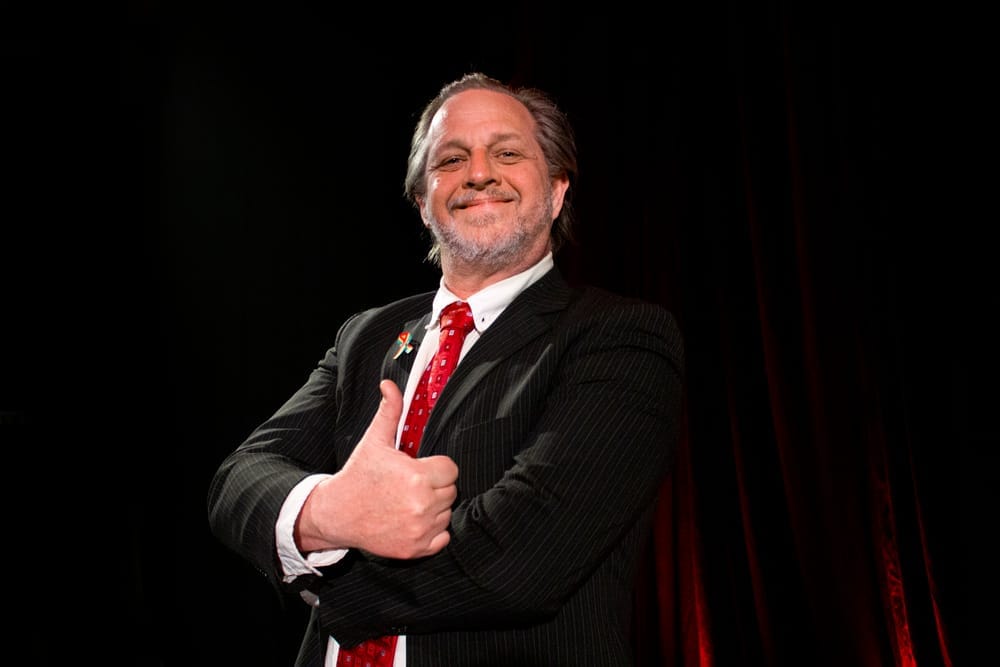
Morris-Johnson is excellent here too, because Grant's militancy doesn't collapse into stupidity once Head starts making sense. Their anger remains intelligible even as its certainties become harder to maintain.
Head asks what Grant actually wants. Not the slogans on the banners. Not the funding demands. What do you want?
What emerges is something closer to a future in which people like Grant are cared for too.
“You're good at rhetoric too,” Head tells them.
And there, somewhere, Fuck Your Funding gets properly interesting.
Hamilton and Jones, working with dramaturg Laura Ozzimo, have built what initially looks like an agitprop farce and then systematically denies us the pleasures of having an uncomplicated villain. Philanthropy has sold their soul, certainly, but they also understand that opera needs audiences, education and an arts ecology if it is to exist after the current generation is dead. Head is part of a government presiding over a broken funding system, but he is also an artist who decided that changing systems from within required stability, compromise and years of profoundly unsexy work. The terrorists have righteous grievances and absolutely no idea what would happen if somebody actually said yes to their demands.
Nobody gets out clean.
Jones directs the whole thing with a gleeful inventiveness that makes a virtue of having very little. The Trades Hall space keeps opening up: performers appear above us on the balcony; banners tumble down; the Arts Centre spire becomes a perch for a fleeing Philanthropy. When an escape by helicopter is required, we get a tiny model dangling along a line.
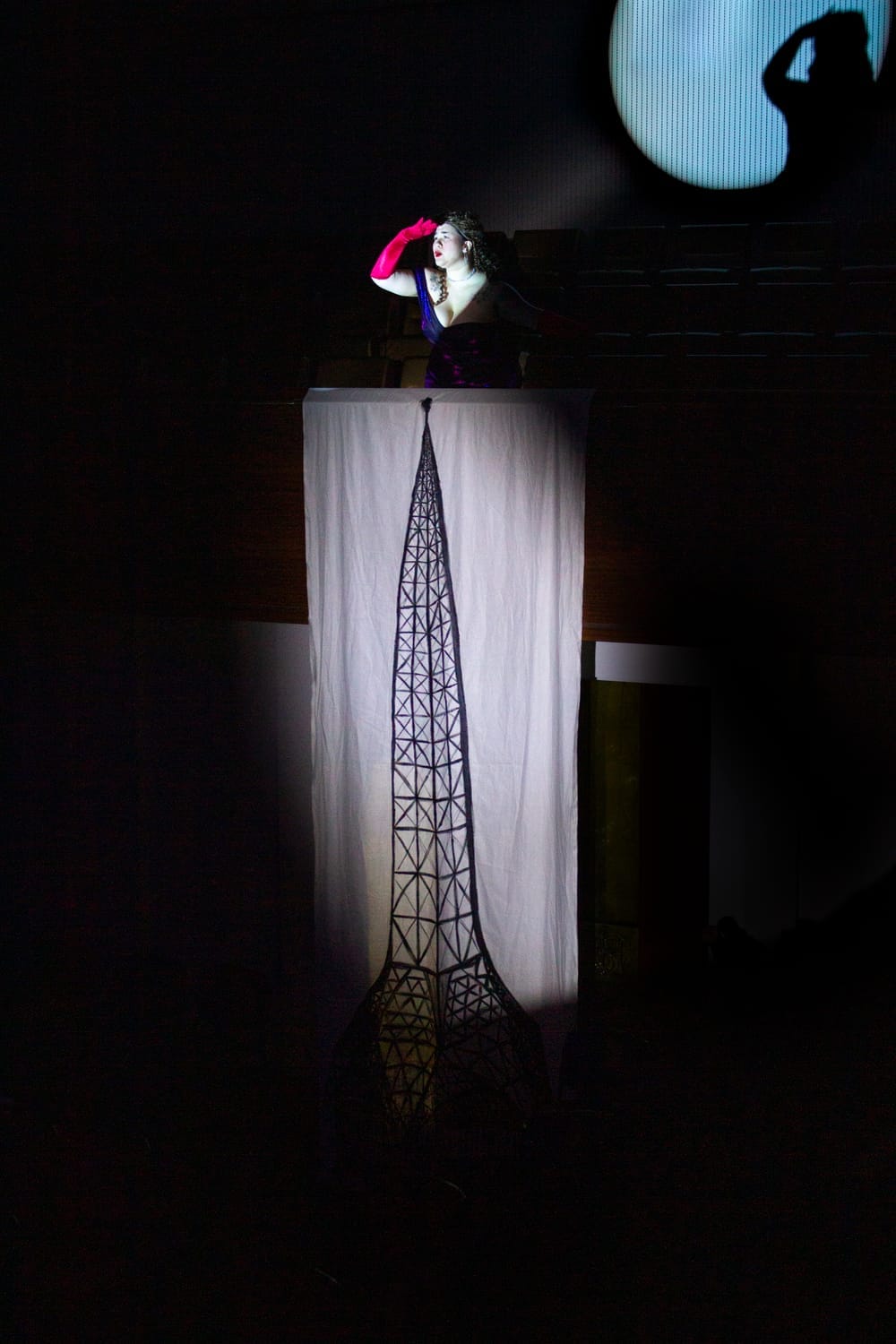
It is ridiculous. It is delightful.
Jones and Frankie Thorne's set and costumes have the handmade economy of Fringe theatre, but the production doesn't apologise for it. It keeps finding another joke in what can be achieved with almost nothing. Hamilton's AV, Jack Burmeister's sound and Georgie Wolfe's lighting help a political hostage thriller, opera, Macbeth and a miniature helicopter coexist in roughly the same theatrical universe.
The performances are similarly broad: slapstick, mugging, revue, people shouting political slogans at one another. Sometimes the broadness works against Hamilton's writing. Jokes are occasionally pushed towards an uproariousness the room on closing night doesn't quite supply, and there are moments when I wanted the production to trust just how funny—and how sophisticated—the text already is.
Then again, I occasionally wanted a more lavishly resourced production of Fuck Your Funding.
Well. Quite.
Jones sends Grant and Chase down parallel paths. Grant remains with Head; Chase follows Philanthropy, who is by now perched atop the Arts Centre, and eventually discovers that their interests aren't quite as opposed as either thought.
“We both need each other.”
Unfortunately, obtaining the necessary $75,000 requires supernatural intervention.
Enter the Weird Sisters.
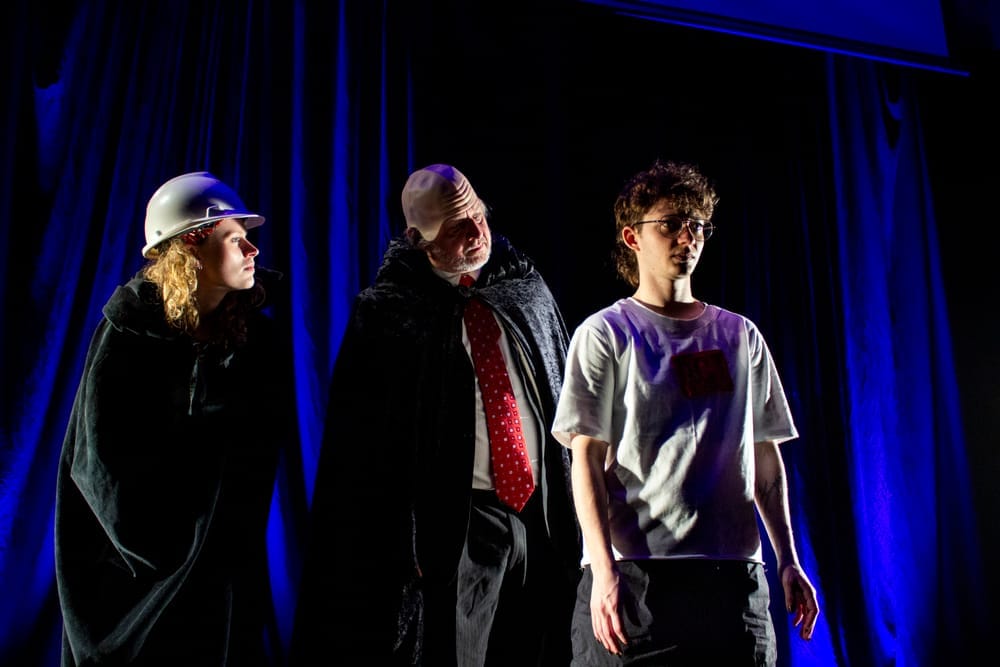
To summon Rinehart, Brandis and Murdoch, Chase must make art. So Beare performs Macbeth's “Tomorrow, and tomorrow, and tomorrow” soliloquy—beautifully, as it happens—until the hooded trio appear. It's a wonderfully stupid sequence with a fairly vicious idea inside it: an artist makes art in order to summon wealth and power, then sells their soul to that power in order to secure the funding required to keep art alive.
The $75,000 is duly procured.
And then Hamilton makes the whole thing worse.
Because when the money finally lands, it doesn't belong to Melbourne Fringe. It goes to Grant as the stitched recipient of the Melba Award.
And with novelty cheque in hand, actually Grant wants dental work. A holiday. A deposit on a home. They have spent years being told that artists should accept precarity because art is important, and now they have seventy-five thousand actual dollars. Why should they be responsible for saving Melbourne Fringe? Isn't that precisely how government gets let off the hook?
Grant is right.
Chase, who has just sold their soul to obtain the money, is also right.
This is a problem.
And it completes a neat, nasty reversal. Grant began the night as the militant. Chase was the cautious one. Yet scarcity has pushed them past one another. Grant ends by asserting the individual's right to an ordinary material life; Chase has become so committed to collective survival that another artist's refusal to sacrifice for it becomes intolerable.
The Chekhov joke from much earlier—“Where'd you get that gun?” “Chekhov.”—finally pays its debt.
Chase shoots Grant: “Fuck your funding.”
It's the title, finally delivered as the rallying cry we've been waiting for. Except it isn't shouted at government. Or Philanthropy. Or Rupert Murdoch.
It's one artist saying it to another.
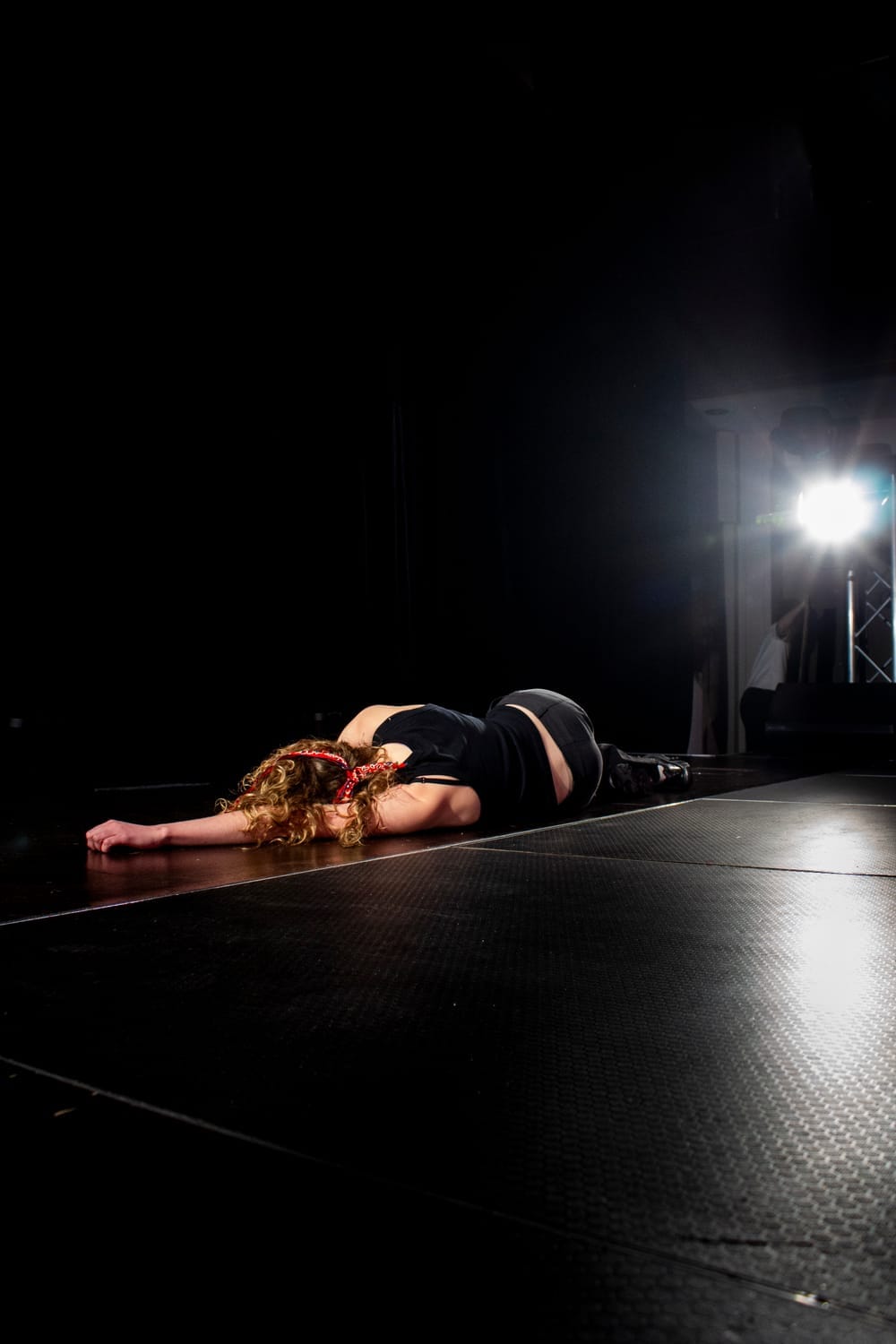
That sideways movement is the nastiest—and best—thing in Hamilton's play. For all its fury about governments, institutions and wealthy benefactors, Fuck Your Funding keeps returning to what scarcity does to the people forced to live inside it. Artists compete for scraps. They police one another's compromises. They turn structural failures into individual moral tests. Eventually, in Hamilton's gleefully grotesque formulation, they shoot each other.
Hamilton's pre-Fringe writing describes wanting to make a play that could “feel our way through the mess that is arts advocacy”. He's done something better than making a case. He has made the case against himself, and then the case against that, and allowed each person inside the argument enough humanity to become inconvenient.
There are no clean hands here. Government can't simply fix it. Philanthropy can sustain art while distorting what gets sustained. Institutional compromise can produce change. Artistic purity doesn't pay the dentist. Collective action requires individual sacrifice, but asking precarious artists to keep making that sacrifice is part of the bloody problem.
Hamilton doesn't tell us which contradiction to solve first.
Instead, he leaves us with a sticky little mess in which almost everyone has a point.
It's brilliant.
Fuck Your Funding was performed at Trades Hall from 30 September to 4 October as part of Melbourne Fringe Festival 2026.
Disclosure: A complimentary ticket to Fuck Your Funding was provided to Melbourne Stage Review for the purpose of review. Melbourne Stage Review retains full editorial independence.