The strange pleasure of being starved of light: Triptych
Lewis Major’s Triptych starves its audience of light, transforming bodies into fragments, images and traces. The result is technically astounding, exquisitely beautiful and completely hypnotic.
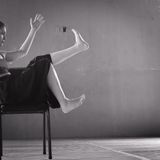
I could not read my notes during Triptych.
This was not only during the dancing. Between the three works, the lights came up and I could barely distinguish my handwriting from the white page. By the end of the hour, I had filled, completely by feel, eleven tiny wayward pages.
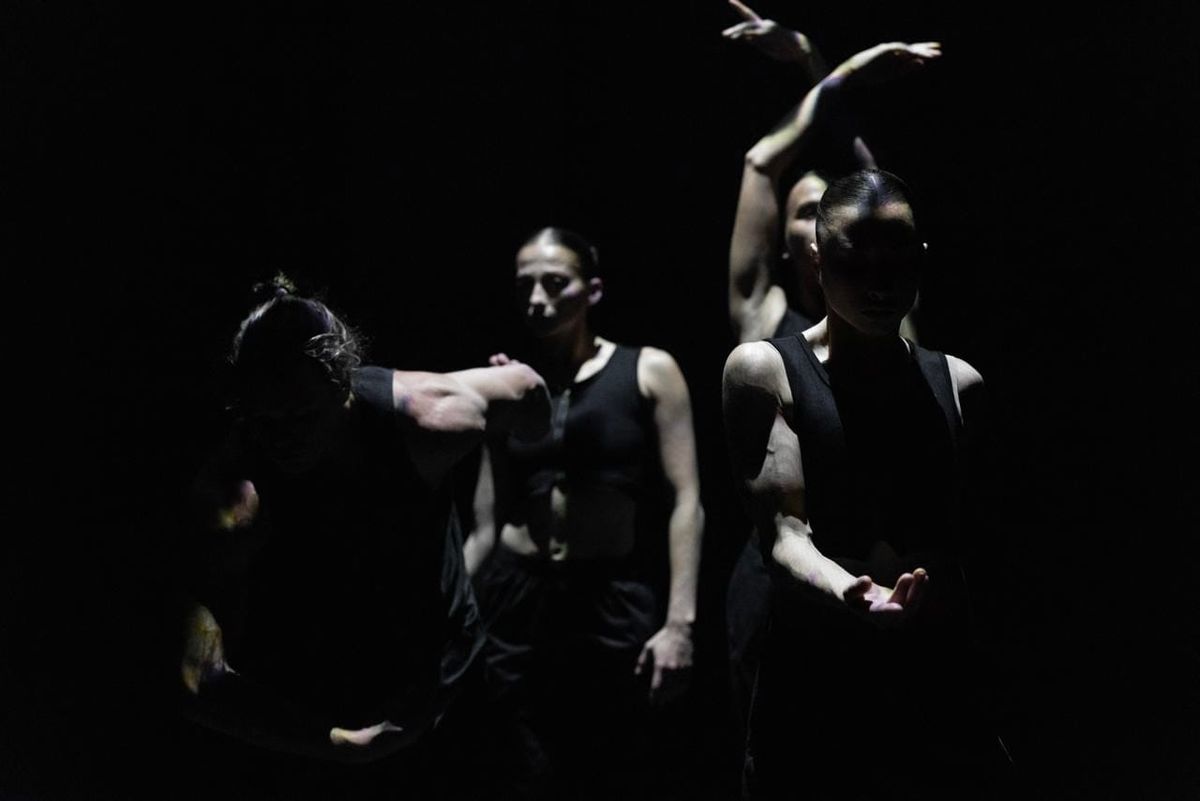
This scarcity of light is central to the uncanny delight of Lewis Major’s Triptych. Choreography and sound combine with the remarkable lighting and visual design of Fausto Brusamolino and Frankie Clarke to keep withholding visual information. Bodies are there, but we are not necessarily allowed to see them whole.
Sometimes a thin horizontal line scans across an otherwise dark stage. It catches a fraction of an arm, a shoulder, a torso. The eye knows these fragments belong to bodies and begins assembling what it cannot see. Elsewhere, three dancers occupy shifting squares of light, their athletic bodies flattened into line, shape and plane. In these moments, Triptych looks less like dance than an exquisitely art-directed magazine spread set in motion.
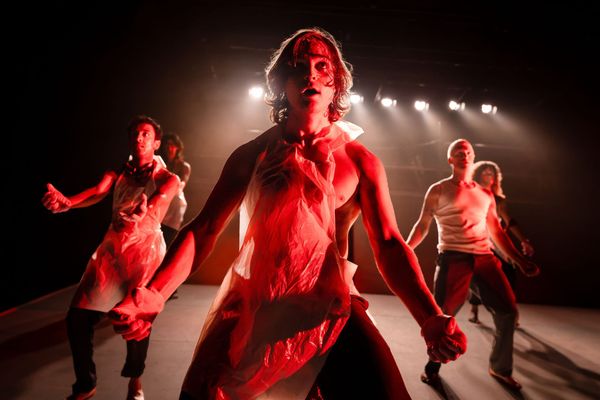
Those bodies belong to Alexander Abbot, Elsi Auricht-Faulks, Felicity Chadwick and Tahlia Russell, four superbly expressive dancers whose physical range allows Major to shift constantly between body as image and body as flesh. They can be graphic material one moment and emphatically human the next: muscular, tender, precariously balanced. In one extraordinary duet, Auricht-Faulks seems never to touch the floor, Abbot’s body becoming the ground beneath her.
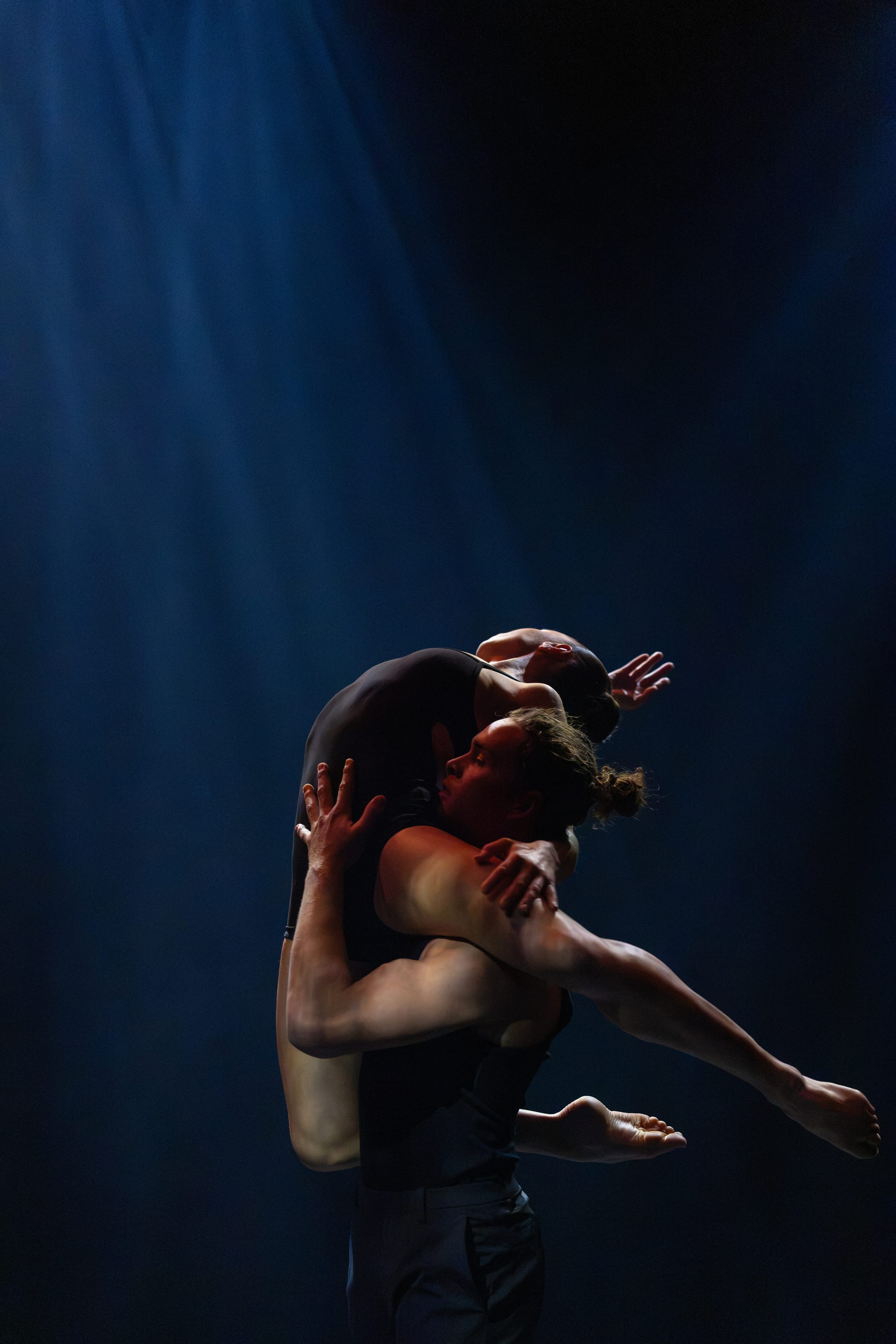
The deprivation also does peculiar things to perception. Light becomes waves, cells, webs. Dancers spin inside a geometric configuration of fine lines while James Peter Brown’s score builds through deep electronic thrum, strings and synth distortion. Stare long enough and your eyes begin to betray you: it becomes difficult to tell whether the image is moving strangely or your own vision has begun to wobble.
Then the work begins to withdraw. The web breaks into finer and finer points of light. Low to the floor, two dancers are cocooned in a soft tangle, curled around one another within a cosmic field of light. Eventually another pair takes their place; the light takes on a gentle terracotta glow, then slowly fades to almost nothing. I can only just see them receding from the stage.
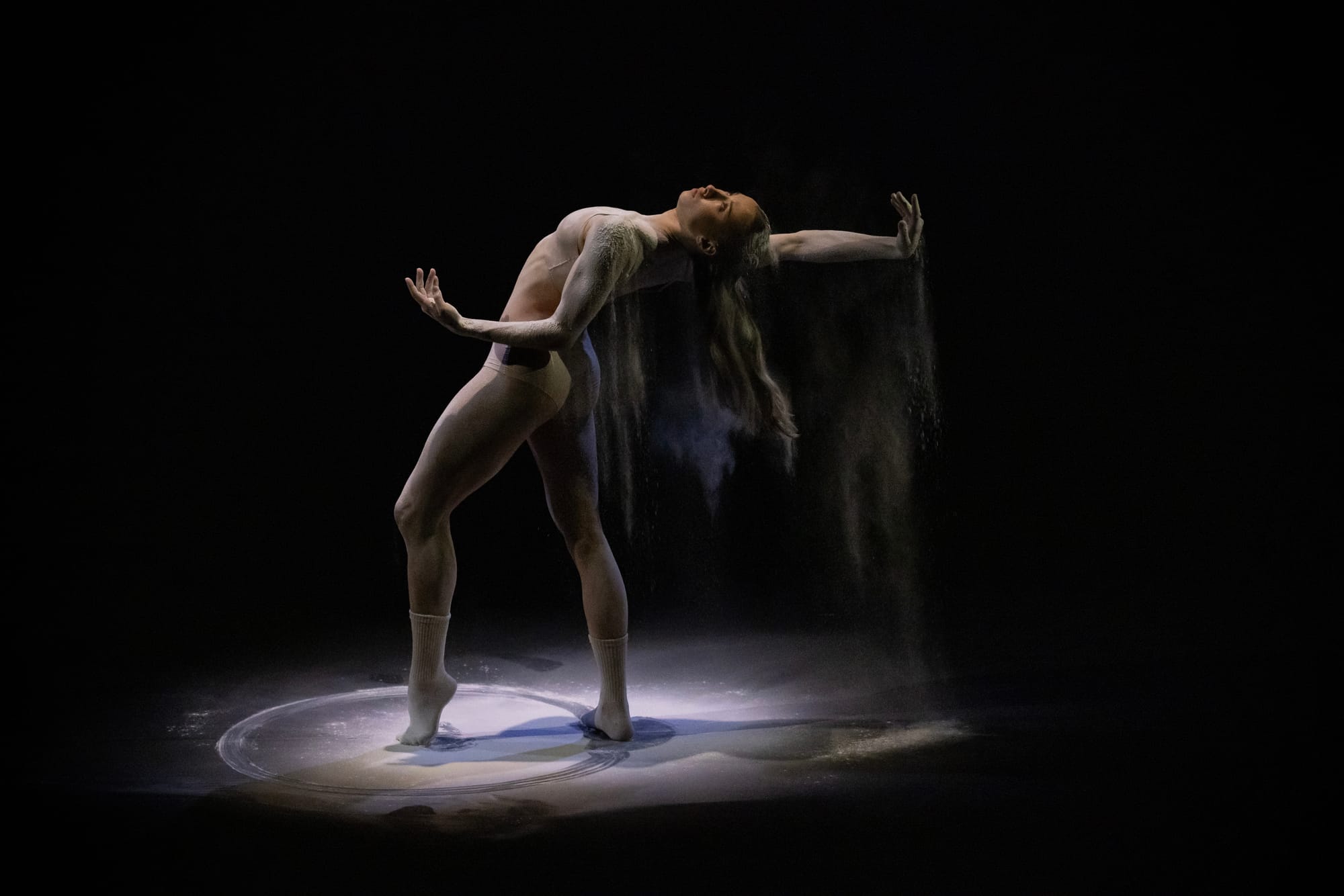
After all this deprivation, simply being allowed to see a body feels sublime. In the final solo, Auricht-Faulks slowly emerges into warm light. Where bodies have previously been fragmented, flattened or swallowed by darkness, hers is suddenly sculptural: muscular, curved and unusually available to the eye. Against Dane Yates's piano arrangement after Debussy, fine flour falls from her hair, skin and costume, dusting the black floor beneath her. Her movements accumulate in circles, footprints, sweeps and smudges. Having spent so much of Triptych constructing bodies from traces, we now watch a body create its own.
Perhaps the most peculiar measure of the work’s control comes when nobody is dancing. Between sections, the same low light reaches into the auditorium. We were told that we may talk during these interludes but must remain in our seats. Before the performance, several hundred people produced the familiar roar of an audience in anticipation. Now there is only a sweet hum.
Nothing requires this. There are few physical changes to conceal and no elaborate sets to shift into place. Yet with this small device, Triptych invites us within the work itself. We remain together: talking quietly, pupils widened, waiting for another movement to materialise from the dark. When it does, we hush before the music has even begun.
It is difficult to overstate how completely Triptych holds a room. Major and his collaborators make darkness sumptuous, light thrilling and four extraordinary bodies utterly hypnotic.
For an hour, Triptych makes looking feel new again.
Triptych performs at Arts Centre Melbourne, Fairfax Studio, until 26 September 2026.