Cruise: The cost to carry on
An extraordinary act of queer remembrance, alive to the absurdities of human behaviour and the devastation wrought by the AIDS epidemic. Cruise is a magnificent achievement, its exuberance inseparable from its grief, its pleasures made all the more precious by what is lost.

The British have spent the better part of a century congratulating themselves on their ability to suffer quietly. Somewhere along the way, stoicism became a national virtue, emotional constipation a point of pride, and Keep Calm and Carry On an excuse to put a Union Jack on every object under the sun. There's something about this commercial trope I have always found a little repulsive. Yet Jack Holden's Cruise, in Sean Landis's magnificent production at Theatre Works, has made me reconsider the whole thing.
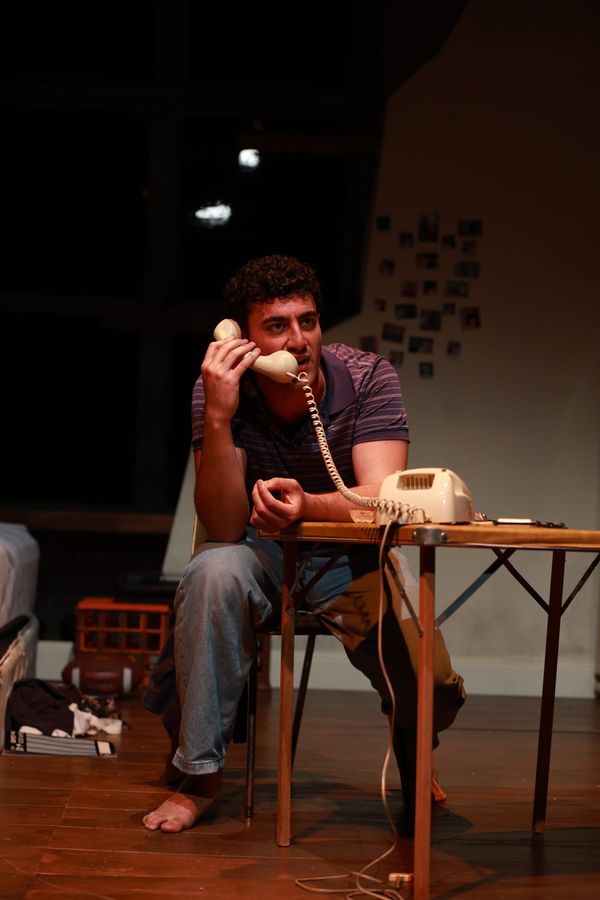
There's precious little calm in the Soho of the 1980s. Behind unmarked doors lie what Holden calls “X-rated Narnias”, a wonderfully disreputable collection of bars, clubs and cruising grounds where men pursue pleasure with an enthusiasm bordering on the athletic. The music thumps, bodies sweat, and a young man called Michael discovers a world apparently designed to accommodate his every appetite. We encounter this world through Michael's recollections, shared decades later with a young volunteer at an LGBTQ+ telephone helpline.
Fraser Morrison plays Michael and upwards of twenty other characters. A whole population comes bustling through a single body. A tilt of the chin, a twitch of the shoulders, a sudden rearrangement of the voice, and another fully formed personality elbows its way onto the stage. Movement director Jeremy Lloyd and accent and dialect coach Linda Nicholls-Gidley contribute to the performance's extraordinary physical and vocal precision, while Morrison's mischievous eye for human absurdity catches every character's peculiar vanities and vulnerabilities.
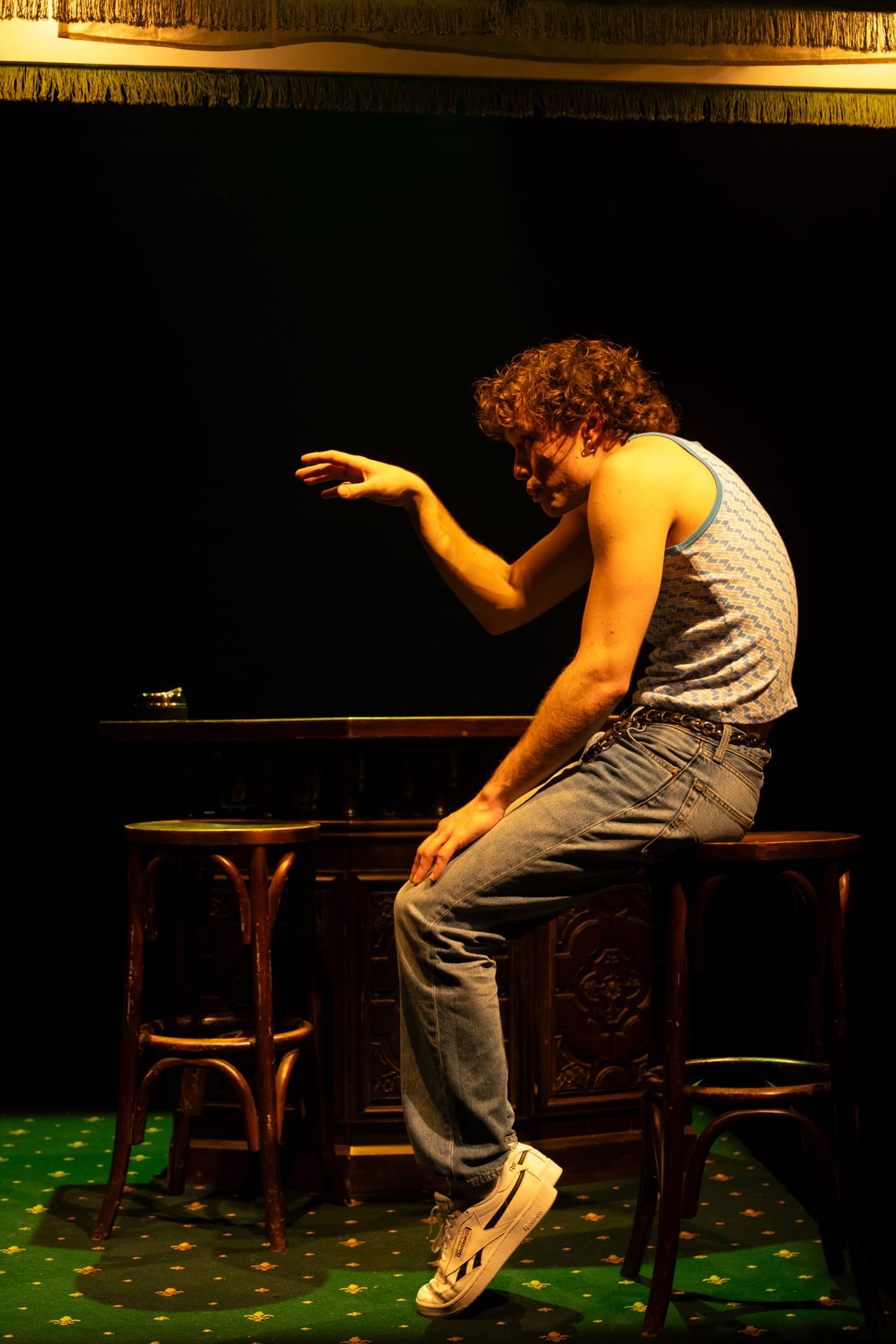
Consider Jackie, a drag queen described as a “mosaic of a woman”. Morrison gives her a magnificently dry delivery, a flamboyance worn almost threadbare by experience, and a rendition of Is That All There Is? that manages to make Peggy Lee's great anthem of disillusionment sound both wickedly funny and horribly prescient. If life is going to disappoint you, you might as well have another drink.
The pleasure of watching Morrison is complicated by the knowledge of what awaits these characters. As AIDS tears through the community, the same theatrical virtuosity that made Soho seem so extravagantly populated begins to acquire a terrible poignancy. One by one, the lives that crowded Morrison's stage begin to disappear. He remains, carrying their voices around inside him.
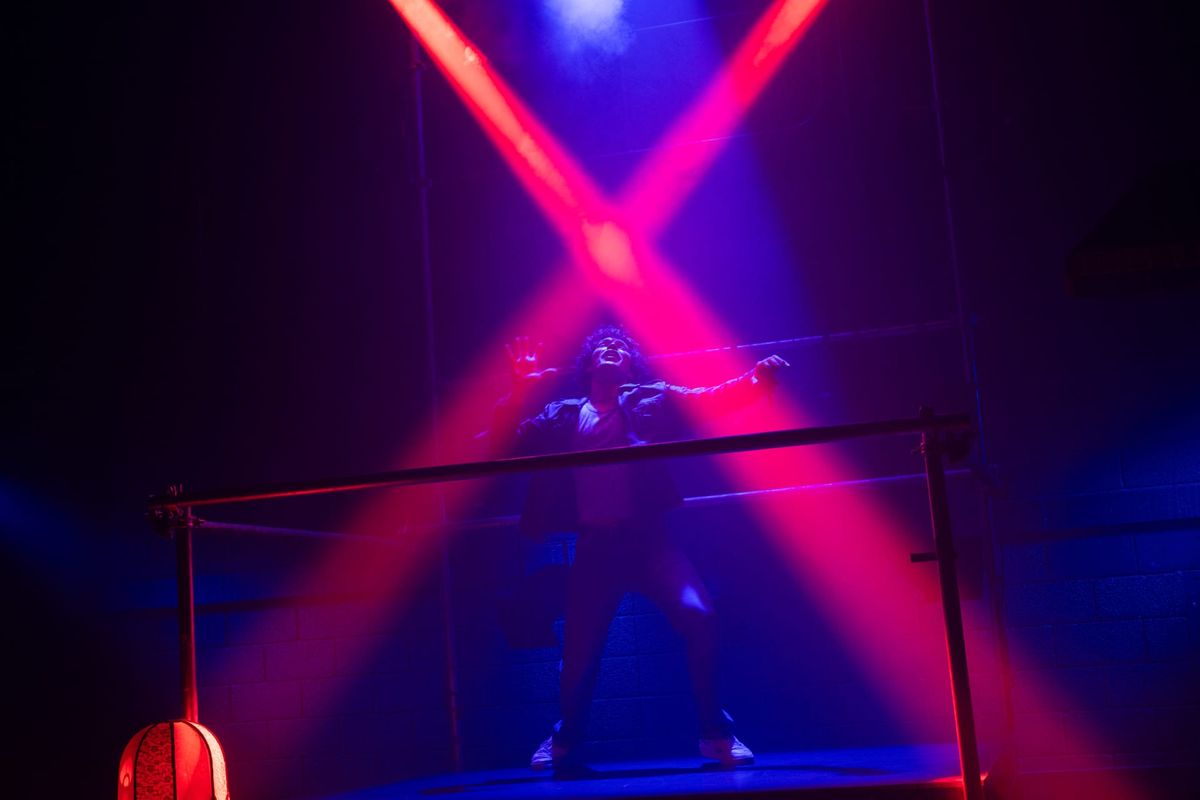
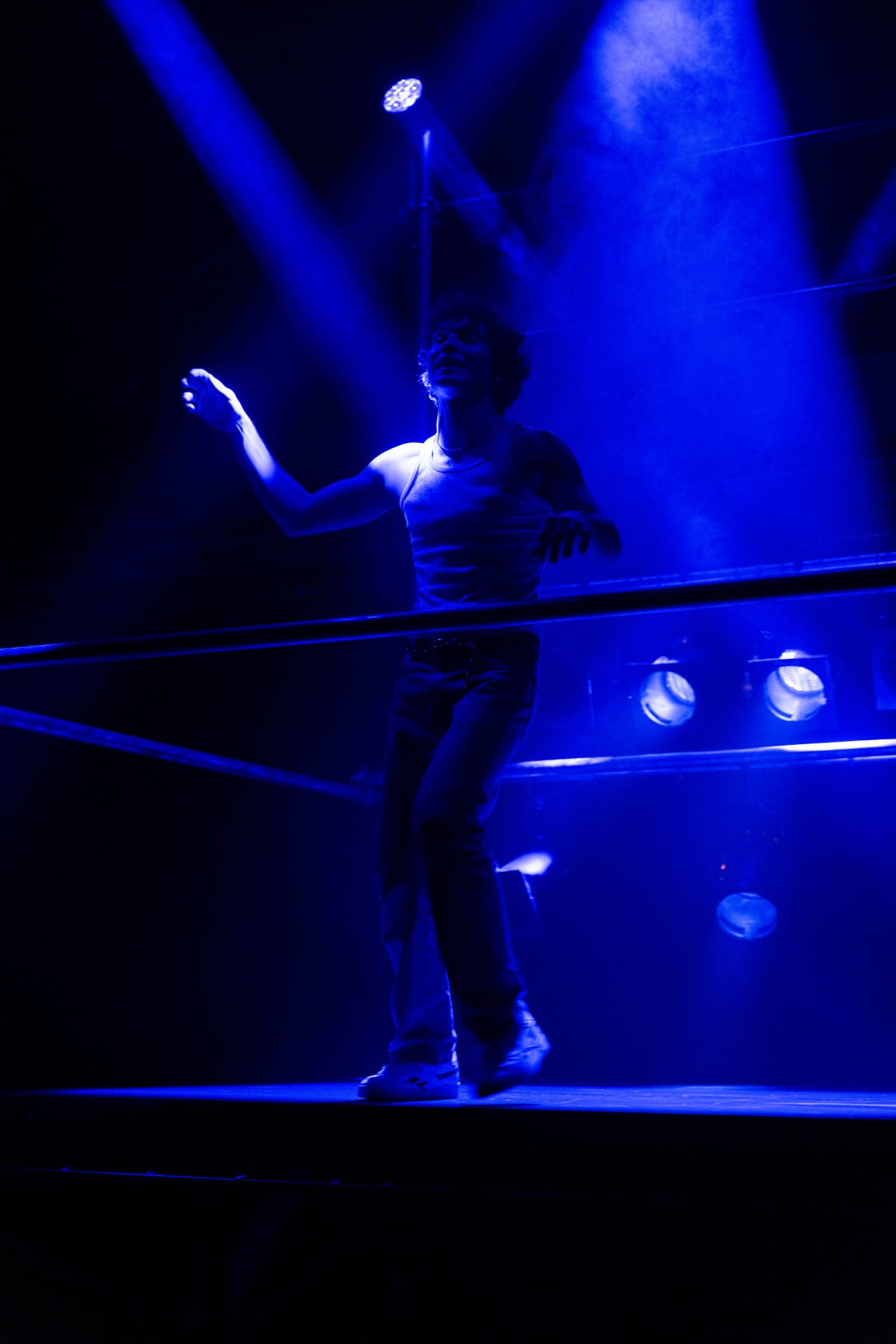
Landis keeps the production moving through a series of sharply defined playing spaces. Ruby Jenkins' set places a battered sofa beneath a fringed lamp, bathed in red light; a raised nightclub platform looms behind it, while a green-lit bar beckons from the other side of the stage. Below, the open stage floor becomes the streets of Soho, where these disparate lives collide. Tom Hicks' lighting draws each location out of the darkness as Morrison moves between them, giving the performance a visual rhythm that complements its musical pulse. There's scarcely a wasted movement or an unnecessary flourish.
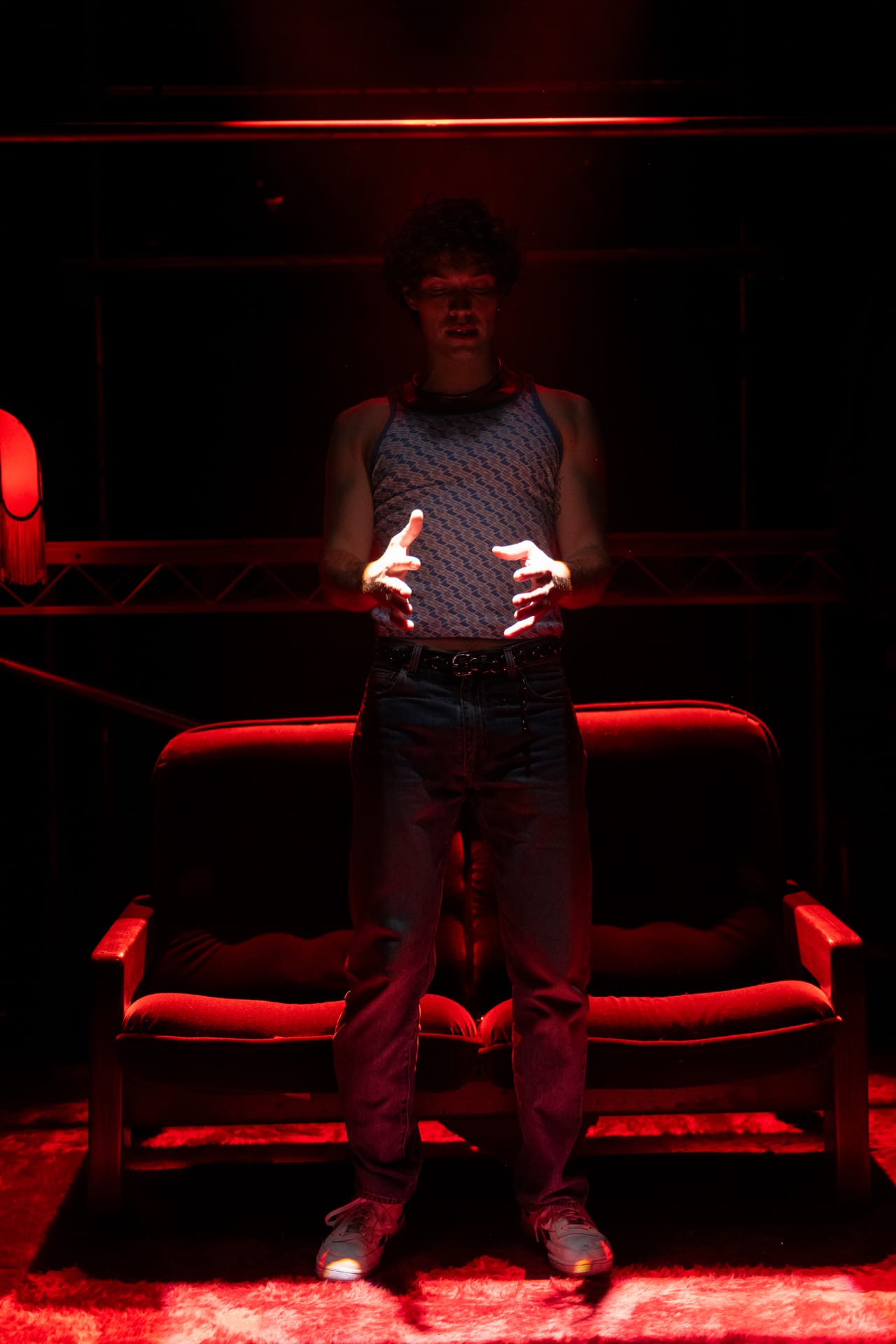
Michael outlives his lover Dave, whose death leaves him carrying a plastic bag of belongings from the hospital and a lifetime of memories with nowhere obvious to put them. Another survivor understands something of this peculiar loneliness. Losing a partner, they tell him, is like losing a mirror: the person who remembers who you were, who holds a version of your life that nobody else possesses. The AIDS epidemic robbed people of their lovers and friends, but it also took away the witnesses to their lives. Those left standing had to remember for everyone.
Which brings us to Kevin.
The young volunteer listening to Michael's story is Jack, a 22-year-old working a shift at Switchboard. Among his fellow volunteers is Kevin, an older gay man whom Jack regards with something approaching distaste. His mannerisms are embarrassing, his “white emulsion” milky tea revolting, and his very presence an irritation. Jack, meanwhile, rather fancies having been an eighties kid himself. It's one of Holden's sharper little jokes: the young man covets a past whose survivors he can barely tolerate.
By the time Michael finishes his story, Jack has begun to see Kevin rather differently. Kevin has been quietly carrying a history Jack never thought to ask about. The reward for surviving an epidemic, it seems, is sometimes to become an embarrassing old man making second-rate tea.
Jack's failure of imagination becomes painfully apparent when Michael describes the small flat where he now lives, surrounded by his records. Jack thinks it sounds rather nice. Michael bursts into tears. The young man hears domestic contentment where Michael feels the accumulated weight of absence. And what could Jack possibly say? There are some experiences for which sympathy, however sincere, is a poor substitute for understanding.
Earlier, when Michael is almost undone by grief, another survivor offers him a piece of advice: don't just face the music, play the music. So Michael dances. The instruction is almost absurdly simple, but there's something magnificent about its generosity. It comes from someone who knows the scale of his loss, who isn't asking him to forget or recover, only to find some way of living alongside it.
Perhaps I've been making something of Jack's mistake myself. It's easy to find the language of endurance faintly ridiculous when the circumstances that gave it meaning have slipped beyond our experience. The words survive, acquiring new uses and fresh absurdities, while the people who once needed them grow old, become irritating, and eventually disappear. We inherit their expressions without necessarily understanding what they cost.
By the time Cruise reaches its final “we carry on”, I find myself considerably less inclined to sneer. My rejection of that peculiarly British injunction to keep calm and carry on had rather obscured its original purpose — a wartime appeal, as I now understand it, to ordinary people facing extraordinary uncertainty. There is, after all, a world of difference between a slogan emptied of its history and a few words offered by one battered human being to another. Holden's play restores something of the life that such language can conceal. And Morrison, who has spent the evening bringing an entire community into the room, makes us feel just how much there is to remember.
All evening, I had been listening to little noises coming from the darkness around me. A murmur at the mention of an old song, a snort of recognition at some half-forgotten detail, an audible sigh when the words “gay cancer” first enter the story. I don't know what memories those sounds belong to, or what private histories have accompanied their owners into the theatre. But I've become increasingly conscious of the people sitting beside me. Some of them may have been carrying on, one foot in front of another, for a very long time.
Cruise, presented by Fruit Box Theatre, plays at Theatre Works, St Kilda, until 21 November 2026.
Disclosure: A complimentary ticket to Cruise was provided to Melbourne Stage Review for the purpose of review. We retain full editorial independence.